
Industrial 800x480 TFT Modules & Embedded Displays (Part I)
High-yield WVGA panels and mission-critical graphic modules engineered for rapid system integration, featuring customizable pinouts, extended backlight lifespans, and reinforced front surfaces.
-
 China 5 inch 800×480 1200nit High brightness TN TFT LCD module Suppliers, FactoriesView Specifications
 -
 Custom 2.8 inch 240×320 TN TFT LCD Module with resistive touch panel Manufacturers, SupplierView Specifications
 -
 China 12.3 inch 1920×720 EDP 60pin 400nit IPS Strip TFT LCD Display Supplier, SuppliersView Specifications
 -
 Custom 7 inch TFT LCD module 800×480 RGB 50pin interface 250nit TN screen Supplier, SuppliersView Specifications
 -
 Custom 2 inch 176×220 MCU 45pin interface 220nit TN TFT LCD Module Supplier, SuppliersView Specifications
 -
 Custom 8 inch 1200×1920 MIPI 40pin 350nit IPS TFT LCD Display Module Manufacturer, SupplierView Specifications
 -
 China 8 inch 1024×768 LVDS 40pin interface 300nit IPS TFT LCD module Manufacturer, SupplierView Specifications
 -
 China 7 inch 800×480 RGB 40pin 450nit TN TFT LCD Display Manufacturers, SuppliersView Specifications
The 800x480 (WVGA) Standard in Global Industrial Engineering
Why the 800x480 resolution remains the unmatched balance of graphical fidelity, computational overhead, and thermal longevity across international embedded hardware ecosystems.
Optimal GUI Framework Alignment
The 800x480 format provides exactly 384,000 addressable pixels at an ideal 5:3 / 15:9 aspect ratio. This pixel footprint allows low-power microcontrollers (STM32, NXP i.MX RT, ESP32-S3) and lightweight Linux microprocessors to render 60 FPS graphics buffers through standard 16-bit or 24-bit RGB parallel pipelines without requiring expensive external DDR RAM or discrete GPU accelerators.
Glass Maturity & Long-Term Supply Security
Unlike high-density mobile phone resolutions that become obsolete in 18 to 24 months, Chinese Gen-5 and Gen-6 TFT-LCD fabrication lines treat 800x480 mother glass as an evergreen industrial foundation. Shenzhen Xunrui guarantees an availability roadmap of 7 to 10+ years for 4.3-inch, 5.0-inch, and 7.0-inch WVGA panel cuts, mitigating costly PCB respins and enclosure retooling for medical and industrial OEMs.
The TN to IPS Paradigm Transition
While legacy industrial systems initially adopted Twisted Nematic (TN) glass with restricted 6 o'clock or 12 o'clock viewing angles, modern Chinese factories now produce pin-compatible In-Plane Switching (IPS) replacements. These deliver symmetrical 85°/85°/85°/85° all-direction viewing cones, zero color inversion, and enhanced contrast ratios exceeding 800:1 without altering host pinouts.
Navigating Global Sourcing Demands for 800x480 Displays
Procuring TFT modules from China requires an analytical approach that bridges raw component specifications with international reliability protocols, optical performance, and supply chain continuity.
Sunlight Readability & Thermal Balance
Outdoor EV chargers, marine navigation units, and agricultural control panels require luminance from 800 nits to 1,500 nits. High-brightness LED strings generate significant thermal loads. Xunrui incorporates high-thermal-conductivity aluminum substrates, low-Vf LED dies, and custom light guide plates (LGP) to deliver ultra-high candela output while limiting temperature rise to less than 12°C above ambient.
Optical Bonding vs. Air Gap Lamination
To combat ambient glare and internal condensation, our Shenzhen assembly lines support both double-sided perimeter tape bonding and full Optical Clear Adhesive (OCA/OCR) bonding. Optical bonding matches refractive indices across the cover lens, ITO sensor, and TFT polarizer (n ≈ 1.5), slashing ambient light reflection from 13.5% down to under 0.8% while increasing impact resistance up to IK08/IK10 standards.
Custom FPC Routing & Electrical Immunity
Industrial HMIs are prone to severe electromagnetic interference (EMI) from variable-frequency drives (VFDs) and heavy switching relays. We manufacture custom Flexible Printed Circuits (FPCs) featuring integrated silver paste shielding, grounded meshed copper pour backplanes, and matched differential impedance routing for high-speed RGB or LVDS clocks, ensuring Class B EMC compliance.
Technical Comparison: 800x480 Industrial TFT Display Stacks
Comparative parameters for mainstream 5.0-inch and 7.0-inch WVGA configurations commonly specified by Tier-1 OEM procurement engineers.
| Display Specification | Standard Commercial WVGA | Industrial Enhanced WVGA | Sunlight-Readable Ruggedized | Automotive Grade WVGA |
|---|---|---|---|---|
| Typical Diagonal Sizes | 5.0", 7.0" | 4.3", 5.0", 7.0" | 5.0", 7.0" | 7.0", 12.3" (Bar Cut) |
| Liquid Crystal Mode | TN (Normally White) | IPS (Normally Black) | IPS / Transflective | IPS (AAS/ADS Wide Angle) |
| Viewing Angle (CR≥10) | 70/70/50/70 (U/D/L/R) | 85/85/85/85 All Angles | 85/85/85/85 All Angles | 88/88/88/88 All Angles |
| Typical Luminance | 250 ~ 350 cd/m² | 450 ~ 600 cd/m² | 1,000 ~ 1,500 cd/m² | 800 ~ 1,200 cd/m² |
| Contrast Ratio | 500:1 | 800:1 ~ 1000:1 | 1000:1 | 1200:1 |
| Pinout & Bus Interface | RGB 24-bit 40-pin / 50-pin | RGB 24-bit or LVDS (6/8-bit) | LVDS / RGB / HDMI Bridge | OpenLDI LVDS / MIPI DSI |
| Operating Temperature | -20°C to +70°C | -20°C to +70°C | -30°C to +85°C | -40°C to +85°C |
| Touch Sensor Technology | 4-Wire Resistive (RTP) | Capacitive (PCAP) I2C | PCAP with Anti-Glare Glass | Automotive PCAP (Glove/Water) |
| Lamination Protocol | Air Gap (Double-Sided Tape) | Air Gap or LOCA | Full Optical Bonding (OCA) | Full Optical Bonding (OCR) |
| Application Focus | Consumer & Office | Factory HMI & Test | EV Chargers & Marine | Cluster & Heavy Fleet |
Sector-Specific Implementation Strategies
How Tier-1 system architects implement our 800x480 TFT LCD modules across critical enterprise, industrial, and vehicular operational environments.
Factory Automation & Human-Machine Interfaces
Industrial control panels require uncompromised longevity in environments with heavy grease, dust, and electrical interference. For these setups, we pair 7-inch 800x480 IPS displays with high-noise-immunity touch controller ICs (such as EETI or Ilitek). Firmware is customized to reject false triggers from water droplets while maintaining seamless operation with 5mm industrial latex or leather gloves.
Medical Diagnostic & Infusion Systems
Medical workstations require tight chromatic stability and easy sanitization. Our 5.0-inch and 7.0-inch 800x480 modules feature chemically strengthened cover glasses up to 3.0mm thick, treated with anti-microbial coatings and sealed against ingress up to IP65/IP67. Displays maintain reliable color rendering at wide observation angles to ensure clinical telemetry data is read accurately from any perspective.
Off-Highway Equipment & Commercial Fleets
Construction excavators, telematics dispatchers, and electric utility vehicles encounter extreme mechanical shocks and fluctuating temperature extremes. Xunrui's ruggedized WVGA assemblies utilize wide-temperature automotive liquid crystal fluids rated from -30°C to +85°C, reinforced back metal chassis structures, and high-efficiency backlights delivering over 1,200 nits of sunlight-piercing luminance.
Shenzhen Xunrui's 5-Gate Quality Assurance System
Our ISO 9001 and ISO 14001 certified plant operates on a zero-defect production methodology, applying strict inspection and automated stress testing across every fabrication milestone.
Gate 1: IQC Incoming Material Screening
Raw TFT open cells, polarizers, driver ICs, and LED packages are sampled and inspected according to MIL-STD-105E Class II standards. Microscopic surface inspection eliminates defective ITO circuits, micro-cracks, and particulate contaminants before raw glass enters the bonding queue.
Gate 2: Automated COG / FOG Hot-Press Bonding
High-precision Japanese anisotropic conductive film (ACF) bonding machines bond driver ICs and FPC traces under controlled temperature and pressure profiles. In-line Automated Optical Inspection (AOI) verifies alignment accuracy within ±3 microns to avoid intermittent contact issues.
Gate 3: Mid-Process 72-Hour Burn-in Thermal Aging
Before backlight integration, open cells and FOG sub-assemblies undergo active thermal burn-in at +50°C for 24 to 72 hours under full dynamic pattern drive. This thermal stress weed-out eliminates infant mortality failures in driver IC silicon and ITO interconnects.
Gate 4: 100% Optical & Electrical Testing
Every finished 800x480 module undergoes colorimeter luminance testing, chromaticity coordinate inspection (CIE 1931), touch coordinate accuracy mapping, and high-voltage backlight dielectric withstand testing. Defective pixels are classified according to ISO 9241-307 Class I/II standards.
Gate 5: OQC Auditing & Export Packaging
Outgoing Quality Control validates antistatic packaging integrity, moisture barrier seals with desiccant indicators, drop-test survival margins, and barcoded traceability. Shipments comply with RoHS Directive 2011/65/EU, EU REACH regulations, CE, and FCC electromagnetic directives.
Future Evolution of the 800x480 Industrial Display Format
How next-generation semiconductor driving schemes, Mini-LED backlighting matrices, and integrated sensor glass are extending the lifecycle of the 800x480 form factor.
Mini-LED Local Dimming Backlights
Traditional edge-lit LED backlights provide uniform brightness across the entire panel, limiting dynamic contrast. Xunrui is introducing multi-zone Mini-LED backplanes to 7-inch industrial WVGA displays. Featuring over 384 local dimming zones, this architecture provides true blacks, exceptional 100,000:1 HDR contrast, and a 35% power reduction during dark GUI operations.
TDDI (Touch and Display Driver Integration)
Historically, touch panels required an external touch controller IC mounted onto a separate FPC tail. Transitioning 800x480 modules to In-Cell TDDI combines the display driver and touch processor into a single silicon chip on the glass. This eliminates an external FPC connection, slashes module thickness by 0.7mm, and avoids optical bonding delamination risks.
Smart HMI Embedded UART / CAN Engines
To shorten engineering cycles for IoT developers, we offer turnkey smart display assemblies integrating an onboard ARM Cortex-M controller, flash memory, and real-time serial (RS485, CAN bus, UART) interfaces. GUI assets, animations, and font sets are stored locally inside the display module, letting base host microcontrollers command rich screens through simple ASCII commands.
Procurement & Engineering FAQ
Key technical and contractual answers addressing lead times, customized tooling, interface compatibility, and quality control.
Why choose an 800x480 resolution over 1024x600 or 1280x800 for an industrial terminal?
What is the difference between 40-pin and 50-pin RGB 800x480 interfaces?
What is Xunrui's Minimum Order Quantity (MOQ) and sample verification protocol?
How do you ensure long-term availability for medical and industrial devices with 7-10 year lifecycles?
Should I specify a Projected Capacitive (PCAP) or 4-Wire Resistive Touch Screen (RTP)?
How does optical bonding improve sunlight readability compared to standard air-gap bonding?
Industrial Display Portfolio & Custom Form Factors (Part II)
From compact wearable round modules and ultra-wide bar formats to large industrial touch panels, explore our comprehensive display manufacturing capabilities.
-
 China 1.8 inch 360×360 MIPI 30pin 400nit IPS Circular TFT LCD Module Manufacturer, SuppliersView Specifications
 -
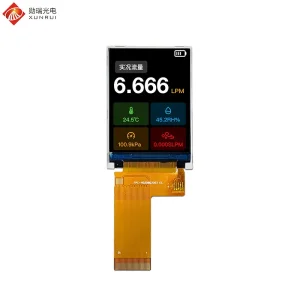 China 2 inch 240×320 SPI 30PIN 250nit IPS TFT LCD Module Manufacturer, SuppliersView Specifications
 -
 China 5 inch 480×272 RGB 40pin interface 350nit TN TFT LCD module Manufacturer, FactoryView Specifications
 -
 Custom 10.1 inch 1024×600 LVDS 40pin 1000nit IPS TFT LCD Display Manufacturers, FactoryView Specifications
 -
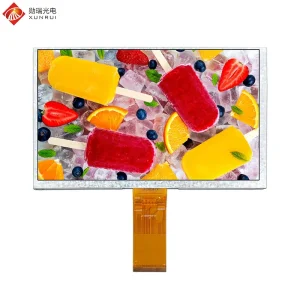 Custom 9 inch TFT LCD Module 1024×600 LVDS 60pin 400nit IPS Screen Suppliers, FactoryView Specifications
 -
 Custom 2.8 inch 240×320 SPI 10pin 250nit TN TFT LCD Display Supplier, FactoriesView Specifications
 -
 China 5 inch 480×272 TN TFT LCD Module with capacitive touch panel Manufacturers, FactoryView Specifications
 -
 Custom 4 inch IPS 720×720 MIPI 30pin interface Circular TFT LCD module Manufacturer, FactoriesView Specifications