
Factory-Engineered Small-to-Mid TFT & Touch Solutions
Explore high-reliability display modules produced in our Shenzhen optoelectronic manufacturing base, featuring custom cover glass, tailored pin configurations, and high-ambient legibility.





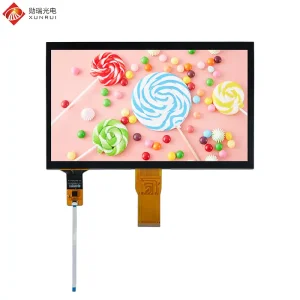


Global Enterprise Procurement Dynamics for 3.2 Inch Touch Panels
Analyzing structural shifts in compact human-machine interface (HMI) sourcing, procurement lead-time mitigation, and total cost of ownership (TCO) across tier-1 hardware ecosystems.
Severe Environmental Ruggedization
Standard consumer-grade touch controllers experience false touches or erratic tracking when subject to high humidity, conductive salt sprays, or electrical fast transients (EFT). Tier-1 industrial buyers mandate custom sensor patterning and tuned firmware algorithms.
- Tolerant to surface water film without parasitic capacitive triggers
- Extended thermal operating range (-30°C to +85°C)
- IK07 to IK09 impact resistance via chemically tempered aluminosilicate glass
Mechanical & Cosmetic Bespoke Design
Off-the-shelf cover glass creates mechanical constraints and limits enclosure IP ratings. Custom touch panel factories offer full-freedom CAD customization of outer dimensions, stepped edges, drilled holes, and high-definition ceramic frit printing.
- True flush-bezel integration (IP65, IP67, IP68 hermetic sealing)
- Customized FPC exit routes preventing stress concentration
- Precision CNC edge chamfering (2.5D / 3D contouring)
Supply Chain Resilience & Longevity
Consumer electronics panels face rapid end-of-life (EOL) cycles within 12 to 18 months. Enterprise engineering teams require guaranteed long-term availability with frozen Bill of Materials (BOM) to eliminate recurring testing and recertification overhead.
- Strict Product Change Notification (PCN) period (minimum 6 months)
- Form-Fit-Function (FFF) backward compatibility guarantees
- Last-time buy (LTB) buffer stock arrangements in Shenzhen
3.2 Inch Touch Architecture: PCAP vs. RTP Engineering Comparison
Direct technical trade-offs between Projected Capacitive (G+G / G+F+F) and 4-Wire / 5-Wire Analog Resistive tactile configurations.
| Engineering Parameter | Projected Capacitive (PCAP) - Glass+Glass | Projected Capacitive (PCAP) - Glass+Film | 4-Wire Analog Resistive (RTP) |
|---|---|---|---|
| Touch Sensor Technology | Mutual/Self Capacitance Matrix (ITO on Glass) | Single/Double ITO Sensor Film laminated to Glass | Voltage Divider (Top ITO Film + Bottom ITO Glass) |
| Multi-Touch Capability | True Multi-Touch (Up to 10 points) | Multi-Touch (Up to 5 points) | Single Touch Only (Pressure Induced) |
| Optical Transmittance | ≥88% (≥93% with AR Coatings) | ≥85% - 87% | 78% - 82% (Lower clarity due to air gap) |
| Surface Hardness Rating | ≥7H Mohs (Chemically Strengthened Soda-Lime / AGC) | ≥6H Mohs | 3H (PET surface vulnerable to sharp scratching) |
| Glove / Stylus Support | Tuned Firmware (Latex, Nitrile, Heavy Leather ≤4mm) | Tuned Firmware (Thin/Medium Gloves ≤2mm) | Native Any-Object Activation (Passive Stylus, Heavy Glove) |
| Cover Glass Thickness Options | 0.55mm, 0.7mm, 1.1mm, 1.8mm, up to 3.0mm | 0.55mm - 1.1mm | Fixed PET Top Foil (Typically 0.188mm) |
| Controller Interface Bus | I2C (Fast Mode Plus 1MHz) / SPI / USB HID | I2C / SPI | Analog 4-Wire ADC Inputs / USB Controller Board |
| Mean Time Between Failures (MTBF) | >50,000,000 touches per single point | >30,000,000 touches per single point | >1,000,000 - 3,000,000 touches per location |
Macro Industry Solutions Powered by 3.2" Touch Panels
Field-proven implementations delivering seamless touch fidelity, mission-critical dependability, and rigorous ingress protection.
Industrial Handheld Terminals & Scanners
Rugged mobile computers (PDA scanners, inventory verification guns) operate in warehouse and logistics environments where drops, vibration, and dust ingress are continuous hazards.
- Optically bonded 3.2" 320x480 IPS panel
- 1.1mm tempered Corning Gorilla Glass
- Full support for wet-finger and heavy glove input
Point-of-Care Medical Diagnostics
Handheld blood gas analyzers, portable infusion pumps, and surgical monitor pendants require clinical precision, electrical isolation, and resistance to aggressive chemical disinfectants.
- Anti-Microbial and Oleophobic (AF) glass coatings
- Immunity against hospital sterilizing agents (Bleach, IPA)
- Compliance with IEC 60601-1-2 EMC regulations
Smart Metering & Grid Infrastructure
Utility metering systems, high-voltage substations, and solar inverter monitoring hubs exposed to intense solar UV and extreme sub-zero weather conditions.
- Anti-UV coating preventing yellowing or delamination
- -30°C to +85°C continuous operating temperature
- High signal-to-noise ratio (SNR) shielding EMI noise
High-End Appliance Rotary Knobs
Premium coffee stations, smart oven hubs, and automation controllers integrating a circular or rounded 3.2" display mounted inside an interactive aluminum rotary bezel.
- Custom shaped glass with precision inner CNC cutout
- Embedded haptic feedback vibration driver lines
- Ultra-low power sleep states for battery-operated nodes
Factory Customization Workflow & Quality Engineering
How Shenzhen Xunrui Optoelectronics executes gate-controlled prototyping, bonding precision, and multi-checkpoint quality verification.
Phase 1: Optical & Electro-Mechanical CAD
Initial DFM (Design for Manufacturing) review of sensor patterning, ITO impedance calculation, FPC pinouts (I2C/SPI), shielding ground rings, and cover lens border aesthetics.
Phase 2: Precision CNC & Chemical Tempering
High-speed water-cooled CNC carving of custom lens shapes, radius chamfering, followed by molten potassium nitrate (KNO3) ion exchange baths to yield CS > 450 MPa and DoL > 8 μm.
Phase 3: Automated COG & FOG Assembly
Anisotropic Conductive Film (ACF) thermal compression bonding under micron-level optical alignment cameras, locking driver and touch controller ICs with zero cold-soldering defects.
The 5-Gate Comprehensive Optoelectronic Inspection Architecture
Every 3.2-inch touch panel shipment leaves our Shenzhen cleanrooms only after completing strict stage gates governed by ISO 9001 and ISO 14001 protocols:
IQC Material Verification
Spectrophotometer color check, ITO sheet resistance probing (±10%), chemical glass stress birefringence testing.
FOG Assembly Testing
Continuity & micro-crack detection post-ACF bonding, followed by 100% pre-lamination static tactile response testing.
Environmental Aging Chamber
72-hour thermal cycling (-30°C to +80°C) with 90% RH humidity stress to detect latent delamination or bubbled adhesive.
Final Optical & OQC
Sub-pixel optical flaw detection, coordinate accuracy verification (±0.5mm), ESD spark discharge (±8kV contact / ±15kV air).
Technological Roadmap & Future Outlook (2025–2030)
Anticipating next-generation sensor materials, edge AI gestures, and embedded physical micro-haptics in small HMI form factors.
Silver Nanowire (AgNW) & Metal Mesh
Replacing traditional Indium Tin Oxide (ITO) with micro-mesh conductors to achieve sheet resistance below 10 Ω/sq, drastically improving multi-touch latency and enabling ultra-thin curved cover lenses.
Embedded Micro-Haptic Actuation
Integrating localized piezoelectric actuators directly beneath the 3.2" glass perimeter, producing distinct physical tactile "clicks" upon onscreen button confirmation without bulky linear resonant actuators.
Edge AI Gesture & Hover Recognition
Next-generation touch ICs incorporating tiny neural accelerators capable of detecting 3D hover gestures up to 50mm above the glass surface, allowing sterile, touchless interaction in surgical and sterile cleanrooms.
In-Cell Full Polarization Hybrids
Merging the capacitive sensor circuitry directly within the thin-film transistor liquid crystal array, cutting module thickness down by 35% and improving battery conservation in portable field equipment.
Global Standards, Regulatory Compliance & Engineering Support
Ensuring complete peace of mind for export shipments across European, North American, and Asia-Pacific regulatory regimes.
Localized Engineering Support for International OEM Partners
To bridge communication latency between overseas development labs and factory assembly lines, our English-fluent field application engineers (FAE) deliver direct firmware tuning support. Whether you require custom Linux kernel drivers, Android HAL adaptations, or RTOS touch sampling routines for STM32, ESP32, or NXP i.MX platforms, our Shenzhen engineering labs provide turnkey register-level documentation, initialization C-libraries, and oscilloscope trace debugging within 24 business hours.
Frequently Asked Questions: 3.2" Touch Panel Manufacturing
Addressing the technical, commercial, and operational queries most frequently submitted by enterprise procurement and hardware engineering directors.
What is the typical NRE cost and timeline for a customized 3.2" capacitive touch panel?
Can 3.2" PCAP touch panels operate reliably when covered in water droplets?
What is the Minimum Order Quantity (MOQ) for custom mass production runs?
How does Xunrui prevent electromagnetic interference (EMI) in industrial setups?
Which surface treatments are recommended for outdoor sunlight readability?
What cover glass thickness options can be integrated onto a 3.2" touch assembly?
How do you guarantee long-term availability for 5 to 7 year industrial lifecycles?
Complementary Display & Touch Controller Hardware
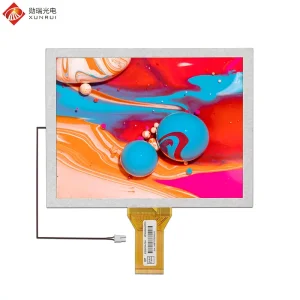
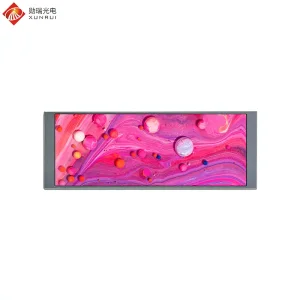
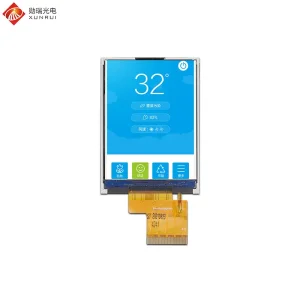
Integrate our broader display portfolio into your hardware ecosystem, ranging from compact 2.0" smart modules to 10.1" high-definition widescreen solutions.





Initiate Your Custom 3.2" Display Project Today
Connect directly with our senior optical and firmware engineering department. Submit your mechanical step files, pinout requirements, or target operating environment for a detailed DFM analysis and rapid quotation within 24 hours.
Request Technical Consultation & Samples