
Precision Display Modules: Tier-1 Production Units
Explore our industrial-grade catalog modules engineered for direct sunlight readability, extended thermal thresholds, and drop-in integration.

Custom 3.5 inch 1000nit High Brightness IPS TFT LCD Module
View Specifications & OEM Quote
China 3.5 inch TFT LCD display 320×240 RGB 54pin interface 350nit TN Screen
View Specifications & OEM Quote
Custom 23.8 inch 1920×1080 IPS TFT LCD display with capacitive touch panel
View Specifications & OEM Quote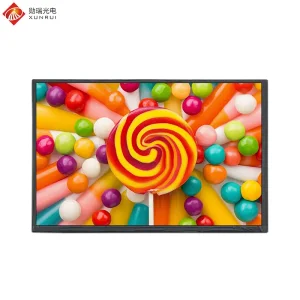
China 10.1 inch 1920×1200 LVDS 45pin 350nit IPS TFT LCD Display
View Specifications & OEM Quote
Custom 2 inch 176×220 MCU 45pin interface 220nit TN TFT LCD Module
View Specifications & OEM Quote
China 10.1 inch TFT LCD module 1280×800 LVDS 40pin interface 350nit IPS screen
View Specifications & OEM Quote
China 4.3 inch 480×272 RGB 40pin interface 350nit TN TFT LCD module
View Specifications & OEM Quote
Custom 10.1 inch 1024×600 TN TFT LCD display with resistive touch panel
View Specifications & OEM QuoteThe Global Commercial & Industrial Paradigm of 4-Inch Full-View LCDs
A rigorous examination of why 4.0-inch IPS (In-Plane Switching) display geometry represents the inflection point in modern human-machine interface (HMI) design.
Physics of Full View: Eliminating Gray Inversion
In standard Twisted Nematic (TN) architectures, liquid crystal molecules twist perpendicular to the glass substrate. When an operator views the panel off-axis, the phase retardation of the transmitted light causes catastrophic grayscale inversion—typically around the 6 o'clock or 12 o'clock perspective. In mission-critical environments such as clinical monitoring or industrial automation consoles, this failure to decipher real-time data introduces severe operational risks.
By contrast, true 4-inch full-view displays leverage In-Plane Switching (IPS) or Fringe Field Switching (FFS) technology. The crystal molecules rotate purely in the horizontal plane parallel to the glass substrates. This alignment preserves color fidelity, contrast ratio (>800:1), and luminance uniformity across symmetrical 85°/85°/85°/85° or 89°/89°/89°/89° viewing cones (left/right/up/down), completely extinguishing inversion artifacts regardless of orientation.
Geometry Convergence: 480x480, 480x800 & 720x720 Formats
The 4-inch display landscape has undergone a major transformation away from rudimentary rectangular displays to specialized high-density aspect ratios. The explosive growth of IoT smart home hubs, rotary knob interfaces, and automated building controllers has elevated the 1:1 square aspect ratio (480×480 and ultra-sharp 720×720 resolutions) into a global standard.
Engineered to drop seamlessly into standard European/British 86×86mm wall switch backboxes and American single-gang enclosures, a custom 4-inch panel maximizes active area (A.A.) while maintaining structural clearance for power transformers, Wi-Fi/Zigbee transceivers, and terminal blocks. For industrial handhelds, the 480×800 WVGA format remains the preferred choice, offering 235 PPI clarity without burdening cost-sensitive microcontrollers (MCUs) with extreme frame-buffer RAM requirements.
Engineering Core Insight: When sourcing custom 4-inch full-view LCD panels, pixel density and viewing angle are only half the battle. Precision optical matching between the driver IC (such as ST7701S, ILI9806E, or ST7796), the glass substrate transmittance rate, and the LED backlight matrix efficiency determines whether the module operates within acceptable thermal dissipation envelopes in enclosed environments.
| Display Parameter | Legacy TN 4.0-inch | Standard Commercial IPS | Custom Industrial Full-View (XUNRUI Grade) |
|---|---|---|---|
| Viewing Angle (CR ≥ 10) | Top: 20°, Bottom: 40°, L/R: 45° | 80°/80°/80°/80° Typical | 85°/85°/85°/85° to 89°/89°/89°/89° Full View |
| Color Inversion | Severe at 6 or 12 o'clock | Minimal shifting | Completely Eliminated |
| Standard Luminance | 200 – 300 nits | 350 – 500 nits | 500 – 1200+ nits (Sunlight Readable) |
| Operating Temperature | -10°C to +60°C | -20°C to +70°C | -30°C to +85°C (Extended Automotive/Industrial) |
| Backlight MTBF (L50) | 15,000 – 20,000 Hours | 30,000 Hours | 50,000+ Hours with Constant-Current Driver |
Why Direct Sourcing from Shenzhen Factories Redefines OEM Competitiveness
Shenzhen Xunrui Optoelectronic Technology Co., Ltd. (est. 2016) combines localized component clustering with automated assembly to eliminate middleman margins and accelerate deployment.
Vertical Ecosystem Clustering
Situated in Shenzhen's Bao'an industrial corridor, our 5,000 m² production facility is within a 30-minute radius of glass cutting, FPC fabrication, driver IC packaging, and precision metal stamping plants. This geographic integration shortens material supply loops from weeks to hours.
De-Risked NPI Prototyping
Western and global OEMs routinely face prohibitive 5,000+ unit MOQ barriers when initiating custom tooling. Xunrui bridges this gap by offering low-volume NPI (New Product Introduction) trial runs of 5 to 500 units, enabling comprehensive pilot builds before scaling to mass manufacturing.
5-Gate Zero-Defect Quality Gates
Operating under certified ISO 9001 and ISO 14001 systems, every display panel undergoes five mandatory inspection gateways: IQC raw material screening, automated polarizers/glass inspection, FOG high-temperature burn-in aging, final finished assembly stress-testing, and outgoing OQC validation.
Engineering Touch & Glass Stacks for Rugged Environments
A modular display is only as reliable as its front-end protective cover, optical bonding medium, and communication interface protocol.
Optical Bonding (OCA / LOCA) vs. Air Gap Bonding
For outdoor terminals and medical devices, ambient sunlight reflecting off the internal boundary layers between the LCD glass and the top touch sensor washes out image contrast. Air gap tape bonding introduces two refractive index transitions (glass-to-air, air-to-glass), resulting in an approximate 8.5% loss of specular light transmittance.
Xunrui's custom cleanrooms provide advanced Full Optical Bonding using solid Optically Clear Adhesive (OCA) or Liquid Optically Clear Resin (LOCA). By filling the gap with an adhesive indexed to match display glass (n ≈ 1.51), internal reflections are reduced to below 0.2%. This structural bonding also dramatically enhances impact resistance (IK07/IK08 ratings), prevents internal condensation or fogging, and eliminates dust ingress permanently.
High-Performance Interface Selection: RGB, MIPI, SPI & MCU
Selecting the optimal interface depends directly on your system processor's architecture and performance requirements:
- MIPI DSI (Display Serial Interface): Essential for high-resolution 720×720 or 480×800 video streaming with minimal pin count (typically 4-lane differential signaling), drastically lowering EMI/RFI radiation in handhelds.
- RGB 18/24-Bit Interface: The traditional industry workhorse for real-time graphics rendering on embedded Linux / RTOS microprocessors without licensing overheads.
- SPI / MCU 8080 8/16-Bit: Ideal for compact 4-inch square or rotary dial displays driven by low-cost MCUs (e.g., STM32, ESP32), utilizing integrated GRAM to eliminate external frame buffer demands.
Custom Cover Lens Treatments
Anti-Glare (AG) chemical etching, Anti-Reflective (AR) optical sputtering, and Anti-Fingerprint (AF) oleophobic coatings provide smooth swipe feel and crisp readability in direct sunlight.
Industrial Glove & Water Touch
Tuned projected capacitive (PCAP) controllers (Goodix, FocalTech, Ilitek) allow flawless multi-touch input through nitrile gloves, thick work gloves, and surfaces with standing water droplets.
Extended Backlight Engineering
High-efficiency Nichia LED packages combined with dual-brightness enhancement films (DBEF) yield up to 1,500 nits of luminance without exceeding system thermal limits.
High-Reliability Applications for 4-Inch Custom Screens
From smart building ecosystems to mission-critical healthcare, custom 4-inch displays deliver the ideal balance of information density and power efficiency.
Smart Home 86-Box Controls
4.0-inch 480×480 and 720×720 square IPS panels embedded into wall panels for centralized HVAC thermostat management, lighting scenes, and intercom communication.
EV Charging Terminals
Sunlight-readable 1000+ nit displays with wide-temperature liquid crystal stacks (-30°C to +85°C) and IK08 tempered vandal-proof glass for outdoor payment interfaces.
Medical Diagnostic Devices
Handheld blood analyzers, infusion pump controllers, and patient monitors requiring consistent optical clarity across all viewing angles and chemical disinfectant resistance.
Industrial Test Instruments
Rugged digital multimeters, thermal imaging cameras, and pipeline inspection monitors requiring vibration resistance and custom FPC designs for tight enclosures.
Global Buyer's Specification & RFP Evaluation Checklist
Mitigate sourcing risks and avoid costly design revisions with this engineering checklist tailored for custom 4-inch display modules.
1. Mechanical & Structural Integration
- Active Area (A.A.) vs. Outer Dimensions (O.D.): Confirm border symmetry and ensure display centering matches housing bezel cutouts.
- FPC Routing & Grounding: Specify custom gold-plated flexible printed circuit (FPC) lengths, stiffener materials (PI or FR4), and integrated EMI shielding foil to pass CE/FCC compliance testing.
- Total Module Thickness (TMT): Account for optical bonding glue gaps (typically 0.15mm–0.25mm) and custom cover lens step-glass thickness.
2. Electro-Optical & Thermal Dynamics
- Driving Voltage & Power Budgeting: Verify whether LED backlight strings require external high-voltage boost circuits or internal constant-current ICs on the mainboard.
- Operating & Storage Thermal Margins: Specify whether liquid crystals need isotropic clearing points above +105°C to avoid solar black-out spots in outdoor enclosures.
- Optical Coatings: Specify gloss levels (60° gloss test) for anti-glare etching to prevent hazy contrast under high-intensity task lighting.
Frequently Asked Engineering & Sourcing Questions
Direct answers from our senior display engineering and cleanroom manufacturing teams.
What is the typical tooling lead time for a custom 4-inch FPC and backlight?
Custom FPC layout and tooling typically take 10 to 14 working days. Backlight frame molds and light-guide plate (LGP) tooling require approximately 15 to 18 days. Initial engineering qualification samples (5 to 10 pcs) are dispatched within 20 to 25 calendar days following drawing sign-off.
Can you provide sunlight readability without increasing power consumption?
Yes. In addition to high-efficiency LED arrays, we apply transflective polarizers or specialized optical enhancement films (such as 3M DBEF/ESR). These redirect ambient sunlight back through the liquid crystal cell, creating passive contrast reinforcement and delivering readable performance outdoors at lower operating currents.
What minimum order quantity (MOQ) applies to fully customized projects?
Following initial prototype testing, we offer a small-batch pilot validation run of 5 to 500 units. For mass production runs featuring fully custom tooling (custom FPC, backlight, and cover glass), our baseline MOQ starts at 1,000 units, providing accessible entry for specialty B2B devices.
How does your factory handle long-term product lifecycle continuity?
We understand that industrial, automotive, and medical platforms require guaranteed availability for 5 to 7+ years. Xunrui maintains strategic agreements with tier-1 glass fab suppliers and driver IC vendors. In the event of a component obsolescence notice, we provide a minimum of 6 months' notification and recommend drop-in Pin-to-Pin replacements.
High-Performance Displays for Mission-Critical Engineering
Comprehensive standard and customized TFT panels engineered for specialized industrial, automotive, and consumer platforms.

Custom 3.5 inch 320×240 960nit IPS TFT LCD With capacitive touch panel
View Specifications & OEM Quote
Custom 4.3 inch 480×272 IPS TFT LCD display with capacitive touch panel
View Specifications & OEM Quote
Custom 6.9 inch 280×1424 MIPI 30pin interface long strip IPS TFT LCD module
View Specifications & OEM Quote
Custom 21.5 inch 1080×1920 LVDS 30pin 250nits IPS TFT LCD Display
View Specifications & OEM Quote
Custom 8 inch 1280×720 LVDS 1000nit High Brightness IPS TFT LCD Module
View Specifications & OEM Quote
Custom 5 inch 480×854 RGB 40pin 1000nit IPS TFT LCD Module
View Specifications & OEM Quote
China 7 inch 800×480 RGB 40pin 450nit TN TFT LCD Display
View Specifications & OEM Quote
China 4.3 inch 800×480 IPS TFT LCD Module with capacitive touch panel
View Specifications & OEM QuoteAccelerate Your Custom Display Program
Submit your mechanical 3D models, interface specifications, and environmental targets directly to our Shenzhen engineering team. We review thermal design, interface pinout matching, and optical bonding feasibility within 24 hours.
Initiate Engineering Consultation