

Primary Modular Portfolio
Standard & High-Density Display Modules
Explore our foundational range of industrial-grade TFT panels, engineered for high thermal tolerance, low EMI emissions, and extended production lifecycles.


Ultra-High Brightness 1300nit
China 8 inch 1024×600 1300nit TN TFT LCD with capacitive touch panel Manufacturers, Factory

Capacitive Touch / Compact
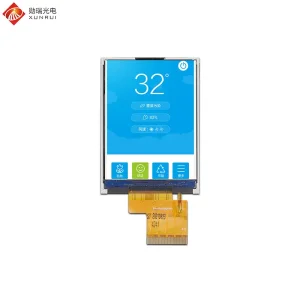
China 5 inch 480×272 TN TFT LCD Module with capacitive touch panel Manufacturers, Factory



Technical Whitepaper & Optical Insights
Engineering Anatomy of Custom 4 Inch HD IPS Displays
A rigorous industrial perspective on why the 4.0-inch IPS form factor serves as the golden standard for edge-computing human-machine interfaces (HMI).
True 80/80/80/80 Symmetrical Viewing Cone
Unlike twisted nematic (TN) panels prone to grayscale inversion and contrast degradation when viewed off-axis, our custom 4 inch HD IPS displays utilize liquid crystals aligned parallel to the glass substrates. This architecture guarantees a uniform 178° viewing angle with uncompromised chromatic fidelity across industrial control enclosures.
High Pixel Density & Optical Clarity
With resolutions scaling to 480×800 or 720×1280 (HD), pixel density exceeds 300 PPI. This micro-fine pitch delivers crisp scalar typography, critical for multi-variable telemetry and medical waveform diagnostics where sub-pixel rendering prevents operator interpretation error.
EMI-Hardened Driver IC Integration
Equipped with industrial controller ICs (e.g., ST7701S, ILI9806E, or NT35510), our modules feature specialized differential impedance matching on MIPI DSI / RGB lines. This suppressive routing prevents signal degradation caused by neighboring VFD motors, relays, and switching power supplies.
Global Industry Panorama
Commercial Status & Supply Chain Dynamics
Analyzing the macro trends accelerating adoption of customized 4-inch display matrices across Western and APAC industrial automation markets.
The Demise of Monochromatic Segment Displays
Global Tier-1 device manufacturers are phasing out STN/FSTN segment screens. The sharp reduction in IPS fab costs has allowed high-resolution 4.0-inch panels to reach parity in bill-of-materials (BOM) cost while expanding UI responsiveness for IoT field units.
Form-Factor Specialization (Square & Stretched)
Beyond traditional 16:9 or 4:3 ratios, customized 4.0-inch formats—such as 1:1 square screens (720×720) for rotary thermostat knobs or ultra-wide bar types—are gaining rapid adoption in automotive center stacks and premium European white goods.
Demanding Field Environments
Industrial applications increasingly require operation under zero-condensation humidity and broad thermal ranges (-30°C to +85°C). Meeting these environmental conditions requires custom high-Tg polarizers and anti-UV optical adhesives configured at the factory level.
Manufacturing Precision
Enterprise Production Capability & Audited Metrics
Our Shenzhen manufacturing hub delivers end-to-end cleanroom fabrication from COG/FOG bonding to customized optical lamination.
5,000 m²
Class 1,000 / 10,000 Cleanroom Area
2,000,000
Monthly Module Output Capacity
ISO 9001/14001
Certified Quality Management Systems
5-Stage
Total Gate Quality Inspection Routine
FOG / COG Precision Bonding
High-speed automated chip-on-glass and flex-on-glass mounting platforms with real-time optical alignment check tolerances down to ±3μm, ensuring ultra-reliable interconnects for harsh, high-vibration applications.
OCA / LOCA Optical Bonding
Full optical bonding of cover lens to LCD cell in-house. Eliminates internal air gaps, drops ambient reflectivity below 1.5%, prevents fogging, and dramatically improves impact resistance to IK08+ ratings.
Accelerated Environmental Aging
100% of finished display assemblies undergo continuous thermal and electrical load aging (50°C, 48 hours minimum) to identify early failures before warehouse packaging and transoceanic dispatch.
Application Engineering
Where 4 Inch HD IPS Displays Deliver Strategic Advantage
Field-proven deployments where compact optical clarity and robust environmental resistance directly influence product success.
Clinical Portable Diagnostics & Infusion
Handheld blood analyzers, ultrasound devices, and infusion pumps demand flawless off-axis viewing so clinicians can assess data without repositioning. Our custom 4-inch IPS screens feature anti-microbial, chemically strengthened cover glass that withstands harsh hospital disinfection protocols.
Smart Metering & Grid Substation Displays
Utility-grade IoT collectors installed outdoors or in unconditioned basement hubs require prolonged static imagery without image sticking or ghosting. We specify anti-burn-in liquid crystal chemistries and wide-temperature backplanes (-20°C to +70°C operating window).
Premium Connected Home & HVAC Nodes
Modern luxury architectural automation centers replace physical toggles with flush-mounted 4-inch IPS capacitive touch screens. Custom glass shaping, ceramic border silkscreens, and anti-fingerprint (AF) oleophobic coatings blend display hardware into contemporary building aesthetics.
OEM Architecture Workflow
Factory Customization Process & Phase Gates
A disciplined 6-stage engineering path engineered to mitigate risk when scaling from low-volume prototypes to mass production.
1 Mechanical & Electrical Audit
Reviewing enclosure CAD models, space limitations, interface preferences (SPI/RGB/MIPI), driving power limits, and thermal ventilation to prevent design bottlenecks.
2 Tooling Design & FPC Routing
Drafting custom flexible printed circuits (FPC) with gold immersion fingers, tailored pin mappings, component shielding, and custom cover lens step files within 5-7 business days.
3 Rapid Prototyping & Tuning
Building 5-10 evaluation samples. Performing initial color balancing, backlight chromaticity binning, and capacitive firmware tuning for moisture and thick glove use.
4 Pilot Batch Verification
Facilitating intermediate production runs of 5 to 500 units. This allows customers to assemble complete end-products for CE/FCC testing and field trials before mass-tooling commitment.
5 Scale Production (MOQ 1000+)
Moving into our Class 1,000 automated manufacturing lines. Raw materials, IC lots, and glass cassettes are tracked under lot traceability to safeguard production stability.
6 Multi-Check Outgoing QC
Every lot passes IQC, In-line optical inspection, automated AOI defect identification, thermal aging, and vibration testing prior to air and ocean dispatch.
Future-Proofing Hardware
Technology Roadmap: The Next Era of 4" IPS Modules
Emerging innovations in backplane materials, touch integration, and energy efficiency planned for next-generation platforms.
TDDI (Touch and Display Driver Integration)
Transitioning from dual-FPC structures (separate touch and display ICs) toward single-chip TDDI configurations. This eliminates one flex cable, reduces module thickness by up to 0.4mm, cuts parasitic capacitance, and lowers bill-of-materials costs.
Mini-LED Local Dimming Arrays
Replacing perimeter edge-lit LED strips with zoned mini-LED backlights. This architecture brings OLED-level contrast ratios (>100,000:1) and deep blacks to 4-inch industrial panels while avoiding the burn-in vulnerabilities of organic diodes.
Ultra-Low Power Reflective & Transflective Modes
Integrating hybrid micro-reflectors behind the liquid crystal layer. This design leverages outdoor ambient light to illuminate the display matrix, reducing active LED drive power by up to 70% in battery-operated field meters.
Procurement & Engineering Intelligence
Frequently Asked Questions
Clear, direct answers for hardware designers, embedded engineers, and procurement teams evaluating customized IPS displays.
What display sizes does our manufacturing facility produce?
We produce an extensive portfolio of TFT LCD modules ranging from 0.96 inch up to 27 inch. Our most in-demand configurations include 1.8", 2.1", 3.5", 4.0", 4.3", 5.0", 5.5", 7.0", 8.0", 9.0", 10.1", 11.6", 13.3", and 15.6" formats, available in conventional landscape/portrait rectangles, precision circular shapes, bar types, and balanced 1:1 squares.
What minimum order quantity (MOQ) applies to custom 4-inch projects?
Following formal CAD sign-off and engineering sample approval, we offer a dedicated, one-time small-batch trial production run of 5 to 500 units. This allows you to evaluate mechanical fits and firmware compatibility. For fully customized mass-production iterations (custom FPC, high-nit backlights, tailored glass shapes), our standard factory MOQ is 1,000 units. Standard catalog items can be purchased in lower quantities.
Which physical and electrical parameters can be customized on a 4-inch panel?
Virtually all optical and mechanical layers can be modified: active area dimensions, outer border boundaries, total module thickness, backlight brightness (from standard 300 nits to sunlight-readable 1,500+ nits), FPC routing shape, length, and EMI shielding. We also support multiple interfaces (MCU, SPI, RGB, MIPI DSI, LVDS), cover glass thickness (0.5mm to 6.0mm chemically tempered), and custom touch sensor coatings (anti-glare, anti-reflective, anti-fingerprint).
How does our cleanroom facility maintain quality control and defect avoidance?
Production follows a strict 5-stage quality gate routine certified to ISO 9001 and ISO 14001: 1) IQC Incoming inspection on bare glass cassettes, backlights, and driver chips; 2) Microscopic glass defect and particle inspection; 3) FOG / COG automated optical bonding inspection followed by operational burn-in; 4) Finished product high-temp aging and parameter checks; and 5) Final OQC outgoing inspection before shipment.
Capacitive (PCAP) vs. Resistive (RTP) touch: Which is best for 4-inch modules?
Projected Capacitive (PCAP) touch is ideal for multi-touch gestures, high optical clarity (>90% transmission), and sleek edge-to-edge flush glass designs commonly specified for medical devices and smart-home interfaces. Resistive Touch (RTP) remains the preferred, cost-effective option for rugged industrial HMIs and outdoor equipment where operators wear thick safety gloves, utilize passive styluses, or work in environments with heavy electrical noise and direct water spray.
Extended Ecosystem Solutions
Application-Specific Modular Displays
Specialized display variants including circular smart dials, high-definition EDP interfaces, and resistive touch-integrated models.

Resistive Touch / 800×480
China 4.3 inch 800×480 IPS TFT LCD Module with resistive touch panel Supplier, Factory

EDP 30-Pin / Full HD
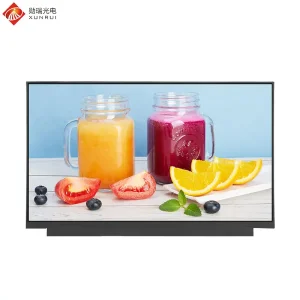
China 13.3 inch 1920×1080 EDP 30PIN 280nit IPS TFT LCD Module Suppliers, Factories

RGB 60-Pin Industrial
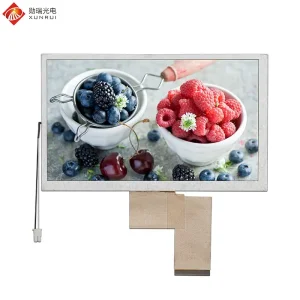
Custom 8 inch 800×480 RGB 60pin 350nit TN TFT LCD Module Manufacturers, Factories

Circular MIPI Rotary UI
China 1.8 inch 360×360 MIPI 30pin 400nit IPS Circular TFT LCD Module Manufacturer, Suppliers


800×480 Resistive Interface
Custom 7 inch 800×480 TN TFT LCD display with resistive touch panel Supplier, Factory