
High-Performance Custom TFT & IPS Display Modules
Explore our core selection of custom embedded TFT-LCD displays, spanning sub-compact IoT modules to high-luminance industrial and wide-aspect automotive visual components.
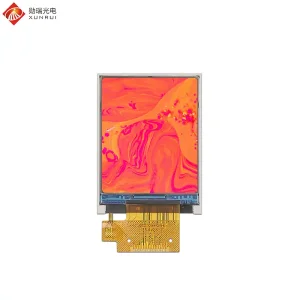
Custom 1.77 inch 128×160 SPI 14pin 250nit TN TFT LCD Module Supplier, Suppliers
Configure & Inquire
Custom 5 inch 480×854 RGB 40pin 1000nit IPS TFT LCD Module Manufacturer, Manufacturers
Configure & Inquire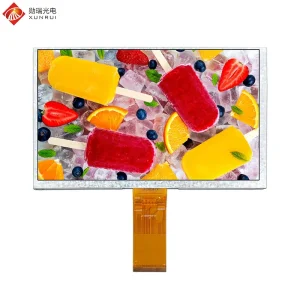
Custom 9 inch TFT LCD Module 1024×600 LVDS 60pin 400nit IPS Screen Suppliers, Factory
Configure & Inquire
Custom 8 inch TFT LCD module 800×1280 MIPI 31pin interface 480nit IPS screen Suppliers, Factories
Configure & Inquire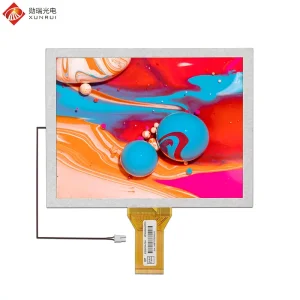
China 8 inch 800×600 RGB 50pin 350nit TN TFT LCD Display Manufacturers, Factories
Configure & Inquire
Custom 5 inch 800×480 RGB 50pin interface 500nit TN TFT LCD Display Suppliers, Factories
Configure & Inquire
China 12.3 inch 1920×720 EDP 60pin 400nit IPS Strip TFT LCD Display Supplier, Suppliers
Configure & Inquire
Custom 5 inch 800×480 TN TFT LCD display with capacitive touch panel Manufacturers, Suppliers
Configure & InquireOptoelectronic Architecture of Custom 6.2 Inch HD IPS Panels
A rigorous examination of molecular liquid crystal alignment, optical stack cohesion, high-speed differential signal integrity, and thermal dissipation paradigms in industrial display systems.
In-Plane Switching (IPS) Physics
Standard Twisted Nematic (TN) modules suffer from severe grayscale inversion and chromatic shift when viewed off-axis due to perpendicular molecular helical rotation. In contrast, 6.2-inch HD IPS panels arrange liquid crystal molecules along parallel horizontal electric fields.
This parallel realignment enables unhindered light transmission across 85° viewing cones in every quadrant (U/D/L/R). Color shift metric Delta E remains below 2.5 across critical visual angles, assuring mission-critical data precision in medical diagnostics and vehicle telematics.
- Zero grayscale inversion under extreme elevation
- 16.7M chromatic gamut coverage (8-bit real)
- Stable touch elasticity without ripple distortion
Differential High-Speed Interfacing
Driving a 720×1520 or 720×1560 high-definition resolution at 60 Hz progressive scan demands robust signal timing. Xunrui integrates advanced 4-lane MIPI DSI interfaces supported by low-power D-PHY physical transceivers.
By consolidating high-speed clock and bidirectional data streams over micro-strip differential pairs with 100Ω ±10% controlled impedance, electromagnetic interference (EMI) is drastically minimized, meeting CISPR 25 Class 5 automotive radiated emission limits.
- 4-Lane MIPI DSI / RGB / LVDS bridge support
- Ultra-compact pin-out with custom FPC shielding
- Integrated Sitronix / Ilitek driver IC protocols
Advanced Optical Stack & Direct Bonding
Air-gap integration creates double reflective boundaries (air-to-glass and glass-to-polarizer), generating internal reflection rates exceeding 8.5%. Xunrui deploys Class 1000 cleanroom full Optical Clear Adhesive (OCA) direct bonding.
By matching the refractive index of optical adhesive (n ≈ 1.49) directly to cover glass and top polarizer, boundary reflections plunge below 0.6%. Combined with anti-glare (AG) and anti-reflective (AR) sputtered layers, optical contrast in direct sunlight reaches unmatched clarity.
- Anti-Glare (AG), Anti-Reflective (AR), Anti-Fingerprint (AF)
- Mechanically shock-absorbing LOCA/OCA resin matrix
- Eliminates condensation and particulate ingress
Precision Mechanical & Optical Layer Composition
The physical architecture of a custom 6.2-inch HD IPS display is an intricate, multi-layered sandwich engineered for optical transmission, structural rigidity, and heat management. At its base, a precision constant-current LED matrix utilizes Nichia phosphor-converted white emitters, delivering pure spectral peaks across the sRGB triangle.
A high-efficiency optical diffuser, dual prismatic brightness enhancement films (BEF), and an ultra-thin 0.4mm chemically strengthened borosilicate glass substrate maximize active pixel luminance while curbing power consumption. Custom Flexible Printed Circuits (FPC) feature integrated ground copper stitching and ferrite shielding to prevent high-frequency RF leakage.
For rugged deployments, the outer cover lens is fabricated from chemically tempered aluminosilicate glass (Gorilla® or equivalent Panda glass), achieving surface hardness ratings above 7H or 9H on the Mohs scale, withstanding ball-drop tests per IK08 kinetic energy impact norms.
| Engineering Parameter | Standard Industrial Spec | Custom Engineered Range |
|---|---|---|
| Diagonal Active Area | 6.20 Inch Diagonal | Customized aspect ratios (18:9, 19:9) |
| Native Pixel Format | 720 (RGB) × 1520 / 1560 | Custom sub-pixel rendering configurations |
| Pixel Pitch / Density | ~271 to 287 PPI | High-density graphic clarity |
| Luminance (Cd/m²) | 400 – 500 nits (Indoor) | Up to 1,500 nits (Sunlight-readable) |
| Operating Temperature | -20°C to +70°C | Wide-temp -30°C to +85°C options |
| Touch Panel Stack | Projected Capacitive (PCAP) | Optical bonding + glove & water rejection |
| Touch Controller IC | I2C / USB HID (Goodix / Ilitek) | Firmware tuned for wet & 5mm glove usage |
Commercial Realities, Fab Yields & Industrial Supply Assurance
Decoupling your embedded product roadmap from erratic consumer display lifecycles through engineered silicon consistency, BOM stability, and disciplined fab allocation.
Gen 5.5 & Gen 6 Slicing Economics
The production economics of 6.2-inch HD IPS glass rely heavily on generation-scale mother-glass substrate utilization. At Xunrui's affiliated foundry hubs, parent sheets measuring 1500×1850mm (Gen 6) are partitioned via high-precision laser-cleaving setups.
Optimized nesting models achieve panel sheet yields above 93.4%, drastically mitigating cutting loss and driving stable per-unit economics for medium and high-volume industrial OEM programs.
Long-Term Lifecycle Protection (5–7+ Years)
Consumer smartphone displays face abrupt discontinuation after 12 to 18 months as consumer manufacturers chase fractional dimensional changes. Xunrui guarantees industrial lifecycle commitments of 5 to 7+ years on custom 6.2" IPS platforms.
We enforce strict BOM (Bill of Materials) freeze protocols, reserving dedicated masks for glass cutouts, driver ICs, and LED arrays, safeguarding buyers against costly mechanical re-tooling and PCB redesigns.
Dual-Sourcing Driver Silicon Architecture
Supply chain bottlenecks frequently emerge at the display driver IC (DDIC) level rather than the raw a-Si glass stage. Xunrui protects production lines through dual-IC firmware architecture.
Our engineering teams pre-validate pin-compatible driver IC architectures from Sitronix, Novatek, and Ilitek. Driver initial codes and timing registers are harmonized, ensuring uninterrupted factory shipments during chip allocation surges.
Localized Engineering Support & Global Compliance Framework
Enterprise procurement demands verified reliability. Every custom 6.2-inch HD IPS display module adheres to stringent environmental stress tests and international compliance frameworks.
ISO 9001 & ISO 14001 Quality Gates
Complete traceability via laser barcoding on raw glass, FPC sub-assemblies, and driver IC lots across all five inspection gates.
RoHS & REACH Compliance
Fully compliant with EU RoHS Directives (2011/65/EU and 2015/863/EU) and REACH SVHC regulations. Heavy metals, lead, and phthalate-free construction.
ESD & EMC Immunity
Certified to IEC 61000-4-2 standards, withstanding ±8kV contact discharge and ±15kV air discharge without panel latch-up or touch freeze.
Thermal Shock & Aging Chambers
Stress-screened under 240-hour thermal cycling from -30°C to +85°C and 60°C / 90% RH damp-heat exposure, preventing delamination and bubbling.
Application Scenarios for Custom 6.2" HD IPS Displays
How the 6.2-inch widescreen HD format redefines user interfaces across smart cockpits, rugged handheld computing, clinical diagnostic equipment, and critical industrial automation.
Smart Automotive Cockpits & Cluster Pods
In two-wheelers, light commercial vehicles, and agricultural machinery, dashboard real estate is severely constrained. The 6.2-inch HD IPS format (18:9/19:9) delivers a slim, ultra-wide visual ratio perfect for secondary pillar displays, digital rear-view mirrors, and auxiliary cluster pods.
With sunlight-readable backlighting up to 1200+ nits and wide-temp polarizers operating from -30°C to +85°C, instruments maintain crisp legibility in scorching direct sunlight or freezing winter mornings.
Rugged Industrial Handhelds & Barcode PDAs
Warehouse logistics, field inspection, and military handheld terminals require high pixel density for reading dense micro-QR matrices and vector schematics. The 720×1560 resolution (~287 PPI) renders hairline typography with razor sharpness.
Custom projected capacitive (PCAP) touch sensors incorporate advanced firmware algorithms calibrated for thick nitrile and leather work gloves, functional operation under surface water droplets, and drop-proof optical resin bonding.
Point-of-Care Medical Diagnostics
Portable ultrasound wands, blood gas analyzers, and patient infusion monitors require accurate, repeatable color representation. IPS liquid crystal architecture delivers true-to-life tone curves essential for reading subtle vascular pigmentation and waveform graphs.
Our cover lenses can be customized with antimicrobial coatings, chemical-resistant sealants that withstand hospital-grade bleach disinfectants, and complete optical bonding that eliminates bacterial voids.
EV Fast-Charging Terminals & Smart Retail
Outdoor unattended kiosks and payment terminals encounter vandalism, temperature swings, and prolonged UV exposure. Xunrui specifies UV-blocking glass laminations to prevent liquid crystal photolytic degradation and polarizer yellowing.
Integrating custom privacy filters or high-impact IK08/IK09 tempered glass ensures transactional security and durable vandal resistance for high-throughput unattended public operations.
Technical Roadmap: The Next Evolution of 6.2" IPS Displays
Anticipating next-generation embedded demands through Mini-LED local dimming, ultra-low power IGZO backplanes, and integrated Touch and Display Driver Integration (TDDI).
Mini-LED Matrix Local Dimming
Traditional edge-lit LED backlights suffer from light bleed in dark environments, limiting dynamic contrast. Xunrui's advanced display lab is piloting full-array local dimming (FALD) backplates for 6.2" form factors.
By integrating 512+ micro-LED dimming zones driven by pulse-width modulation (PWM), dark scenes achieve true zero-nit black depths, unlocking 100,000:1 contrast ratios and cutting overall backlight power consumption by up to 35%.
In-Cell TDDI Architecture
Conventional touch modules utilize external out-cell sensor glass (OGS or G+G), adding 0.7mm to 1.1mm of physical thickness and introducing capacitive noise paths.
Our next-generation roadmap transitions custom 6.2" IPS platforms to single-chip In-Cell TDDI (Touch and Display Driver Integration). By embedding touch receiver electrodes directly into the TFT substrate, total module thickness drops below 1.6mm while boosting touch signal-to-noise ratio (SNR) past 50 dB.
IGZO Backplanes & Dynamic Refresh
Indium Gallium Zinc Oxide (IGZO) semiconductor backplanes offer 20 to 50 times higher electron mobility compared to standard amorphous silicon (a-Si).
This elevated mobility enables microscopic transistor gate footprints, drastically expanding the optical aperture ratio and enabling ultra-low idle refresh rates down to 1 Hz during static metric monitoring. Portable battery life in field instruments increases by more than 40%.
Specialized Embedded Display Modules & Assemblies
Engineered hardware options across various screen diagonals, resolutions, and controller interfaces to support your broader instrumentation ecosystem.

Custom 10.1 inch 1024×600 1000nit High brightness TN TFT LCD module Factories, Factory
Configure & Inquire
Custom 3.5 inch IPS TFT LCD 320×480 MCU 40pin interface 300nit Manufacturer, Factories
Configure & Inquire
China 3.5 inch TFT LCD display 320×240 RGB 54pin interface 350nit TN Screen Manufacturer, Suppliers
Configure & Inquire
China 7 inch 800×480 1000nit Wide Operating Temperature Range TN TFT LCD Display Manufacturer, Manufacturers
Configure & Inquire
China 4.3 inch 800×480 IPS TFT LCD Module with capacitive touch panel Manufacturer, Suppliers
Configure & Inquire
China 1.3 inch 240×240 SPI 16PIN IPS TFT LCD Module With Capacitive touch Supplier, Factory
Configure & Inquire
China 5 inch 480×272 TN TFT LCD Module with capacitive touch panel Manufacturers, Factory
Configure & Inquire
Custom 4.3 inch 480×272 MCU/SPI 40pin 350nit TN TFT LCD Display Manufacturer, Factory
Configure & InquireEngineering Questions Answered by Display Architects
In-depth responses covering custom FPC routing, optical bonding parameters, sunlight-readability engineering, and qualification lead-times.