
Featured Industrial & Custom Display Modules (Batch I)
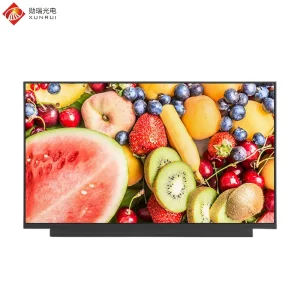
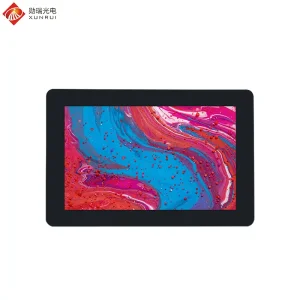
Engineered for immediate drop-in integration, hardware prototypes, and industrial deployment across smart handhelds, instrumentation, and control human-machine interfaces.




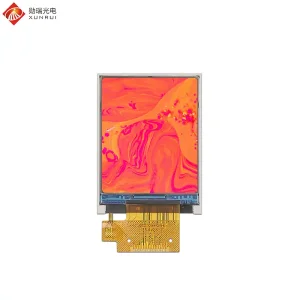

The Industrial Architecture of the 2.2-Inch TFT Display
Exploring spatial density, low-power bus configurations, and electro-optical reliability for high-density embedded human-machine interfaces.
Sub-Pixel Geometry & QVGA Resolution
The standard industrial 2.2-inch TFT LCD is built on a 240×320 QVGA pixel raster arranged in an RGB vertical stripe geometry. With an active area measuring approximately 33.84 mm (W) × 45.12 mm (H), the panel yields a pixel density of ~182 PPI (pixels per inch). This achieves razor-sharp scalar rendering for diagnostic waveforms, numeric telemetry, and multi-language vector fonts within ultra-compact spatial envelopes.
Driver IC Silicon: ST7789V & ILI9341V
Driven by monolithic display driver chips such as the Sitronix ST7789V or Ilitek ILI9341V, these micro-modules feature integrated on-chip display RAM (GRAM) frame buffers. By caching graphic data locally on the silicon die, the host MCU/MPU avoids excessive external refresh cycles, enabling deep sleep states on battery-powered edge devices while sustaining persistent zero-flicker static visual telemetry.
Thermal Dynamics & Liquid Crystal Stability
Unlike consumer-grade display panels that suffer from slow phase-transition states at sub-zero environments, Xunrui designs its 2.2-inch industrial line utilizing wide-temperature nematic liquid crystal fluids. This chemical formulation guarantees fluid clearing points above +95°C and prevents freezing crystallization down to -30°C, sustaining crisp 30ms response rates without image persistence or color inversion.
Global Supply Chain Dynamics & Procurement Strategy
Evaluating TFT-LCD vs. OLED longevity, raw substrate capacity, and mitigating life-cycle obsolescence across long-horizon industrial OEM projects.
TFT-LCD vs. PMOLED / Micro-OLED
While organic displays (PMOLED and Micro-OLED) offer pitch-black background states, industrial instrumentation OEM programs overwhelmingly select a-Si TFT-LCD modules. TFT displays exhibit zero differential sub-pixel burn-in when displaying static dashboards, feature predictable LED half-life curves surpassing 50,000 operating hours, and maintain complete optical stability under continuous ultraviolet (UV) sunlight exposure.
7–10 Year Guaranteed Availability
The primary failure mode in modern embedded engineering is premature component end-of-life (EOL). Xunrui addresses this risk through direct upstream cell partnerships with leading glass foundries. We secure multi-year glass wafer allocations and commit to strict 7 to 10-year product longevity roadmaps, ensuring medical and defense buyers avoid costly PCB redesigns and recertifications.
Substrate Cost & Yield Resiliency
By manufacturing within Shenzhen's consolidated photonics cluster, Xunrui capitalizes on mature Gen 4.5 and Gen 5 TFT substrate lines. This automated glass cutting and COG (Chip-on-Glass) architecture keeps yield rates above 99.2%, directly neutralizing supply volatility and safeguarding customer profit margins against global silicon price fluctuations.
Macro-Industry Integrated Display Solutions
Tailored electro-optical configurations solving critical environmental, electrical, and ergonomic challenges across global industrial sectors.
Smart Grid Metering & Substation Telemetry
Electric utility meters, gas flow computers, and grid monitoring relays require decades of non-stop operation under severe harmonic distortion. Our 2.2-inch modules incorporate shielded multi-layer FPCs with integrated ferrite chokes and ground rings, passing Class B radiated immunity (EN 55032) and surviving 8kV direct contact ESD discharges without driver lock-up.
Handheld Medical Diagnostic Instruments
For portable blood analyzers, pulse oximeters, and handheld infusion monitors, optical clarity is paramount. We engineer our 2.2-inch IPS variants to deliver true 85°/85°/85°/85° symmetrical viewing angles with high color uniformity (NTSC >65%), accompanied by antimicrobial, chemically tempered cover lenses resistant to harsh hospital sterilizers.
Defense & Rugged Field Communication
Tactical two-way radios, GPS surveyor units, and forestry inspection handhelds face dropping hazards, rain immersion, and direct desert sunlight. Xunrui equips these 2.2-inch displays with sunlight-readable backlights producing over 1,000 nits luminance, paired with transflective polarizers and IP67-sealed optically clear adhesive (OCA) bonds.
Standard & Custom 2.2-Inch Engineering Parameters
Comprehensive baseline hardware specifications alongside modular customization capabilities offered directly by Xunrui's engineering lab.
| Parameter | Standard Commercial Spec | Industrial Enhanced Spec | Fully Customized Options |
|---|---|---|---|
| Active Diagonal | 2.2 Inch (55.88 mm) | 2.2 Inch (Custom Cover Outlines) | Custom active display masks available |
| Pixel Resolution | 240 × 320 (QVGA) | 240 × 320 (QVGA) | Custom sub-pixel rendering architectures |
| Panel Technology | Twisted Nematic (TN) | In-Plane Switching (IPS) | Transflective / Sunlight Readable Film Stacks |
| Luminance (Brightness) | 250 – 350 cd/m² (Nits) | 500 – 800 cd/m² (Nits) | Ultra-High 1000+ Nits with constant-current drivers |
| Interface Support | 4-Wire SPI (Serial) | 8-Bit / 16-Bit Parallel MCU (8080) | Quad-SPI (QSPI), RGB 18/24-Bit, custom pin-outs |
| Controller / Driver IC | ST7789V / ILI9341V | ST7789VI / ST7789H2 | Customer-specified driver silicon bonding |
| Operating Temperature | -20°C to +70°C | -30°C to +80°C | Extended Automotive: -40°C to +85°C with ITO heaters |
| Touch Screen Interface | Optional 4-Wire Resistive (RTP) | Custom Capacitive Touch (PCAP) | Custom shape cover glass, anti-glare, IK08 impact |
Localized Application Scenarios & Regional Use Cases
Demonstrating how Xunrui's 2.2-inch TFT displays excel across varied environmental conditions and regulatory frameworks worldwide.
North American Smart HVAC & Building Automation
Deployed within smart thermostats, zoning dampeners, and commercial furnace controllers across the US and Canada. The 2.2-inch IPS wide-angle module ensures flawless readability from steep downward viewing angles on residential walls. Low power draw allows parasitically powered two-wire thermostat systems to maintain clear graphical interfaces without draining backup supercapacitors.
European High-Precision Industrial Metrology
Utilized by German and Swiss instrumentation makers for digital micrometers, vibration sensors, and industrial multimeters. In these applications, the display's compact 2.2-inch physical footprint accommodates narrow DIN-standard hand tools. Robust electromagnetic compatibility (EMC) protects measurement electronics from high-frequency inverter noise in heavy machine shops.
Asia-Pacific Mobile POS & Logistics Scanners
Powering hundreds of thousands of handheld payment terminals and express logistics barcode scanners across East and Southeast Asia. The optical bonding eliminates internal condensation during extreme humidity shifts, while chemical surface hardening prevents micro-scratches from keys, coins, and dropped surfaces during fast-paced parcel delivery operations.
Five-Stage Zero-Defect Quality Assurance & Compliance
Certified to ISO 9001 and ISO 14001, our Shenzhen plant adheres to rigorous gate controls to guarantee uncompromised optical and mechanical reliability.
5-Gate Inspection Protocol
Every single production lot passes through five structured inspection gates: (1) IQC incoming raw material screening, (2) automated optical inspection (AOI) for glass substrates, (3) FOG (Flex-on-Glass) hot-bar thermal bonding inspection, (4) finished module electrical and optical aging at elevated temperatures, and (5) OQC final pre-shipment audit.
Environmental & Chemical Compliance
All display components—including polarizers, liquid crystal materials, FPC bonding conductive pastes, and backlight light guides—fully comply with RoHS 3 (EU 2015/863), REACH (SVHC regulations), and Conflict Mineral reporting standards. Independent SGS testing reports are archived and accessible for client audits.
Mechanical Shock & Thermal Cycling
Sample units undergo rigorous stress qualification in our internal reliability chambers: 500 hours of continuous thermal shock (-40°C to +85°C with 5-minute dwell transitions), high-humidity bias testing (85°C / 85% RH for 240 hours), and 3-axis vibration testing conforming to MIL-STD-810G transportation requirements.
Technology Roadmap & Future Architecture (2025–2030)
Leading the transition toward ultra-efficient embedded display interfaces, hybrid reflective architectures, and integrated silicon bonding.
High-Speed QSPI & Octal-SPI Interfaces
To minimize PCB pin counts and enable the use of low-cost, ultra-compact microcontrollers (such as ESP32, STM32G0, and RP2040), our next-generation 2.2-inch controller roadmaps prioritize Quad-SPI and Octal-SPI protocols. These deliver frame update rates exceeding 45 FPS using only 6 signal pins, freeing up precious host MCU GPIOs for external sensors and wireless radios.
In-Cell TDDI (Touch and Display Driver Integration)
Traditional capacitive touch requires an external controller IC mounted either on the FPC or host motherboard. Xunrui's advanced R&D is implementing In-Cell TDDI architecture into small-format displays. By embedding touch sense electrodes directly between the sub-pixel arrays, we reduce overall module thickness by 0.6mm and eliminate the acoustic optical reflections found in air-gapped touch stacks.
Mini-LED & Transflective Hybrid Polarizers
Addressing zero-emission off-grid IoT monitors, we are combining ultra-low-power transflective cell polarizers with zoned mini-LED backlights. In full ambient sunlight, the module reflects ambient illumination for effortless reading with 0mA backlight power; in darkness, high-efficiency mini-LED edge lights activate with microampere power draw.
Frequently Asked Questions for 2.2-Inch TFT Projects
Direct answers to the most common optical, electrical, and commercial questions raised by global engineering and sourcing teams.
What is the difference between TN and IPS technology on a 2.2-inch TFT display?
What are the minimum order quantities (MOQ) and sample lead times for custom projects?
How can we achieve true sunlight readability on an outdoor 2.2-inch display?
Can Xunrui customize the FPC cable layout and connector interface?
Which communication interface is best suited for low-cost microcontrollers?
How does Xunrui prevent cold-temperature sluggishness and image sticking?
How does Xunrui protect customers against sudden component obsolescence (EOL)?
Featured Industrial & Custom Display Modules (Batch II)
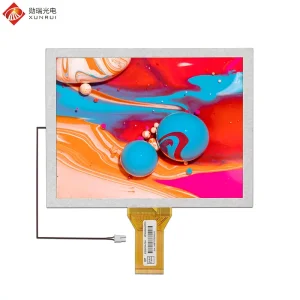
Explore our full line of round, square, HDMI, MIPI, and large-format industrial TFT modules for specialized visual human-machine systems.







Connect Directly with Xunrui Display Engineers
Whether you require a standard 2.2-inch QVGA sample evaluation kit, a customized FPC pinout drawing, or an optical bonding assessment, our Shenzhen technical team delivers engineering reviews within 24 business hours.