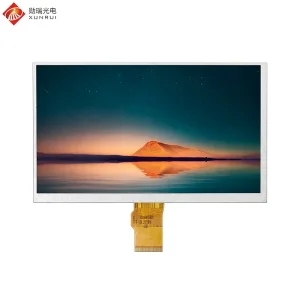
Featured Industrial & Portable TFT LCD Modules
From compact 1.44" smart telemetry displays to 10.1" wide-aspect HMIs, explore field-proven industrial panels precision-engineered in our Shenzhen cleanrooms.
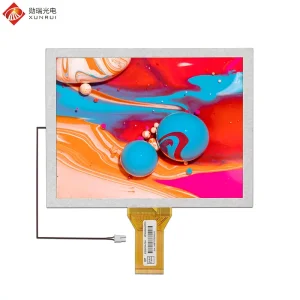





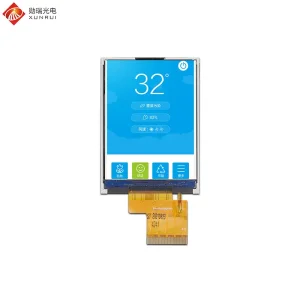
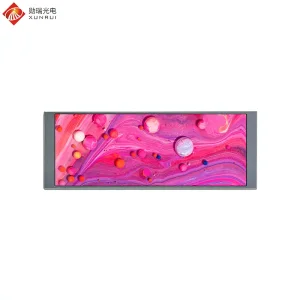
The Strategic Trajectory of 3.2-Inch HD Display Engineering
As smart devices downsize while analytical processing shifts to the edge, the 3.2-inch display form factor has emerged as the global golden ratio for sub-compact human-machine interfaces.
From QVGA to High-Definition IPS
Historically, the sub-3.5" sector was dominated by legacy 240×320 (QVGA) TN panels with severe grayscale inversion and restricted viewing cones. Modern 3.2" HD modules now integrate IPS (In-Plane Switching) and high-density active matrix arrays delivering HVGA (320×480), WVGA (480×800), and custom sub-HD formats. This shifts pixel density past 280+ PPI, eliminating jagged vector curves in medical graphs and industrial telemetry readings.
Sunlight Readability & Micro-Optics
Global field operations require uninterrupted optical performance under extreme ambient illumination (exceeding 80,000 lux direct sunlight). China's cutting-edge display fabrication leverages enhanced LED backlights generating 800 to 1200+ nits, integrated with circular polarizers and transflective micro-structures. When bonded with anti-reflective (AR) and anti-glare (AG) coated cover glass, internal specular reflection drops below 1.2%.
Severe-Environment Longevity
Unlike commercial consumer glass, modern 3.2-inch industrial HD displays operate across extended temperature profiles of -30°C to +85°C. High-clearing-point liquid crystal formulations prevent solar blackening (isotropy), while wide-temperature driver ICs (such as ST7796, ILI9488, and HX8357 series) prevent gate leakage and refresh stutter in freezing or high-heat environments.
Addressing Global Enterprise Sourcing Bottlenecks
Procuring specialized small-form-factor displays typically exposes enterprise hardware teams to obsolescence shocks, non-recurring engineering (NRE) traps, and supply friction.
Component EOL & Silicon Risk
Tier-1 glass fabs frequently retire small motherglass cuts in favor of large TV/tablet runs. Chinese specialized manufacturers bridge this by securing dedicated cell allocation agreements, locking driver IC silicon masks, and guaranteeing form-fit-function mechanical continuity for 5–10 project lifecycles.
High NRE for Niche Projects
Western and Japanese display suppliers regularly mandate initial NRE fees upwards of $30,000 for customized pinouts or optical bonding. Direct Shenzhen factory engagement slashes tooling hurdles, providing modular FPC adaptation and laser glass trimming at competitive trial thresholds.
Interface & Driver Mismatch
Hardware architects constantly struggle with MCU bus speeds vs bandwidth requirements. China's top suppliers engineer flexible FPC stacks supporting 8080 MCU parallel (8/16-bit), 3/4-wire SPI + RGB interfaces, and MIPI DSI lane configurations to match low-power microcontrollers or high-end SoCs.
Batch Heterogeneity & Tint Shifts
Uncontrolled wafer mixing causes unacceptable color temperature shifts and luminance decay between production batches. Rigorous factory IQC and automated chromaticity binning ensure tighter white point tolerances (within ±0.015 on CIE 1931 coordinates) across multi-year runs.
| Evaluation Parameter | Legacy 3.2" TN Panel | High-Tier 3.2" HD IPS Display | Customized Industrial Specification |
|---|---|---|---|
| Native Resolution | 240 × 320 (QVGA) | 320 × 480 (HVGA) / 480 × 800 (WVGA) | Up to 720 × 1280 (HD Custom) |
| Viewing Angle (U/D/L/R) | 45° / 50° / 60° / 60° (Inversion prone) | 80° / 80° / 80° / 80° (Free View) | 85° / 85° / 85° / 85° (Full Symmetric IPS) |
| Standard Brightness | 180 – 250 cd/m² | 350 – 500 cd/m² | 800 – 1,200+ cd/m² (Sunlight Readable) |
| Operating Temperature | -10°C to +60°C | -20°C to +70°C | -30°C to +85°C (Automotive/Heavy Marine) |
| Touch Sensor Technology | Resistive (RTP) 4-Wire Film | G+F / G+G Projected Capacitive | Optical Bonded PCAP w/ Glove & Wet Tracking |
| Interface Availability | Legacy 8080 MCU 8-bit / SPI | 8080 16-bit / RGB 18/24-bit / SPI | MIPI-DSI (2-Lane) / QSPI / Dual SPI |
Mission-Critical Deployment Scenarios
From sterile medical wards to high-EMI factory floors, discover how specialized 3.2-inch HD panels deliver robust, field-tested performance.
Medical Diagnostics & Infusion Systems
Point-of-care ultrasound handles, patient syringe pumps, and telemetry pulse oximeters demand clean, high-contrast waveforms. 3.2" IPS displays with chemically hardened Corning® Gorilla Glass or AGC Dragontrail™ survive daily hospital chemical disinfection (isopropyl alcohol, bleach solutions) without clouding, while optical bonding guarantees zero parallax and moisture ingress in sterile settings.
Industrial Handheld Test & Measurement
Thermal imagers, gas detection analyzers, and handheld digital multimeters face brutal field drops and dirty electrical noise. Our 3.2" modules incorporate resistive touch layers or high-noise-immunity PCAP controllers (FocalTech / Goodix) certified for IEC 61000-4-6 Conducted Immunity. Technicians can operate machinery wearing heavy industrial leather or nitrile gloves without false inputs.
Smart Energy & Building Automation
Next-generation HVAC rotary thermostat knobs, residential EV wallbox chargers, and solar inverter monitoring panels utilize circular or compact 3.2" rectangular screens. Equipped with sleep-mode power throttling down to <15μA and fast wake-up SPI handshakes, these displays provide dynamic status reporting while aligning with stringent ErP European energy efficiency mandates.
Five-Gate Quality Assurance & Global Compliance
Our ISO 9001 and ISO 14001 certified production ecosystem operates under strict multi-layer quality gate checks to guarantee zero defects across global supply runs.
5-Stage Zero-Defect Inspection Gate
Every single 3.2" module passes through five mandatory inspection checkpoints: (1) IQC for substrate, polarizer, and driver IC lots; (2) Automated optical glass inspection; (3) FOG (Film-on-Glass) alignment inspection coupled with thermal shock aging; (4) Post-lamination full-screen dynamic pattern aging under 50°C load; and (5) Outgoing OQC covering mechanical dimensional tolerances, electrostatic discharge (ESD) resistance, and optical luminance uniformity.
Global Environmental & Safety Compliance
All display stacks and matching driver boards comply fully with European Union RoHS Directive 2011/65/EU and REACH (EC 1907/2006) SVHC thresholds, eliminating hazardous heavy metals and halogen compounds. Substrates meet UL94V-0 flammability ratings, and electromagnetic emission profiles are verified against EN 55032 Class B standards, ensuring friction-free customs clearance and swift regulatory certifications in North America, Europe, and Asia-Pacific.
Agile Supply Chain & Pilot Production
To eliminate capital risk for industrial engineers, our Shenzhen manufacturing facility supports an agile ramp-up framework: we offer rapid custom sampling, followed by small-batch pilot validation runs (5 to 500 units) to verify field performance and enclosure tolerances before committing to high-volume commercial production runs (>1,000 units).
Technology Roadmap: 3.2-Inch Display Next-Gen Architecture
Anticipating the technological curve over the next 3 to 5 years, display engineering is shifting toward ultra-efficient backplanes, touch integration, and advanced optical bonding.
TDDI (Touch and Display Driver Integration)
Traditional compact displays rely on two separate ICs: one for pixel driving and one for capacitive touch coordinate reporting. Next-generation 3.2" panels are rapidly transitioning to single-chip TDDI architectures. Consolidating the driver IC and touch controller onto the glass reduces FPC pin count by over 35%, slashes assembly labor, and dramatically reduces electromagnetic interference (EMI).
Micro-LED & Mini-LED Local Dimming
While standard edge-lit backlights produce satisfactory luminance, extreme contrast demands are driving the adoption of custom mini-LED matrix backlights for compact displays. Delivering >10,000:1 static contrast with local zone dimming, these configurations enable true blacks for night-vision avionic devices and surgical scopes while halving operational power draw.
Full Optical Bonding & Anti-Microbial Glass
Moving away from perimeter tape air bonding, direct LOCA (Liquid Optical Clear Adhesive) and OCA film bonding eliminate the internal air gap between the 3.2" LCD cell and cover glass. This completely prevents condensation in outdoor humidity, boosts impact resistance up to IK08 ratings, and allows permanent silver-ion antimicrobial chemical infusions for hygiene-critical medical tablets.
Frequently Asked Questions for Technical Procurement
Clear, engineering-driven answers to clarify interface selection, environmental endurance, touch integration, and sample lead times.
What are the key technical differences between a 3.2" TN display and a 3.2" IPS HD display?
Which interface should I choose: MCU 8080, SPI, RGB, or MIPI DSI for a 3.2" display?
• SPI (3/4-Wire): Ideal for low-pin-count microcontrollers (STM32, ESP32) displaying static data, icons, or slow telemetry curves.
• 8080 MCU (8/16-Bit Parallel): Features an internal graphic RAM buffer within the driver IC (e.g., ILI9488), enabling snappy UI redraws without continuous video stream output from the host MCU.
• RGB Interface (16/18/24-Bit): Suited for microprocessors running real-time video or high-FPS graphical operating systems, though it consumes more GPIO pins.
• MIPI DSI: Optimal for high-performance SoCs running Linux or Android, utilizing differential signaling to transmit HD video streams with minimal EMI and low wire counts.
What customization options are available for 3.2" TFT LCD modules?
1. Backlight Engineering: High-efficiency LED rail replacements achieving 300 to 1,200+ nits luminance for sunlight visibility.
2. FPC Customization: Custom flex cables with tailored pinouts, gold-plated gold fingers, integrated ZIF connectors, and EMI shielding foils.
3. Cover Glass & Optical Treatments: Chemically strengthened glass (0.55mm to 3.0mm thickness), custom silkscreen logos, chamfered borders, AG (Anti-Glare), AR (Anti-Reflective), and AF (Anti-Fingerprint) coatings.
4. Touch Solutions: Custom capacitive (PCAP) sensor shapes, glove touch firmware tuning, water rejection, or rugged 4-wire resistive touch panels.
What is the minimum order quantity (MOQ) and production turnaround time?
How do you guarantee long-term product availability for industrial & medical equipment?
Full Display Range & Accessory Integration Modules
Explore our broader display matrix ranging from circular smart knob screens to high-brightness LVDS automotive displays and complete driver board setups.