

Featured Optoelectronic Catalog
High-Precision Small & Medium Display Modules
Explore standard, customized, and high-brightness TFT LCDs engineered for edge computing, intelligent appliances, and medical-grade human-machine interfaces.
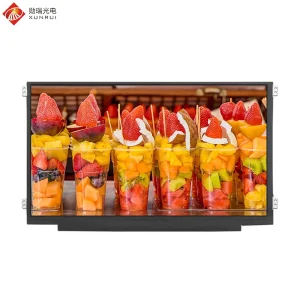
Custom 11.6 inch 1920×1080 EDP 30PIN 220nit IPS TFT LCD module Supplier, Suppliers
Explore Specs
China 4.3 inch 800×480 IPS TFT LCD Module with capacitive touch panel Manufacturer, Suppliers
Explore Specs
China 5 inch 480×272 TN TFT LCD Module with capacitive touch panel Manufacturers, Factory
Explore Specs
China 4.3 inch 800×480 1000nit High brightness IPS TFT LCD module Supplier, Factory
Explore Specs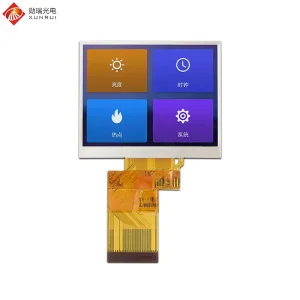
China 3.5 inch 320×240 RGB 54pin interface 350nit TN TFT LCD module Supplier, Factories
Explore Specs
China 4.3 inch 480×272 RGB 40pin interface 350nit TN TFT LCD module Manufacturer, Factories
Explore Specs
China 10.1 inch 800×1280 MIPI 40pin 350nit IPS TFT LCD Display Manufacturers, Suppliers
Explore Specs
Industry Whitepaper Analysis
The Strategic Rise of 4-Inch Display Modules in Modern Embedded Systems
Transitioning from legacy numeric indicators to responsive, high-density 1:1 square and customized aspect ratios across smart living, medical sensing, and industrial automation.
In the rapidly advancing landscape of embedded edge devices, the 4-inch display module has emerged as the premier sweet spot balancing physical dimensions, structural ergonomics, visual ergonomics, and processing load. Historically constrained to basic segmented liquid crystal or low-resolution TN matrix panels, global demand for 4-inch optoelectronic units has pivoted sharply toward all-viewing-angle IPS technology, 1:1 square aspect ratios (predominantly 480×480 and 720×720 pixels), and circular cutouts integrated into smart dials. As international original equipment manufacturers (OEMs) and original design manufacturers (ODMs) seek direct sourcing from verified Chinese fabrication facilities, selecting a manufacturing partner requires deep visibility into glass generation yields, driver IC compatibility, and optical bonding precision.
Standardization on 86-Type Wall Boxes
The global adoption of European and Asian 86mm×86mm electrical junction boxes has created an unprecedented demand for 3.95-inch and 4.0-inch square (480×480) IPS panels. These modules fit precisely inside the standard physical bezel envelope while leaving adequate space for internal thermal management, isolated AC/DC power supplies, and wireless Zigbee/Matter RF antennas.
Sunlight Readability & Thermal Balance
Outdoor human-machine interfaces—such as electric vehicle (EV) AC wallboxes, smart parcel lockers, and agricultural pump controllers—require optical output exceeding 800 to 1200 nits. China's top tier suppliers resolve the critical trade-off between thermal degradation and high-lumen LED arrays by utilizing customized aluminum reflective backplates and constant-current LED step-up drivers.
Low-Power Edge Microcontroller Pairing
Legacy RGB 24-bit interfaces demand continuous frame-buffer refreshing from expensive microprocessors running embedded Linux. Modern 4-inch display modules engineered by Chinese specialists offer flexible hybrid interfaces: high-speed 4-wire SPI + RGB, QSPI, or MIPI DSI, enabling direct driving via ultra-cost-effective MCUs such as ESP32-S3, STM32H-series, and low-power Cortex-M33 chips.
2016
Established in Shenzhen Hub
5,000 m²
Dust-Free Cleanroom Facilities
2,000,000
Monthly Module Output Capacity
5-Gate QC
IQC to OQC Full-Cycle Inspection
Technical Architecture
Engineering Decision Matrix: Sourcing 4-Inch Display Modules
A rigorous comparison of optical stack designs, interface bandwidth requirements, and environmental durability specs to guide electrical engineering and procurement decisions.
| Specification Parameter | Standard Commercial Grade | Industrial High-Reliability | Automotive / Outdoor Mission-Critical |
|---|---|---|---|
| Display Matrix & Resolution | 4.0" IPS 480×480 Square / 4.3" 480×272 | 4.0" IPS 480×480 / 720×720 Ultra-Sharp | Custom 4.0" Square or Circular TFT |
| Viewing Angle (CR ≥ 10) | 80/80/80/80 All View (IPS) | 85/85/85/85 Symmetrical True IPS | 88/88/88/88 Symmetrical Wide Viewing |
| Luminance (Backlight Optical Power) | 300 – 400 nits (Typical Indoor) | 500 – 800 nits (Semi-Outdoor) | 1000 – 1200+ nits (Direct Sunlight Readable) |
| Operating Temperature Window | -10°C to +60°C | -20°C to +70°C | -30°C to +85°C (Wide Temperature Grade) |
| Signal Protocol Architecture | RGB 24-bit / 8080 MCU 8/16-bit | 3/4-Wire SPI + 16/18/24-bit RGB | 2-Lane MIPI DSI / LVDS / Custom SPI |
| Touch Sensor Technology | Air-bonded Capacitive (G+F structure) | Optical Clear Adhesive (OCA) G+G Touch | OCA/OCR Bonded G+G, AG/AR/AF Treatment |
| Driver IC Integration | ST7701S / NV3052C / ILI9806E | ST7701S / GC9503V / Sitronix series | Automotive Qualified ICs (AEC-Q100 Tier) |
| Backlight Half-Life (MTTF) | 20,000 Hours (Commercial) | 30,000 – 50,000 Hours | 50,000+ Hours with Dimming Control |
Optical Bonding (OCR/OCA)
By filling the internal air gap between the TFT polarizer and the protective cover glass with index-matched optical adhesive (refractive index ~1.49), internal reflections decrease from 9% to under 0.5%, significantly boosting outdoor contrast while eliminating internal condensation.
Cover Glass Customization
XUNRUI provides chemical tempering (7H+ pencil hardness, IK08 impact rating), custom ceramic silkscreen printing, and chemical surface treatments including Anti-Glare (AG etching), Anti-Reflection (AR vacuum sputtering), and Anti-Fingerprint (AF hydrophobic oleophobic coating).
ESD / EMI Hardening
Industrial applications with inductive contactors require stringent electromagnetic compatibility. Our flexible printed circuit (FPC) routing incorporates double-sided silver foil shielding, dedicated TVS suppression diode clusters, and optimized return ground paths to withstand ±8kV contact and ±15kV air discharge.
Long-Term Supply Guarantee
Unlike transient consumer panel runs, industrial modules require prolonged field availability. We lock down mother glass substrate cuts from major foundries (BOE, HannStar, Tianma) and secure driver IC long-term commitments, providing a stable 5 to 7 year product lifecycle roadmaps with PCN notification.
Industrial Ecosystem
China Smart Factory 4.0: Supply Chain Resilience in Shenzhen
Inside the Pearl River Delta optoelectronic cluster: how Shenzhen Xunrui Optoelectronic combines raw component proximity, automated bonding, and agile batching.
International buyers often ask why China, and specifically the Shenzhen-Dongguan hardware corridor, manufactures more than 80% of the world's specialized small-to-medium TFT LCD modules. The answer lies beyond labor metrics; it is defined by a dense, unbundled supply ecosystem where glass cutting, polarizer slitting, LED die packaging, driver IC wafer bumping, custom FPC etching, and precision tooling reside within a two-hour logistics perimeter. At Shenzhen Xunrui Optoelectronic Technology Co., Ltd. (XUNRUI), founded in 2016, our facility harnesses this geographical density to deliver rapid NPI (New Product Introduction) cycles paired with automated Industry 4.0 assembly.
Five-Gate Quality Assurance System
Quality in high-density optoelectronics is verified at each transition. XUNRUI enforces five non-negotiable inspection gates: IQC Incoming Material Quality Control (polarizer integrity, ITO conductivity), Cleanroom Glass Automated Optical Inspection (AOI), FOG (Film on Glass) Bonding Inspection with Continuous Aging, Finished Display Matrix Electrical Testing with Thermal Cycling, and strict OQC Outgoing Inspection prior to anti-static vacuum packaging.
Automated High-Precision COG & FOG
Micro-pitch driver ICs and FPC interconnects require micron-level placement precision. Our Class 1,000 and Class 10,000 dust-free cleanrooms operate high-speed automated Chip-on-Glass (COG) and Flex-on-Glass (FOG) machines equipped with real-time CCD visual alignment, maintaining bonding planarity within ±3 microns and anisotropic conductive film (ACF) particle count adherence.
Agile MOQ & Prototype De-risking
Traditional Tier-1 display conglomerates demand 50,000 to 100,000 piece minimum order quantities (MOQ), stranding innovative medium-volume industrial programs. XUNRUI bridges this barrier: upon sample sign-off, we offer one-time trial pilot runs of 5 to 500 units, allowing overseas engineering teams to validate firmware, enclosure fits, and EMC certifications before committing to our standard custom production MOQ of 1,000+ units.
Application Engineering
Global Deployment Architecture: 4-Inch Module Use Cases
How specialized optical stacks and mechanical shapes solve user-interface challenges across diverse global environments.
Smart HVAC & Smart Home Panels
4-inch 480×480 square IPS displays mounted in standard 86-type architectural switch plates. Featuring high color saturation (NTSC > 70%), full viewing angles, and ultra-thin custom cover glass with black silk screening, delivering seamless integration for luxury smart home climate and lighting controls.
Medical Diagnostics & Infusion Pumps
Compact clinical instrumentation requires total image stability from sharp off-axis viewing angles and zero color distortion. XUNRUI supplies 4-inch IPS modules bonded with antibacterial, chemical-resistant cover glass capable of withstanding daily hospital disinfection protocols and saline exposure without false touch triggers.
Commercial EV Charging Terminals
Exposed to extreme environmental variance from -30°C winter frost to direct solar thermal loading (+50°C). Our 4.0-inch to 4.3-inch 1000-nit high-brightness modules feature wide-temperature liquid crystal fluid, UV-resistant polarizers, and optical bonding to completely eliminate internal solar fogging.
Automotive Rotary Knob Displays
Next-generation cockpit center consoles feature digital rotary knobs with integrated displays. Utilizing specialized circular or compact square 4-inch TFT LCD stacks driven via high-refresh SPI/QSPI interfaces, our modules support seamless physical dial rotation while maintaining rock-solid visual readouts.
Stage-Gated Reliability
Engineering Workflow: Custom Display Development Process
A systematic, transparent 6-stage engineering path from requirement definition to certified volume delivery.
01
Demand Analysis & DFM Review
Detailed evaluation of client mechanical CAD, enclosure boundaries, driver MCU bus limits, target power budget, operating temperature extremes, and optical requirements.
02
2D/3D Drawing Design & Sign-Off
Our engineering team drafts formal module schematics, custom FPC trace routings, backlight circuit topologies, and cover glass artwork dimensions for customer sign-off.
03
Tooling & Prototype Fabrication
Cleanroom laser cutting of polarizers, custom FPC tooling, initial COG/FOG bonding setup, and delivery of fully functional engineering evaluation samples (typically within 15–20 working days).
04
Trial Pilot Run (5–500 Pcs)
A specialized small-batch pilot build to stress-test manufacturing yields, verify client automated SMT/firmware flashing workflows, and eliminate assembly bottlenecks before volume ramp-up.
05
Full Scale Mass Production
Transition into full automated production with an MOQ of 1,000+ units. High-speed automated chip bonding, continuous in-line optical tracking, and yield monitoring under ISO 9001 governance.
06
Final Testing, Aging & Global Shipping
100% finished-product burn-in aging under temperature stress, OQC cosmetic and electrical auditing, followed by anti-static, shock-absorbing export packaging and scheduled global freight.
Procurement & Technical FAQ
Engineering Questions Frequently Asked by Global Sourcing Teams
Authoritative insights directly from our senior optical, hardware, and manufacturing engineering staff.
What makes 4-inch square displays (480×480) preferable over traditional 4.3-inch (480×272)?
The 4-inch square module offers a balanced 1:1 aspect ratio that integrates natively into square physical enclosures such as 86-box wall switches, home automation hubs, and multi-function rotary knobs. Additionally, 480×480 resolution provides 230,400 pixels compared to only 130,560 pixels on standard 4.3-inch 480×272 displays—a 76% increase in pixel density (PPI), producing significantly sharper text, circular gauges, and UI animations.
Can a 4-inch display module be driven by a low-cost microcontroller without external RAM?
Yes. While 24-bit RGB interfaces require an external frame buffer and substantial SRAM, our 4-inch modules equipped with controllers such as the ST7701S or GC9503V can be configured for SPI + RGB or QSPI modes. When paired with high-performance dual-core MCUs like the ESP32-S3 or NXP i.MX RT series equipped with internal PSRAM, full UI rendering (using LVGL or TouchGFX) can be achieved smoothly at 30–60 FPS without high-cost external DRAM.
What are the distinct advantages of optical bonding (OCA/OCR) versus tape perimeter bonding?
Tape air-bonding leaves a microscopic 0.2mm–0.5mm air gap between the display polarizer and the cover glass, which causes two reflective refractive index transitions (~4.5% reflection each), creates internal condensation in humid environments, and degrades sunlight legibility. Full optical bonding with Optically Clear Adhesive (OCA) or liquid resin (OCR) forms a solid, optically contiguous unit that maximizes ambient contrast, withstands higher mechanical shock (IK08+), and prevents dust or moisture ingress entirely.
How does XUNRUI manage custom tooling costs and NRE for OEM flex cable (FPC) alterations?
Customizing flexible printed circuits (FPC) to reposition connector pinouts, adjust cable length, or add dedicated EMI grounding is routine. We keep NRE (Non-Recurring Engineering) tooling costs highly economical—typically ranging from $300 to $800 depending on layer complexity—and frequently credit these tooling fees back against mass production milestone orders over 5,000 units.
How do you resolve capacitive touch panel (PCAP) false triggers caused by water or electrical noise?
Industrial touch sensitivity requires matched hardware and firmware calibration. We integrate advanced touch ICs (such as Goodix, FocalTech, or Ilitek) configured with mutual-capacitance sensing algorithms, frequency-hopping logic to ignore high-frequency inverter noise, and dedicated "water rejection" modes that recognize and reject static water droplets or moisture films while maintaining reliable glove touch operation.
What quality documentation and lifecycle support does XUNRUI provide for regulated projects?
Every production batch is accompanied by comprehensive Outgoing Quality Control (OQC) inspection reports, color temperature and luminous distribution charts, and material compliance documentation (RoHS, REACH). We provide guaranteed 5 to 7 year component availability roadmaps, issue formal Product Change Notifications (PCN) at least six months prior to any component revision, and supply last-time-buy (LTB) allocations to safeguard medical and industrial clients against line stoppages.
Complete Display Portfolio
Specialized Form Factors, Driver Boards & Integrated CTP
Engineered for high-volume manufacturing: industrial-grade resolutions, broad interface support, and tailored touch panel assemblies direct from Shenzhen.
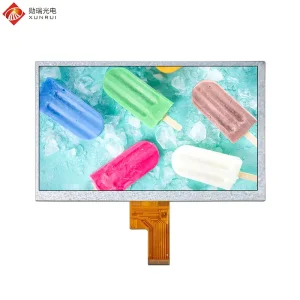
China 7 inch 1024×600 MIPI 30PIN 350nit IPS TFT LCD Display Manufacturer, Suppliers
Explore Specs
Custom 2 inch 480×240 RGB 40pin 150nit TN TFT LCD Display Supplier, Suppliers
Explore Specs
China 5 inch 800×480 1200nit High brightness TN TFT LCD module Suppliers, Factories
Explore Specs
Custom 5 inch 800×480 TN TFT LCD display with capacitive touch panel Manufacturers, Suppliers
Explore Specs
Custom 7 inch 1024×600 IPS TFT LCD display with capacitive touch panel Manufacturers, Suppliers
Explore Specs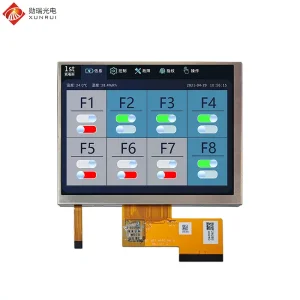
China 5.7 inch 640×480 RGB LVDS MIPI Interface IPS TFT LCD Module Manufacturer, Factory
Explore Specs
China 4 inch 480×480 RGB Square IPS TFT LCD Module with capacitive touch Manufacturer, Supplier
Explore Specs