
Active Module Inventory: Standard & Custom TFT LCD Solutions
Direct factory configurations engineered for immediate evaluation, rapid prototyping, and scalable volume manufacturing across medical, automotive, and industrial domains.
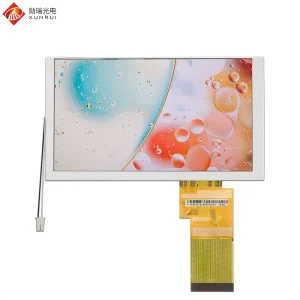
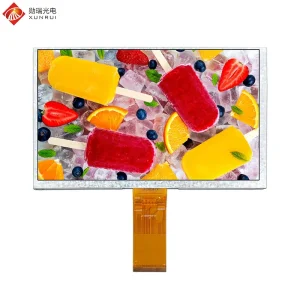

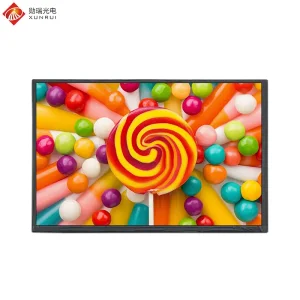
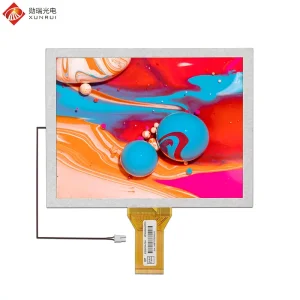



The 4.0" & 4.3" TFT Module Architecture: Physics, Substrates & Electro-Optics
An authoritative engineering breakdown of small-to-midsize Thin-Film Transistor Liquid Crystal Display architectures, covering liquid crystal molecular alignment, driver IC multiplexing, and thermal-optical stabilization.
Active Matrix Substrate Physics
At the foundation of industrial 4.0-inch and 4.3-inch TFT modules is the active matrix array. Modern panels leverage high-mobility amorphous Silicon (a-Si) or Low-Temperature Poly-Silicon (LTPS) backplanes. In a-Si substrates, hydrogenated amorphous silicon field-effect transistors switch individual sub-pixels via Indium Tin Oxide (ITO) pixel electrodes. For high-density 4-inch modules (reaching up to 720×1280 or 800×480 resolutions), LTPS offers electron mobilities exceeding 100 cm²/(V·s), yielding microscopic aperture ratios, reduced parasitic capacitance, and ultralow power consumption suited for battery-powered handheld instrumentation.
IPS vs. Twisted Nematic (TN) Dynamics
Selecting between In-Plane Switching (IPS) and Twisted Nematic (TN) defines product usability. While TN modules (e.g., 480×272 on 4.3") offer cost-optimized performance with rapid 15ms fall times, they suffer from severe grayscale inversion when viewed from suboptimal angles (often 6 o'clock or 12 o'clock). In contrast, our IPS 4.0" and 4.3" modules rotate liquid crystal molecules in a plane parallel to the glass substrate. This architecture provides symmetric 80°/80°/80°/80° or 85°/85°/85°/85° viewing cones without chromatic shift or contrast degradation, vital for medical and mission-critical diagnostic displays.
Driver IC Integration: COG vs. COF
Small-format TFT displays require rigorous space optimization. Our China manufacturing lines utilize automated Chip-on-Glass (COG) bonding with Anisotropic Conductive Film (ACF). High-density driver ICs—such as the ST7701S, ST7789V, ILI9806E, or OTA7001A—are bonded directly onto the extended TFT glass ledge at conductive ball pitches down to 12μm. For space-constrained mechanical enclosures requiring minimal bezel width, Chip-on-Film (COF) folding techniques wrap the driver circuitry underneath the backlight structure, ensuring a sleek mechanical footprint for next-generation smart home interfaces.
Engineering Insight: Eliminating Phase Retardation & Birefringence in Harsh Environments
In outdoor or extreme operating temperatures (-30°C to +80°C), conventional liquid crystal mixtures suffer from viscosity spikes, resulting in sluggish response times exceeding 200ms and phase retardation loss. By pairing wide-temperature nematic liquid crystal compounds with optimized polarizers featuring compensation films (Wide-View films), our 4.0" and 4.3" modules guarantee crisp, streak-free dynamic waveforms even in arctic cold or high engine-bay heat.
Why Global OEMs Source 4" TFT Modules Direct from Shenzhen, China
Shenzhen Xunrui Optoelectronic Technology Co., Ltd. (XUNRUI) exemplifies the unmatched agility, supply chain depth, and cost-to-performance ratio of South China's optoelectronics cluster.
Mother-Glass Fab Integration & Raw Material Stability
Our direct access to major Chinese Gen 5, Gen 6, and Gen 8.5 TFT-LCD mother-glass wafer foundries (such as BOE, Tianma, and IVO) allows Xunrui to secure stable cell allocations without intermediary price markups. While global Tier-1 panel manufacturers frequently discontinue legacy small-format lines to prioritize smartphone or TV fabs, our specialized Shenzhen facility preserves mask toolings and driver firmware stacks. We ensure an uninterrupted supply chain continuity of 5 to 7+ years for industrial HMIs, defense equipment, and diagnostic medical electronics.
Complete In-House Tooling & Rapid Customization Velocity
Unlike trading entities that resell fixed catalogs, Xunrui operates fully integrated FPC laser routing, precision backlight fabrication, and cleanroom optical bonding lines under one roof in Fuyong, Shenzhen. When an overseas client requests custom FPC pin-outs, altered backlight brightness, EMI copper foil shielding, or custom cover lens geometry, our engineering department delivers CAD layout verification within 48 hours. Rapid physical prototypes arrive in 7 to 12 days—drastically compressing your time-to-market compared to Western or Japanese lead times.
Signal Interfaces, High-Luminance Backlights & Touch Stacks
In-depth technical analysis of signal transmission protocols, optical luminance enhancements up to 1,500 nits, and advanced Projected Capacitive (PCAP) / Resistive touch surface lamination.
| Display Spec | 4.3" Standard Industrial | 4.3" High-Brightness IPS | 4.0" Portrait Smart Display | 3.5" Classic Micro-HMI |
|---|---|---|---|---|
| Resolution (Pixels) | 480 × 272 (WQVGA) | 800 × 480 (WVGA) | 480 × 800 (WVGA) / 720 × 1280 | 320 × 240 (QVGA) |
| Panel Technology | TN or IPS Full Angle | IPS (In-Plane Switching) | IPS / LTPS High PPI | TN or IPS Technology |
| Luminance Options | 250 to 500 nits | 800 to 1,200+ nits (Sunlight) | 350 to 800 nits | 300 to 600 nits |
| Standard Interface | RGB 24-bit 40-pin TTL | RGB 24-bit / 4-lane MIPI | MIPI DSI (2-Lane) / SPI+RGB | RGB 54-pin / MCU 8080 |
| Driver IC Example | OTA7001A / NV3047 | ST7262 / SC7283 | ST7701S / ILI9806E | HX8238D / ST7789V |
| Operating Temp Range | -20°C to +70°C | -30°C to +80°C (Extended) | -20°C to +70°C | -20°C to +70°C |
| Touch Sensor Type | 4-Wire Resistive / PCAP | Optical Bonded PCAP (I2C) | Capacitive Multi-Touch (G+G) | Resistive / PCAP Option |
High-Bandwidth Interface Protocols
Choosing the correct communication bus is critical to system throughput. Our 4.0" and 4.3" TFT modules support RGB 24-bit TTL for microcontrollers (such as STM32, NXP i.MX, and ESP32-S3), MIPI DSI for high-speed differential transmission with minimal EMI in Linux/Android platforms, and MCU 8080 8/16-bit parallel bus for legacy controller retrofits. For remote display links, our engineering team supplies integrated bridge boards converting native panel signaling to LVDS or HDMI with USB touch feedback.
Sunlight Readability & Backlight Thermal Sinking
Direct outdoor sunlight washes out conventional 250-nit screens due to high ambient reflection. Xunrui engineers custom LED light bars integrating Nichia or Osram phosphor-converted white LEDs, pushing luminance to 800–1,500 nits. To prevent thermal degradation and phosphor shift, our light guides utilize optical-grade PMMA coupled with aluminum back chassis heat spreaders. This architecture maintains an LED half-life MTBF exceeding 50,000 hours at 25°C ambient conditions.
Optical Bonding (OCA / OCR) vs. Air Gap
Standard displays utilize perimeter tape bonding, leaving an air gap that reflects 4% of ambient light at every boundary (totaling ~8-9% reflection). Xunrui provides full Optical Clear Adhesive (OCA) and Liquid Optical Clear Resin (LOCA/OCR) bonding. By matching the refractive index of the display glass (n ≈ 1.52) with the optical silicone/acrylic adhesive (n ≈ 1.49), internal reflections drop to under 0.2%, boosting perceived contrast ratio by 400% while sealing against moisture, dust condensation, and impact shocks.
Macro Application Blueprints: 4" TFT Modules in Critical Systems
How Tier-1 engineering teams integrate our customized 4.0-inch and 4.3-inch display modules into ruggedized field hardware, smart energy infrastructure, and patient-care diagnostics.
Industrial Automation, Robotics & Field Test Instruments
Handheld gas spectrometers, multi-axis PLC programming teach pendants, and field calibration meters require absolute tactile and optical dependability. In these environments, chemical solvents, extreme mechanical vibrations, and thick work gloves render consumer touchscreens useless. Xunrui configures 4.3" TFT displays with 4-wire analog resistive touch panels (RTP) capable of zero-false-touch input under heavy water spray or electromagnetic interference (EMI). Alternatively, we bond 2.0mm chemically strengthened cover glass (Corning Gorilla Glass or Dragontrail) with IK08 vandal resistance and specialized firmware tuned for gloved and wet-finger capacitive tracking.
Automotive Telemetry, EVSE Charging Piles & Two-Wheelers
Electric vehicle (EV) charging stations, two-wheeler digital instrument clusters, and commercial fleet telematics face scorching summer sunlight and freezing sub-zero exposure. Xunrui supplies customized 4.0" portrait and 4.3" landscape modules equipped with wide-temperature liquid crystal arrays operating from -30°C to +80°C. Backlight matrices deliver up to 1,200 nits of pure daylight visibility, while the optical cover lens features Anti-Glare (AG, 3-5% haze) to scatter mirror reflections, Anti-Reflective (AR) sputtering coatings, and Anti-Fingerprint (AF) oleophobic treatments for effortless maintenance.
Medical Diagnostic Equipment & Point-of-Care Analyzers
Portable blood gas analyzers, infusion pumps, and patient vital sign monitors demand exceptional color fidelity and wide viewing angles to prevent clinical misinterpretation from off-axis angles. Xunrui’s 4.3" IPS TFT displays feature true 24-bit RGB color depth producing 16.7 million distinct hues, high contrast ratios exceeding 800:1, and zero grayscale inversion across the entire 178° viewing envelope. Touch sensors are laminated with antibacterial, chemical-resistant cover glass compatible with medical disinfectant wipes (alcohol, bleach, quaternary ammonium compounds).
Smart Home Hubs, Rotary Knob Encoders & Building IoT
Smart thermostats, wall-mounted HVAC controllers, and high-end kitchen appliances increasingly favor sleek 4.0" square or circular-aperture TFT displays integrated directly into rotary rotary dials. Xunrui produces specialized round and square 4-inch modules featuring high pixel densities (300+ PPI), custom circular cover glass with central or perimeter capacitive encoders, and simplified SPI/QSPI interfaces. This drastically reduces MCU pin counts, allowing engineers to deploy cost-effective microcontrollers without external frame buffers.
Reliability Qualification: 5-Stage QC Gates & Cleanroom Testing
How Xunrui Optoelectronics mitigates field failure rates down to <50 PPM through rigorous gate-controlled quality verification and environmental stress screening.
Stage 1: IQC Raw Material Screening
Every lot of bare TFT glass cells, driver ICs, LED dies, polarizers, and FPC cables undergoes strict incoming quality control. Glass panels are inspected via automated optical inspection (AOI) for micro-cracks, ITO pinholes, and particle contamination before entering the cleanroom.
Stage 2: Precision COG / FOG Hot-Bar Bonding
Automated bonding equipment matches driver IC bumps and flexible printed circuit traces with ACF tape under precise microscopic thermodynamic profiles (pressure, temperature, and duration). Bond line resistance and conductive ball indentation are continuously monitored.
Stage 3: 100% Dynamic High-Temp Aging
Following cell assembly, completed TFT modules run high-stress dynamic video patterns inside thermal aging chambers at 50°C to 60°C for a continuous 24 to 72 hours. This weeds out infant mortality defects, ACF micro-delamination, and driver IC transistor leakage.
Stage 4: Optical Chroma & Gamma Calibration
Every finished module passes through high-precision colorimeters (Konica Minolta CA-310/410) measuring luminance uniformity across a 9-point grid, color coordinates (CIE 1931 x, y), contrast ratios, and flicker levels, ensuring total batch-to-batch visual consistency.
Stage 5: OQC Final Outgoing & Environmental Audit
Before packaging into anti-static, vacuum-sealed enclosures, random sample units from each production batch undergo drop tests, thermal shock cycling (-40°C to +85°C, 100 cycles), constant humidity soaking (60°C / 90% RH), and ESD testing (±8kV contact / ±15kV air discharge).
ISO Certified Cleanroom Standards
All polarizers and optical touch laminations are executed within Class 1,000 (ISO Class 6) cleanrooms, with critical bonding zones maintaining Class 100 laminar flow conditions. Xunrui maintains ISO 9001 (Quality Management) and ISO 14001 (Environmental) certifications.
Comprehensive Sourcing Guide for 4" TFT Modules
Authoritative answers to the most frequent technical, commercial, and lifecycle questions raised by hardware engineering and procurement teams.
What specific screen diagonal sizes and aspect ratios are included in the 4-inch TFT module family?
What is the Minimum Order Quantity (MOQ) for custom 4.0" / 4.3" TFT development?
What electrical parameters and mechanical features can be customized on a 4" module?
- FPC Design: Total length, trace impedance, bend radiuses, connector pitch (0.5mm, 0.3mm), gold-finger pinout mapping, and EMI grounding tape.
- Backlight Architecture: LED quantity, serial/parallel configuration, drive voltage/current, and custom light guides delivering 300 to 1,500+ nits.
- Cover Glass: Custom shape, chamfered edges, chemically strengthened soda-lime or aluminosilicate glass, silkscreen logo printing, and surface coatings (AG, AR, AF).
- Touch Panel: Choice between 4-wire resistive (RTP) or projected capacitive (PCAP) with custom controller ICs (Goodix, FocalTech, Ilitek).
- Driver Boards: Turnkey PCBA bridge cards converting RGB/MIPI into HDMI, VGA, or USB-C interfaces.
How do you prevent grayscale inversion when using cost-effective TN displays?
What is the difference between Optical Clear Adhesive (OCA) and Air Bonding for 4" modules?
How does Xunrui address component obsolescence and supply longevity?
Can you supply initialization code and firmware support for microcontroller platforms?
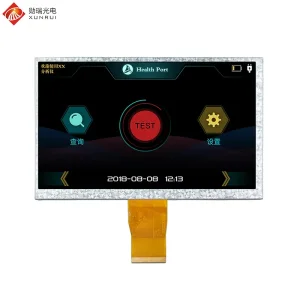
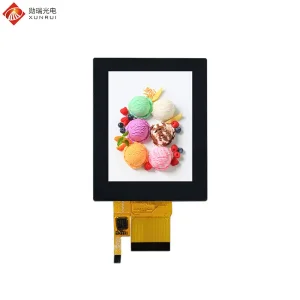
Specialized 4.3" & Multi-Format TFT LCD Modules
Explore our custom 4.3-inch platforms, wide-aspect touch displays, and compact visual modules engineered to meet strict industrial, medical, and embedded specifications.






Launch Your Custom 4" TFT Module Project with XUNRUI Engineers
Connect directly with our Shenzhen display hardware engineering team. We review mechanical tolerances, electrical timing, optical target nit levels, and supply chain timelines before issuing precision CAD drawings and quotation packages within 24 hours.
Request an Engineering Drawing & Sample Kit
Send us your target diagonal size, resolution, interface (RGB/MIPI/SPI), and operating brightness. Receive formal 2D/3D step files and optical recommendations.
Contact Engineering Team