
High-Precision Standard & Specialized TFT LCM Modules
Engineered for mission-critical instruments, medical diagnostic monitors, and outdoor field equipment. Select standard form factors or configure bespoke interfaces with our engineering labs.

Custom 10.1 inch 1024×600 RGB 50pin interface 350nit TN TFT LCD module Manufacturer, Manufacturers
View Specifications
Custom 6.9 inch 280×1424 MIPI 30pin interface long strip IPS TFT LCD module Manufacturer, Factories
View Specifications
China 4.3 inch vertical screen 480×800 RGB 40pin IPS TFT LCD Display Manufacturer, Manufacturers
View Specifications
Custom 3.5 inch 640×480 MIPI 30pin interface 800nit IPS TFT LCD module Manufacturer, Suppliers
View Specifications
Custom 8 inch TFT LCD module 800×1280 MIPI 31pin interface 480nit IPS screen Suppliers, Factories
View Specifications
Custom 7 inch 800×480 TN TFT LCD display with resistive touch panel Supplier, Factory
View Specifications
China 2.8 inch 240×320 MCU 30pin interface 250nit TN TFT LCD display Manufacturers, Factories
View Specifications
Custom 4.3 inch 480×272 MCU/SPI 40pin 350nit TN TFT LCD Display Manufacturer, Factory
View SpecificationsThe Global Commercial & Engineering Significance of 5.7" TFT LCM
Why the 4:3 Aspect Ratio (320×240 QVGA / 640×480 VGA) continues to anchor global mission-critical architectures across automation, clinical medicine, and legacy infrastructure retrofits.
Legacy Architecture Retention
For more than two decades, the 5.7-inch display footprint (active area ~115.2 × 86.4 mm) served as the world's de facto physical standard for CNC operator panels, industrial PLC terminals, marine radar consoles, and diagnostic medical carts. Global OEMs face exorbitant re-certification costs (UL, CE, FDA Class II) if chassis cutouts change. China's dedicated 5.7" LCM cleanroom fabrication lines allow overseas tier-1 contractors to sustain lifecycle supply chains without redesigning expensive stamped-steel and cast-aluminum enclosures.
- Chassis Backward Compatibility: 100% mechanical drop-in for Kyocera, Ampire, and Sharp.
- Zero Re-Tooling Overhead: Avoids expensive plastic injection re-tooling.
- Extended Longevity: Guaranteed 5 to 7+ years production lifecycle roadmap.
CCFL to Solid-State LED Upgrades
Fielded legacy equipment often utilized Cold Cathode Fluorescent Lamp (CCFL) backlights that suffered from high failure rates, toxic mercury vapor, thermal dissipation issues, and bulky high-voltage inverters prone to arcing. Modern Chinese 5.7 TFT LCM factories specialize in converting these legacy modules to high-efficiency, solid-state White LED (WLED) arrays. These upgrades slash system operating power by up to 60%, eliminate high-voltage electromagnetic interference (EMI), and elevate half-life luminance longevity past 50,000 continuous operating hours.
- MTBF Reliability: >50,000 hours to 50% initial brightness.
- Integrated Constant Current Drivers: 12V/24V direct rail compatibility.
- EMI Radiation Suppression: Meets EN 55032 Class B standards.
Precision Industrial Resilience
Unlike consumer-grade display panels that delaminate or discolor under industrial field stress, premium 5.7-inch industrial TFT LCM modules feature wide-temperature fluid formulations (-30°C to +85°C operating parameters). Utilizing anti-reflective (AR), anti-fingerprint (AF), and anti-glare (AG) surface chemistry combined with optically matched polarizers, our displays resist solar clearing-point blackout under direct sun exposure in mining, maritime, and utility sub-station deployments.
- Operating Temperature: Ruggedized -30°C to +85°C operational envelope.
- Optical Clarity: True sunlight readability from 500 to 1,200+ nits.
- Chemical Resistance: IPA, betadine, and industrial grease repellent.
Engineering Strategic Note: The Economics of Form Factor Preservation
When engineering teams redesign a fielded HMI terminal, migrating from a 5.7" 4:3 panel to a wider 7.0" 16:9 widescreen often requires rewriting legacy firmware GUI rendering code, recertifying electromagnetic emissions, and rebuilding front sheet metal. Sourcing an advanced, high-brightness 5.7" TFT LCM preserves software graphical aspect ratios (QVGA 320×240 or VGA 640×480) while instantly modernizing the panel's contrast, viewing angles, and LED operational life.
Electro-Optical Topology & Interface Engineering
A comprehensive examination of drive IC configurations, timing controller synchronization, optical bonding mechanics, and signal routing across modern 5.7" display modules.
Interface Protocols: RGB, MCU & LVDS
5.7-inch modules bridge the transition from legacy parallel buses to high-speed serialized data streams. We configure flexible printed circuits (FPC) to match your host motherboard:
- Parallel RGB (18/24-Bit): Direct dot-clock driving for embedded RTOS and Linux SoCs, providing zero latency frame updates.
- 8080/6800 MCU Bus: Built-in graphic RAM controllers (e.g., SSD1963, RA8875) eliminating CPU video rendering strain on low-cost microcontrollers.
- Single-Channel LVDS: Low Voltage Differential Signaling for high-noise industrial cabinets, transmitting video over 2-3 meters with low EMI.
Optical Bonding & Luminance Stacks
Direct sunlight readability is determined not merely by raw nit output, but by managing internal reflectance across glass boundaries:
- LOCA / OCA Optical Bonding: Refractive index-matched silicone/acrylic resins eliminate the 0.5-1.0mm internal air gap, slashing reflection by up to 85%.
- Impact Ruggedization (IK08-IK10): Resin fills reinforce the thin TFT front glass against heavy physical impacts and mechanical vibrations.
- Precision LED Backlight Rails: Precision Nichia emitter arrays delivering 500 to 1,200 nits with custom Pulse Width Modulation (PWM) dimming to 1%.
Touch Interface Ergonomics: RTP vs PCAP
Interactive human-machine feedback demands tailored sensor integration based on actual workplace conditions:
- 4-Wire / 5-Wire Resistive (RTP): Actuated by raw surface pressure. Operates with heavy leather work gloves, plastic styluses, or when drenched in hydraulic oil.
- Projected Capacitive (PCAP): Supports multi-touch gestures, water rejection algorithms, palm rejection, and seamless flush tempered cover glass.
- Cover Glass Customization: Chemically strengthened soda-lime or Gorilla Glass up to 6mm thick with custom silkscreen logos and antimicrobial coatings.
Standard 5.7" Industrial TFT LCM Electro-Optical Configurations
Typical engineering baseline specifications across QVGA legacy retrofits and modern high-brightness VGA iterations manufactured by Shenzhen Xunrui.
| Module Parameter | Standard QVGA Legacy Type | High-Brightness Industrial QVGA | Modern Precision VGA (IPS) | Ultra-Rugged Outdoor VGA |
|---|---|---|---|---|
| Resolution | 320 × 240 pixels (RGB) | 320 × 240 pixels (RGB) | 640 × 480 pixels (VGA) | 640 × 480 pixels (VGA) |
| Active Area (mm) | 115.20 (W) × 86.40 (H) | 115.20 (W) × 86.40 (H) | 115.20 (W) × 86.40 (H) | 115.20 (W) × 86.40 (H) |
| Pixel Pitch (mm) | 0.360 × 0.360 | 0.360 × 0.360 | 0.180 × 0.180 | 0.180 × 0.180 |
| Panel Alignment Mode | TN / Normally White | TN / Normally White | IPS / Normally Black | IPS / Free Viewing Angle |
| Viewing Angles (L/R/U/D) | 70 / 70 / 50 / 70 deg | 75 / 75 / 60 / 70 deg | 85 / 85 / 85 / 85 deg | 89 / 89 / 89 / 89 deg |
| Luminance (Typical) | 350 cd/m² (nits) | 800 cd/m² (nits) | 500 cd/m² (nits) | 1,200 cd/m² (nits) |
| Contrast Ratio | 400:1 | 600:1 | 800:1 | 1,000:1 |
| Interface Protocol | 18-bit / 24-bit RGB or MCU | Parallel RGB + PWM Dim | 18/24-bit RGB or LVDS | Single LVDS / Customized FPC |
| Operating Temp Range | -20°C to +70°C | -30°C to +80°C | -20°C to +70°C | -30°C to +85°C (Extended Fluid) |
| Touch Integration | 4-Wire Resistive (RTP) | 4-Wire RTP / Air Bond | PCAP Multi-touch (I2C) | PCAP Optically Bonded (USB/I2C) |
Application Scenarios & Macro Solutions
Examining field-proven engineering implementations where 5.7" TFT LCM assemblies deliver continuous uptime in severe industrial, clinical, and transit environments.
Clinical Patient Monitors & Infusion Systems
Medical devices require strict color reproduction for blood oximetry charts, wide viewing angles without grayscale inversion, and glass surfaces compatible with quaternary ammonium disinfectants. Our 5.7" VGA IPS panels feature chemically toughened cover glass with optical bonding to stop fluid penetration and withstand ESD shocks up to ±15kV per IEC 61000-4-2.
CNC Controls & Robotics Teach Pendants
Factory automation environments subject displays to repetitive mechanical vibrations, coolant mist, and heavy electrical motor noise. Xunrui integrates high-temperature ITO resistive touch sensors or shielded PCAPs that disregard electrical EMI bursts while permitting operators to jog servo axes wearing grease-covered leather safety gloves.
Electronic Test & Measurement Gear
Benchtop and field oscilloscopes, digital multimeters, and spectrum analyzers rely on 5.7-inch modules for fine waveform rendering. Our 640×480 VGA displays provide rapid liquid crystal response times (<16ms), preventing waveform ghosting during high-frequency trace sweeps while maintaining low power consumption on portable battery packs.
Maritime Radar & Heavy Ag-Tech Dashboards
Combines 1,000+ nit high-efficiency backlights, circular polarizers, and optical bonding to ensure chart plotters and tractor control consoles remain legible even under direct midday sun without overheating. Wide-temperature fluid (-30°C to +85°C) prevents liquid crystals from turning opaque in arctic or tropical working zones.
Shenzhen Xunrui Optoelectronic Manufacturing Rigor
Founded in 2016, our Bao'an facility couples automated Class 1,000/100 COG/FOG bonding cells with closed-loop optical and environmental aging regimens certified to ISO 9001 and ISO 14001 standards.
Automated COG & FOG Bonding Precision
Chip-on-Glass (COG) and Film-on-Glass (FOG) bonding lines employ sub-micron machine vision alignment systems. Anisotropic Conductive Film (ACF) is heat-bonded with precision temperature profiles and pressure sensors, guaranteeing zero conductive micro-particle displacement, eliminating intermittent line-loss defects over millions of thermal cycles.
Five-Stage Closed-Loop Quality Verification
Every 5.7" batch must pass strict control stages: Incoming Quality Control (IQC), raw glass polariser defect screening, FOG automated optical inspection with live power aging, 100% finished product high-temperature burn-in (50°C, 24-72 hours), and Outgoing Quality Control (OQC) verifying optical chromaticity, response times, and touch calibration curves.
Engineering-Led Customization & Trial Batches
Xunrui simplifies procurement risk. After sample approval, overseas buyers can run pilot batches of 5 to 500 units to validate tooling and enclosure integration prior to mass volume runs. We handle custom FPC routing, backlight LED rail configurations, pinout adapter boards, and cover glass shaping with total design transparency.
Evolutionary Trends in 5.7" TFT LCM Technology
How edge AI compute, low-power IPS panel substrates, and advanced surface functionalization are defining the next generation of industrial small-to-mid display modules.
Migration to IPS/AAS Super-Wide Angle Glass
Traditional TN (Twisted Nematic) 5.7-inch displays suffered from color inversion at narrow viewing angles (especially looking upward at 6 o'clock). The modern industrial trend has shifted toward In-Plane Switching (IPS) and Azimuthal Anchoring Switching (AAS) cells. These provide symmetrical 85°/85°/85°/85° viewing angles with consistent contrast ratios across all quadrants, which is critical for wall-mounted building automation panels and mobile medical carts.
Embedded Smart UART / SPI Display Engines
To reduce CPU load on system microcontrollers, Xunrui integrates smart serial driver engines directly onto the rear PCB of the 5.7" module. By utilizing powerful onboard graphic controllers (ARM Cortex or dedicated 2D graphics hardware), the host MCU needs only to send simple ASCII or Hex command strings over RS232, RS485, or SPI. The display handles all image caching, fonts, widget animations, and touch coordinates independently.
Extreme Environmental Coatings & Antimicrobial Glass
Next-generation 5.7" LCMs are increasingly deployed in public interactive terminals and sterile cleanrooms. Advanced post-processing includes nano-silver antimicrobial ion coatings embedded in the cover glass matrix, which permanently destroys 99.9% of bacteria without wiping away. Anti-glare (AG) etching eliminates harsh reflections, while hydrophobic oleophobic coatings prevent oily fingerprints from disrupting touch accuracy.
China 5.7 TFT LCM Sourcing & Engineering FAQ
Direct answers from our senior display engineers covering pinout adaptations, optical bonding options, touch calibrations, and order workflows.
How can a modern Xunrui 5.7" TFT LCM replace an obsolete Kyocera, Ampire, or Hitachi module?
What is the difference between air bonding and optical bonding for a 5.7-inch display?
What are the MOQ and prototyping lead times for custom 5.7" LCM configurations?
Can your 5.7" resistive touch screens handle heavy industrial gloves and electrical noise?
How does Xunrui guarantee 5 to 7+ years of component availability for industrial OEM designs?
Related Industrial TFT LCM Modules & Form Factors
From compact 1.3" wearable panels to full HD 13.3" interface modules. Discover our full engineering portfolio, with driver boards, touch digitizers, and custom cover plates.

China 3.5 inch 320×480 RGB 50pin 300nit IPS TFT LCD Display Manufacturer, Factory
View Specifications
China 5 inch 480×272 TN TFT LCD Module with capacitive touch panel Manufacturers, Factory
View Specifications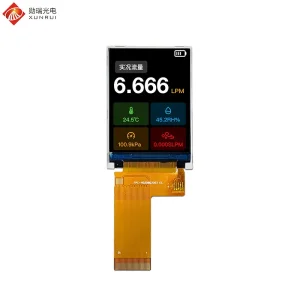
China 2 inch 240×320 SPI 30PIN 250nit IPS TFT LCD Module Manufacturer, Suppliers
View Specifications
China 4.3 inch 480×272 RGB 40pin interface 350nit TN TFT LCD module Manufacturer, Factories
View Specifications
China 8 inch 1024×768 LVDS 40pin interface 300nit IPS TFT LCD module Manufacturer, Supplier
View Specifications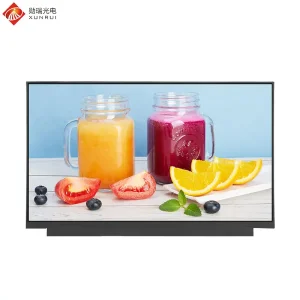
China 13.3 inch 1920×1080 EDP 30PIN 280nit IPS TFT LCD Module Suppliers, Factories
View Specifications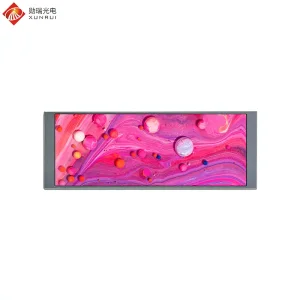
Custom 6.86 inch 480×1280 MIPI 40pin 700nits IPS Strip TFT LCD Module Supplier, Factory
View Specifications
China 1.3 inch 240×240 SPI 16PIN IPS TFT LCD Module With Capacitive touch Supplier, Factory
View SpecificationsRequest a 5.7" TFT LCM Evaluation Sample & Custom Drawing
Our Shenzhen engineering staff reviews CAD step files, FPC pinouts, and optical brightness requirements within 24 hours. Connect directly with factory specialists to confirm backward compatibility for your next-generation HMI build.