
High-Performance TFT LCD & Capacitive Touch Selections
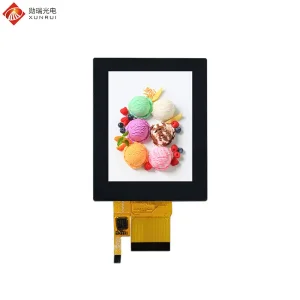
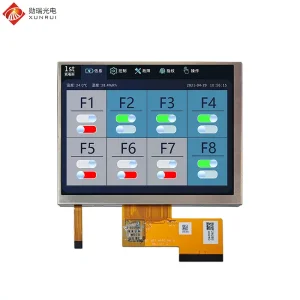
Explore our core engineering catalog featuring pre-tooled, mass-production-ready active matrix displays ranging from ultra-compact handhelds to rugged industrial interfaces.






Engineering Insights: The Rise of 6.2 Inch Capacitive Displays
A comprehensive examination of form factor ergonomics, optical stack optimizations, and modern touch controller architectures in next-generation industrial and commercial hardware.
1. Form Factor Optimization & Ergonomic Advantage of the 6.2" Footprint
In modern embedded human-machine interfaces (HMI), the 6.2 inch capacitive screen represents a pivotal convergence between compact handheld mobility and rich visual information density. While traditional industrial displays historically relied on squarish 4:3 or 16:9 4.3" and 7.0" modules, the 6.2-inch format—frequently engineered in elongated 18:9, 19:9, or custom ultrawide aspect ratios—matches human thumb-sweep radii and narrow-enclosure constraints with exceptional mechanical efficiency. As modern field operators, clinical technicians, and automotive drivers demand one-handed operation without compromising graph or waveform fidelity, the 6.2" capacitive touch display has rapidly transitioned from an emerging niche to an essential standard across European, North American, and Asian industrial automation sectors.
Manufactured under stringent process standards at Shenzhen Xunrui Optoelectronic Technology Co., Ltd. (XUNRUI), our 6.2-inch capacitive touch screen assemblies utilize industrial In-Plane Switching (IPS) panels paired with projected capacitive (PCAP) multi-touch digitizers. This architecture guarantees true 178°/178° symmetric viewing angles without the color inversion, chromatic aberration, or grayscale collapse inherent to legacy Twisted Nematic (TN) modules. When engineering an instrument cluster, a mobile payment terminal, or an avionics telemetry unit, optical consistency regardless of operator vantage point is the primary prerequisite for operational safety and ergonomic precision.
2. Capacitive Sensor Stack Architectures: G+G vs. G+F+F vs. OGS
A critical consideration during OEM specification is the physical topology of the touch sensor layer. The 6.2-inch capacitive digitizer can be realized through diverse material topologies, each serving distinct reliability, optical, and cost boundaries:
- Glass + Glass (G+G) Construction: Incorporates a chemically strengthened soda-lime or aluminosilicate cover glass laminated directly over a dedicated glass sensor matrix. Offering the highest mechanical rigidity, IK08/IK10 impact resistance, and scratch hardness reaching 7H–9H Mohs, G+G stacks represent our primary engineering recommendation for harsh industrial factory floors, unattended outdoor kiosks, and military-grade handhelds.
- Glass + Film + Film (G+F+F) Architecture: Replaces the rigid sensor substrate with double-layer optical PET film coated with indium tin oxide (ITO). This results in a substantially thinner module profile and reduced gross weight, providing high resilience against flexural cracking, particularly favored in battery-constrained logistics scanners and field diagnostic meters.
- One Glass Solution (OGS / In-Cell / On-Cell): Integrates the touch sensing electrode network directly onto the cover lens or the TFT color filter substrate. While minimizing optical reflections and achieving maximum light transmission (>90%), this topology requires specialized cleanroom laser patterning, ideal for ultra-slim consumer medical monitors and luxury smart home consoles.
| Architecture Type | Structural Composition | Optical Transmittance | Surface Hardness | Operating Temperature | Primary Industrial Use Cases |
|---|---|---|---|---|---|
| Industrial G+G | Chemically Tempered Glass + ITO Glass | 88% – 92% | ≥ 7H – 9H | -30°C to +85°C | Heavy Machinery, Marine GPS, EV Stations, Outdoor Kiosks |
| Lightweight G+F+F | Tempered Glass + Dual Optical ITO Films | 85% – 88% | ≥ 6H – 7H | -20°C to +70°C | Warehouse PDAs, Smart POS, Portable Test Equipment |
| Direct In-Cell / OGS | Integrated Touch Electrode on Substrate | 91% – 94% | ≥ 6H | -20°C to +70°C | Smart Home Wall Panels, Precision Patient Monitors |
Controller Engineering & Optical Bonding Technology
Uncompromising signal integrity, extreme EMC immunity, and sunlight readability powered by advanced adhesive chemistry and multi-point DSP controllers.
Advanced Controller IC Silicon
We deploy industrial-tier touch controller platforms including Goodix, Ilitek, and FocalTech. Supporting both I²C and native USB-HID protocols, these microcontrollers execute localized noise-filtering DSP algorithms to ensure false-touch rejection under wet fingers, water droplets, and electrical noise complying with IEC 61000-4-6 Conducted Immunity standards.
Full Optical Bonding (OCA/LOCA)
By filling the internal air gap between the 6.2" TFT LCD and the capacitive touch sensor using refractive-index-matched Optically Clear Adhesive (OCA) or liquid resin (LOCA), internal reflectance is reduced from 13.5% down to under 0.8%. This dramatically elevates sunlight readability while neutralizing moisture condensation and dust contamination forever.
Surface Chemical Enhancements
Our cover lens options include vacuum-sputtered Anti-Glare (AG) etching to diffuse harsh overhead lighting, Anti-Reflective (AR) multilayer coatings to boost luminous transmittance to >95%, and nano-scale Anti-Fingerprint / Oleophobic (AF) coatings with a water contact angle exceeding 115° for effortless wipe-down in hygienic spaces.
Multi-Touch Gesture Recognition & Thick Glove Sensitivity
Industrial applications frequently require seamless operator engagement while wearing heavy personal protective equipment (PPE). The capacitive touch algorithms embedded in our 6.2-inch modules permit true 5-point to 10-point simultaneous touch tracking even when accessed through thick latex, nitrile, cowhide leather, or insulated industrial work gloves up to 5.0mm in thickness. Furthermore, custom firmware calibration supports aggressive salt-mist tolerance and droplet tracking, ensuring continuous tracking accuracy during rainfall or high-pressure spray cleaning in sterile food processing or chemical manufacturing environments.
Localized & Global Mission-Critical Application Scenarios
Engineered to perform where off-the-shelf consumer screens fail: high vibration, extreme temperature swings, moisture exposure, and round-the-clock continuous duty cycles.
Automotive Cockpits & EV Telematics
Ideal for 2-wheeler digital dashboards, auxiliary console panels, agricultural machinery controllers, and commercial fleet telematics. Features wide automotive operating temperatures (-30°C to +85°C) and optical bond stacks readable under 1,000+ nits of direct sunlight.
Medical Diagnostic Equipment
Integrated into portable blood gas analyzers, portable point-of-care ultrasound systems, infusion syringe controllers, and defibrillators. Precision capacitive sensors comply with medical EMI/EMC standards and resist aggressive clinical disinfectants (bleach, IPA).
Rugged Industrial Handhelds & PDAs
Powering warehouse inventory terminals, explosion-proof petrochemical inspection tablets, and delivery barcode terminals. Delivers drop shock resistance conforming to MIL-STD-810G alongside scratch-proof chemically tempered Corning Gorilla or Panda glass.
Smart Building & Luxury IoT Gateways
Engineered for high-end video intercom terminals, room climate touch controllers, and HVAC energy automation panels. Custom black-mask border printing and flush borderless cover glass create an aesthetic, seamless finish inside architectural walls.
China Factory Ecosystem: Shenzhen Optoelectronics Agility
How XUNRUI leverages hyper-localized vertical integration in Bao'an, Shenzhen to de-risk procurement, slash NRE engineering lead times, and accelerate product commercialization.
The Greater Bay Area Manufacturing Supercluster
Situated within the Hualun Science and Technology Park in Fuyong, Shenzhen, Shenzhen Xunrui Optoelectronic Technology Co., Ltd. operates at the epicenter of the world's most resilient flat-panel display ecosystem. Within a 30-kilometer radius, our supply chain integrates tier-one glass mother-sheet cutting facilities, precision ITO sputtering foundries, high-speed automated Flexible Printed Circuit (FPC) SMT assembly lines, and high-purity optical adhesive synthesis plants.
This geographic proximity eliminates cross-border logistics latency for raw bill-of-materials (BOM), enabling our engineering teams to transition from approved Gerber and CAD mechanical drawings to functional, tooling-accurate working prototypes in as little as 12 to 18 business days—a development pace unattainable through decentralized Western sourcing frameworks.
Rigorous 5-Gate Quality Assurance Protocol
-
1
IQC Raw Material Verification: Microscopic laser inspection of ITO sheet resistance, glass flatness, backlight LED binning, and FPC conductivity.
-
2
Laser AOI Glass Inspection: Automated optical inspection detecting particulate impurities, sub-micron microcracks, and ITO circuit continuity.
-
3
FOG (Film on Glass) Bonding & Dynamic Aging: High-precision anisotropic conductive film (ACF) bonding followed by powered stress tests.
-
4
Final Optical Lamination Thermal Aging: OCA/LOCA bonded stacks undergo continuous high-temperature/high-humidity (60°C / 90% RH) thermal cycling.
-
5
OQC Outgoing Batch Audit: Comprehensive 100% cosmetic, touch linearity, electrical isolation, and MIL-STD export crating validation.
Technology Roadmap: Next-Generation Capacitive Screen Innovations
Strategic advancements shaping the next five years of capacitive human-machine interfaces across automotive, commercial, and industrial markets.
Curved & 3D Free-Form Glass (2025–2026)
Moving beyond flat planar cover lenses, our development lines integrate thermal 3D bending techniques to produce curved 6.2-inch capacitive touch panels that seamlessly integrate into circular vehicular consoles, luxury automotive dash bezels, and cylindrical medical equipment enclosures.
Haptic Feedback & Force Touch (2026–2027)
Integrating localized piezoelectric actuators and linear resonant actuators (LRA) directly behind the 6.2" capacitive substrate. This delivers realistic tactile confirmation (clicks, buzzes, textural pulses) when virtual buttons are pressed, eliminating driver distraction and confirming industrial inputs.
Ultra-Low Power Reflective Touch (2027+)
Pairing transflective TFT cell technologies with advanced ambient-light-harvesting digitizers. This cuts system power draw by up to 70% while boosting contrast under 100,000 Lux equatorial sunlight, engineered specifically for next-generation off-grid IoT sensors, marine GPS, and tactical systems.
Worldwide Regulatory Adherence & Long-Term Lifecycle Commitment
Built for international supply certainty, guaranteed product longevity, and complete global documentation transparency.
ISO 9001 / 14001 Audited
Fully certified quality and environmental operational standards ensure zero-defect process controls, consistent glass yields, and eco-friendly chemical disposal across all manufacturing cleanrooms.
RoHS & REACH Compliant
Every single bill-of-materials component—including polarizers, ITO coatings, driver ICs, FPC polyimides, and silicon sealants—complies with EU directive standards without hazardous substances.
5 to 7 Year Longevity
We guarantee form-fit-function product longevity for 5 to 7 years. In the rare event of raw component EOL, our engineering team manages backward-compatible drop-in alternatives without casing redesigns.
Fast-Track Pilot MOQ
We provide a one-time trial batch run of 5 to 500 units following prototype approval, enabling OEM customers to conduct full field validations and software testing before committing to volume builds (>1,000 units).
Specialty Display Modules & Sunlight-Readable Displays
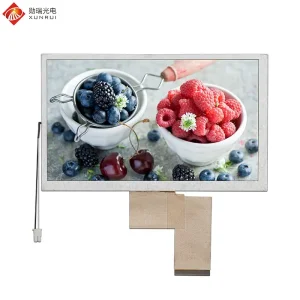
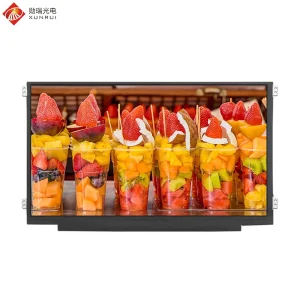
Pair your customized 6.2 inch capacitive screen solutions with our comprehensive array of standard, high-nit, and compact displays engineered in Shenzhen.






Frequently Asked Questions on 6.2" Capacitive Displays
Direct technical and commercial clarifications provided by XUNRUI optoelectronics engineers to simplify procurement due diligence.
What makes a 6.2 inch capacitive screen preferable over standard 7.0 inch or 5.0 inch panels?
Can XUNRUI customize the cover glass thickness, shape, and surface coatings?
Which touch controller ICs do you support, and how is firmware tuned for water or gloves?
What is the difference between Optical Bonding (OCA/LOCA) and Air Bonding (Tape Bond)?
What interfaces are available for the 6.2" TFT display and touch digitizer?
What is the minimum order quantity (MOQ) and lead time for custom tooling?
How does XUNRUI guarantee long-term supply stability for medical and industrial devices?
Consult With a Senior XUNRUI Display Engineer
Whether you need a custom cover lens thickness, high-brightness sunlight tuning up to 1,500 nits, specialized FPC routing, or complete HDMI driver board pairing, our engineering team in Shenzhen is ready to review your mechanical STEP files and Gerber drawings.