

Custom 5 inch 480×272 TN TFT LCD Module with resistive touch panel Manufacturers, Factory
View Specifications →Explore our foundational industrial display modules engineered for embedded systems, high-duty monitoring, and harsh operating conditions.
Custom 5 inch 480×272 TN TFT LCD Module with resistive touch panel Manufacturers, Factory
View Specifications →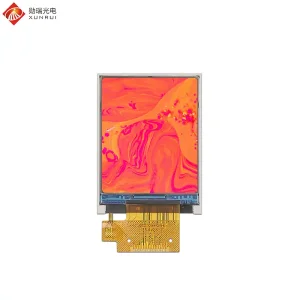
Custom 1.77 inch 128×160 SPI 14pin 250nit TN TFT LCD Module Supplier, Suppliers
View Specifications →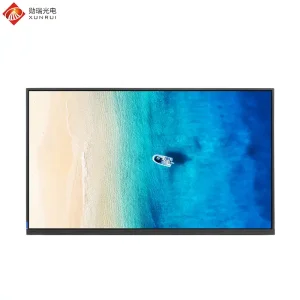
Custom 15 inch 1920×1080 EDP 30pin 300nit IPS TFT LCD Display Manufacturer, Factories
View Specifications →
China 7 inch 800×480 RGB 40pin 450nit TN TFT LCD Display Manufacturers, Suppliers
View Specifications →
China 3.5 inch 320×480 RGB 50pin 300nit IPS TFT LCD Display Manufacturer, Factory
View Specifications →
Custom 2.8 inch 240×320 TN TFT LCD Module with resistive touch panel Manufacturers, Supplier
View Specifications →
China 5 inch 480×272 RGB 40pin interface 350nit TN TFT LCD module Manufacturer, Factory
View Specifications →
Custom 3 inch 240×400 RGB 45pin 400nit IPS TFT LCD Module Manufacturers, Factories
View Specifications →A mission-critical aspect ratio designed to bridge compact handheld ergonomics and detailed spatial graphical interfaces in enterprise systems.
The 6.2-inch industrial form factor frequently bridges typical widescreen 16:9 and ultrawide bar-type configurations (such as 18:9 or 21:9 stretched variants). This format enables complete HMI telemetry displays while fitting standardized 1U or DIN rail panel-cut slots without sacrificing vertical status indicator lines.
Direct exposure demands customized high-efficiency LED arrays. Our factory pairs high-output constant-current backlight drivers with custom light guide plates (LGPs) and optical bonding technology, suppressing ambient refraction below 1.5% to preserve contrast in direct outdoor sunlight.
Industrial machinery produces serious conducted and radiated EMI. Our 6.2-inch solutions implement ILI or FocalTech touch controllers with firmware-tuned frequency hopping, water-rejection algorithms, and glove-touch support up to 5mm thick cover-glass configurations.
Engineered to handle environmental stressors across manufacturing, tactical field logistics, and modern healthcare environments.
Warehouse logistics and smart inventory management depend on drop-resistant, IP67-sealed enclosures. Our 6.2" IPS screens deliver sharp 720×1560 or custom high-resolution panels with chemically strengthened Gorilla/Dragontrail glass that withstand multi-angle concrete drops.
Motorcycle digital dashes, EV instrumentation, and agricultural cabin computers experience broad thermal swings (-30°C to +85°C). Utilizing wide-temp liquid crystal fluids and anti-UV polarizers, our displays prevent black-screen crystallization under continuous sunlight.
Medical interfaces must resist clinical hospital disinfectants like bleach and isopropyl alcohol. Optical bonding with anti-fingerprint (AF) and anti-glare (AG) surface treatments eliminates air gaps, preventing moisture ingress while ensuring high color fidelity.
Stationary cobot teach pendants and discrete automation panels demand reliable 24/7 reliability. Native LVDS and MIPI interfaces with built-in ESD protection (up to 8kV contact, 15kV air discharge) prevent electrostatic interference from industrial machinery.
Continuous evolution toward higher optical efficiency, intelligent embedded drivers, and integrated sensor topologies.
Migrating from edge-lit systems to local dimming Mini-LED backlights. This architectural shift delivers high contrast ratios exceeding 100,000:1, true HDR visibility for medical-grade clarity, and reduces power consumption by up to 35% in dark-theme UI deployments.
Moving beyond raw pixel interfaces to intelligent display systems with integrated Cortex-M/A processing cores. Standardized serial, Modbus, or CANopen protocols eliminate the host MCU's heavy graphics overhead, simplifying overall system hardware design.
Piezoelectric actuators integrated directly behind 6.2-inch capacitive touch stacks provide clear tactile confirmation for factory workers operating heavy machinery in high-noise environments where audio cues go unheard.
Direct tier-1 raw glass procurement, automated COG/FOG production lines, and transparent lifecycle management.
Based in Shenzhen's core optoelectronics hub, Xunrui maintains direct long-term partnerships with leading glass foundries (BOE, Innolux, AUO). This vertical integration protects OEM clients from glass allocation cuts and guarantees reliable component availability for multi-year builds.
Every industrial module undergoes 100% incoming IQC, precision glass optical checks, automated Chip-On-Glass (COG) bonding inspection, high-temp burn-in aging (typically 48 to 72 hours), and final automated outgoing OQC verification before shipping.
Industrial programs demand product stability. Xunrui supports strict Product Discontinuation Notices (PDN) and End-of-Life (EOL) roadmaps with early warnings (6-12 months), backwards-compatible pin-to-pin redesign support, and controlled Last-Time-Buy (LTB) reserves.
Ensuring your finished hardware effortlessly clears North American, European, and Asia-Pacific market standards.
All display stacks, printed circuits, bonding adhesives, and cover glasses strictly comply with EU RoHS Directive 2011/65/EU and REACH (EC 1907/2006). Complete raw material declarations and certified 3rd-party lab test reports are readily available for international audits.
Our engineering team works closely with OEM system designers to pass rigorous EMC emissions and immunity standards. We configure custom shielding, ground rings, ferrite filters, and differential signaling lines to guarantee smooth CE, FCC, and UL qualification runs.
Bypass middlemen. You work directly with Shenzhen-based optoelectronic engineers. We provide custom CAD/3D step files, complete timing charts, initialization code, and driver bring-up support for Linux, Android, RTOS, and Windows systems within 24 hours.
Clear, direct answers regarding custom tooling, delivery schedules, environmental certifications, and interface options.
Explore our wide-temperature, high-brightness displays designed for specialized medical, defense, industrial automation, and vehicle installations.

Custom 3.5 inch 640×480 MIPI 30pin interface 800nit IPS TFT LCD module Manufacturer, Suppliers
View Specifications →
Custom 21.5 inch 1080×1920 LVDS 30pin 250nits IPS TFT LCD Display Manufacturers, Suppliers
View Specifications →
Custom 5 inch 800×480 RGB 50pin interface 500nit TN TFT LCD Display Suppliers, Factories
View Specifications →
China 3.5 inch TFT LCD display 320×240 RGB 54pin interface 350nit TN Screen Manufacturer, Suppliers
View Specifications →
Custom 10.1 inch 1024×600 LVDS 40pin 1000nit IPS TFT LCD Display Manufacturers, Factory
View Specifications →

Custom 2.4 inch TFT LCD module 240×320 SPI 14pin interface 250nit IPS screen Manufacturer, Factory
View Specifications →
Custom 5 inch 480×854 RGB 40pin 1000nit IPS TFT LCD Module Manufacturer, Manufacturers
View Specifications →