
Featured Optical Display Assemblies & Touch Modules
Direct manufacturing of high-reliability TFT LCD displays engineered for industrial instrumentation, medical telemetry, vehicle cockpits, and IoT touch controllers.


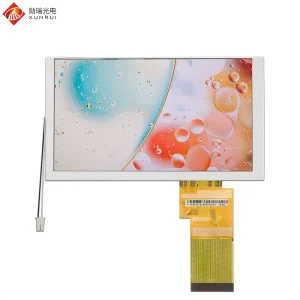


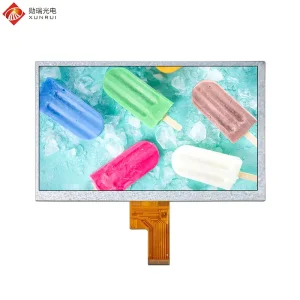


Architecture & Specification Benchmarks of 6.2" Touch Display Stacks
The 6.2-inch form factor occupies a strategic physical footprint across automotive head units, industrial human-machine interfaces (HMIs), and mission-critical handheld diagnostics.
Dimensional Geometry & Form Factor
The 6.2-inch active area typically spans 137.52 mm × 77.23 mm in a native 16:9 widescreen or modern ultra-wide aspect ratio. This diagonal provides substantial touch gesture surface while fitting neatly into standard 2-DIN dashboard housings, 19-inch subracks, or handheld enclosures.
- 137.5 × 77.2 mm Active Area
- Slim Form <3.5mm
- Standard 2-DIN Fit
Native Resolutions & High-Speed Interfaces
Available in native 800×480 WVGA RGB 60-pin arrays for legacy industrial reliability, as well as high-density 720×1560 and 1080×1920 HD panels driven by 4-lane MIPI DSI or dual-channel LVDS. High refresh rates and minimal propagation delays ensure fluid UI feedback.
- RGB 60-pin 24-bit
- LVDS / MIPI DSI
- 60Hz Clean Refresh
Optical Performance: TN vs. IPS Matrix
Choose between cost-efficient, high-contrast TN (Twisted Nematic) panels for fixed viewing angles, or all-angle IPS (In-Plane Switching) delivering 85°/85°/85°/85° symmetrical visibility, zero color inversion, and consistent color coordinates under fluctuating ambient daylight.
- IPS 85° All-Viewing
- 500 to 1500 nits
- High Dynamic Contrast
| Engineering Parameter | Standard Commercial Grade | Industrial High-Durability | Automotive / Outdoor Sunlight Readable |
|---|---|---|---|
| Display Matrix | TN / Standard IPS | Wide-Temperature IPS (A-Si / IGZO) | Automotive Grade IPS w/ High-Gamut LEDs |
| Resolution & Aspect | 800 × 480 (16:9) | 800 × 480 / 1024 × 600 | 720 × 1560 / 1280 × 720 HD |
| Luminance Rating | 300 – 400 cd/m² (nits) | 500 – 800 cd/m² (nits) | 1,000 – 1,500+ cd/m² (Direct Sunlight) |
| Operating Temperature | -10°C to +60°C | -20°C to +70°C | -30°C to +85°C (Extended Automotive) |
| Touch Sensor Technology | Air-Bonded 4-Wire Resistive | PCAP (I²C / USB) w/ 3mm Tempered Glass | Full Optical OCR/OCA Bonded PCAP w/ AG/AR/AF |
| Backlight MTBF | 20,000 Operating Hours | 50,000 Operating Hours | 70,000+ Hours w/ Constant-Current Derating |
Capacitive vs. Resistive Touch & Optical Lamination Physics
A touch display is only as reliable as its sensor stackup and bonding integrity. Our factory engineers tailor the sensing layer specifically for electrical noise profiles, ingress hazards, and physical wear.
Projected Capacitive (PCAP) Multi-Touch
Configured with robust industrial IC controllers (Goodix, Ilitek, FocalTech), our PCAP touch sensors support true 10-point multi-touch, smooth pinch-to-zoom, and advanced noise-filtering firmware. Engineered algorithms maintain uninterrupted tracking during heavy water spray, grease accumulation, and when operators wear nitrile or heavy leather industrial work gloves.
4-Wire & 5-Wire Resistive (RTP) Mechanics
Where absolute immunity to high Electromagnetic Interference (EMI), radio-frequency bursts, or electrical arc noise is mandatory, our precision resistive 6.2-inch assemblies excel. Pressure-actuated mechanical contact ensures zero false touch triggers in heavy metal fabrication plants, marine radar enclosures, and high-voltage transformer monitoring systems.
Full Optical Bonding (LOCA / OCA)
We eliminate the standard internal air gap between the TFT polarizer and the touch sensor utilizing medical-grade Optical Clear Adhesive (OCA) or liquid silicone (OCR / LOCA). By matching optical refractive indices (n ≈ 1.51), internal reflection drops from ~4.5% to below 0.2%, maximizing clarity, boosting impact strength to IK08/IK10, and ending internal condensation permanently.
Shenzhen Xunrui: Cleanroom Manufacturing & Supply Chain Dominance
Shenzhen Xunrui Optoelectronic Technology Co., Ltd. (established in 2016) delivers direct factory-level manufacturing from our 5,000 m² cleanroom campus in Bao'an District, Shenzhen.
Upstream Glass Ecosystem
Immediate proximity to Tier-1 mother-glass foundries (BOE, Innolux, AUO, CSOT) ensures first-priority glass substrate allocation, rapid laser cutting, and stable cell pricing shielded from spot-market volatility.
Automated COG & FOG Bonding
Fully automated Chip-On-Glass (COG) and Film-On-Glass (FOG) bonding systems guarantee sub-micron alignment accuracy, eliminating micro-cracking and achieving high bonding yield rates across all flex cable connections.
Turnkey Tooling & Rapid NRE
Custom cover glass CNC profiling, ceramic silk screening, custom anti-glare (AG) etchings, and specialized FPC layout designs are executed in 14 to 21 business days with low Non-Recurring Engineering (NRE) costs.
Pilot Feasibility Assurance
Avoid rigid million-unit factory demands. After sign-off on first-article samples, we support 5 to 500-unit mass-production feasibility runs before locking in standard volume production (1,000+ units MOQ).
Global Enterprise Procurement Protocols & Quality Safeguards
Enterprise sourcing leaders require more than raw performance specs: they require verified auditability, transparent supply chain provenance, and long-term product availability.
5-to-7 Year Lifecycle Longevity
Industrial and medical machinery designs require protracted lifecycles. Xunrui enforces a strict Product Change Notification (PCN) policy with 6-month advance alerts and 12-month Last Time Buy (LTB) guarantees. In case of upstream wafer phase-outs, our engineers deliver pin-compatible controller drop-ins without demanding motherboard redesigns.
International Regulatory Compliance
Our displays and touch stacks comply fully with international export and eco-directives: CE, RoHS 3 (EU 2015/863), REACH (SVHC), FCC Part 15 Class B, and UL94-V0 flammability ratings. Materials are documented and traceable for audit readiness across North America, the European Union, the UK, Japan, and Australasia.
5-Gate Factory Quality Control
Zero-defect commitments are backed by our multi-tier inspection regimen: 1. IQC: Incoming substrate, polarizer, and IC verification; 2. Glass Matrix Test: Pixel mapping for zero bright spots; 3. FOG Bond & Thermal Burn-In: Dynamic high-heat burn-in; 4. Final Assembly Aging: 100% 24–72 hour cycling; 5. OQC: Spectrophotometer optical verification and AQL 0.4 standard check.
Real-World Deployment Scenarios for 6.2" Touch Panels
Every end-use environment exposes an interactive display to different optical, physical, and environmental stressors. Our 6.2-inch modules are battle-tested across challenging operating spaces.
Automotive & EV Charging
Fits 2-DIN in-dash consoles, fleet tracking telematics, and DC fast-charging kiosks. Built with 1,000+ nits sunlight readability, wide-temperature liquid crystal arrays (-30°C to +85°C), and anti-glare (AG) cover glass.
Industrial Handheld Terminals
Warehouse barcode inventory terminals, field diagnostic tablets, and oil & gas pipeline monitors. Features chemically strengthened 7H cover glass, drop-tested shock resistance, and wet-finger touch algorithms.
Medical Telemetry & Infusion
Bedside patient vital monitors, automated infusion syringe pumps, and lab diagnostic analyzers. Features antimicrobial cover glass options, optical bonding for zero-parallax alignment, and resistance to hospital chemical disinfectants.
Smart Building Automation
Wall-mounted smart home HVAC controllers, commercial intercom access security panels, and room booking displays. Low-power backlight driver configurations provide continuous 24/7 reliability with crisp viewing contrast.
Emerging Display Trends in the 6.2-Inch Category
Continuous evolution in silicon integration and display materials reshapes performance expectations for embedded touch displays. Xunrui actively integrates these advanced innovations.
TDDI (Touch and Display Driver Integration)
By unifying the display driver and touch controller onto a single silicon die, TDDI architecture eliminates redundant flex cables, slashes overall module thickness by up to 25%, and enhances capacitive signal-to-noise ratio (SNR) for superior responsiveness.
Mini-LED Local Dimming Backlights
Replacing traditional edge-lit LED strips with high-density Mini-LED matrix backlights delivers dynamic local dimming across hundreds of zones. This enables ultra-high 100,000:1 contrast ratios and deep black levels with 30% reduced power consumption in battery-powered devices.
Specialized Surface Functional Coatings
Next-generation cover lens processing combines vacuum-deposited Anti-Fingerprint (AF) oleophobic coatings, Anti-Reflective (AR) multi-layer sputtering, and circular polarizers enabling full screen legibility even through polarized sunglasses.
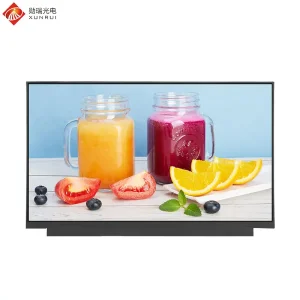
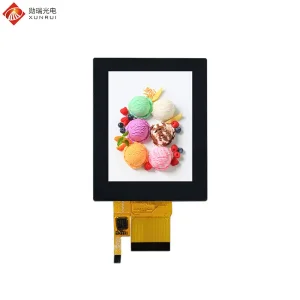
Expanded Industrial TFT LCD & Touch Display Lineup
Explore additional standard and customizable modules engineered to the same exacting optical standards as our 6.2-inch assemblies.






Frequently Asked Questions: Technical & Sourcing Engineering
In-depth answers addressing procurement criteria, optical characteristics, custom tooling, and validation protocols for 6.2-inch touch screen panels.