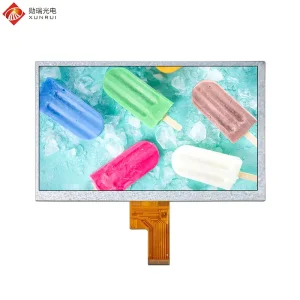
Featured Display Assemblies & Modules
Comprehensive flat panel and bare screen integration technologies manufactured to industrial, automotive, and mission-critical specifications.
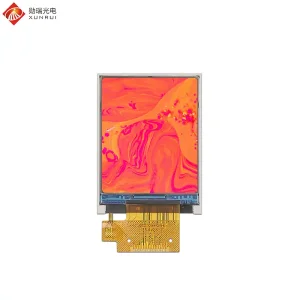
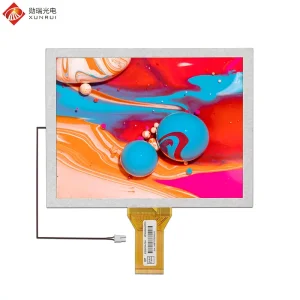



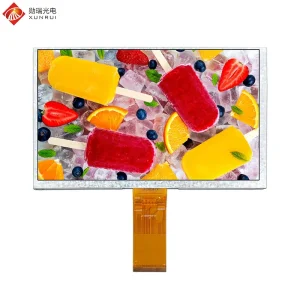


Technical Architecture of Custom 4-Inch Bare Screens (Open Cell)
A comprehensive examination of raw LCD cell optimization, driver IC bonding methodologies, and optical alignment tolerances for advanced embedded displays.
Bare Screen & Open Cell Physics
A 4-inch bare screen (open cell) consists of TFT substrate glass, a liquid crystal layer, and color filter (CF) glass without the integrated backlight assembly. Custom manufacturing allows OEM engineers complete control over optical stack thickness, polarizer angle configurations, and anti-glare (AG) or anti-reflective (AR) surface treatments for direct mechanical chassis integration.
Advanced COG & FOG Interconnects
Utilizing high-precision anisotropic conductive film (ACF), our production lines bond driver ICs directly onto the glass ledge (Chip-on-Glass / COG) and bond customized flexible printed circuits (Film-on-Glass / FOG). This architecture minimizes border margins, achieves compact bezel footprints, and guarantees signal integrity under high mechanical stress and shock profiles.
IPS vs. TN Wide-Angle Selection
Engineered for mission-critical visual readability, our 4-inch bare cells feature In-Plane Switching (IPS) architecture providing 85/85/85/85 symmetrical viewing angles without color shifting or grayscale inversion, alongside cost-efficient Twisted Nematic (TN) formats suited for targeted viewing axes in smart power metering and handheld testers.
Macro Industry Solutions & Global Supply Chain Realities
How direct manufacturing partnerships mitigate global display allocation volatility and streamline embedded product lifecycles.
Supply Chain Continuity
Global display shortages often leave Tier-2 and Tier-3 OEMs vulnerable to sudden component EOLs. Factory-direct partnerships ensure long-term availability guarantees (5-7+ years) on 4.0-inch bare glass arrays and driver IC controller allocations.
Direct Engineering Synergy
By eliminating intermediary brokers, OEM hardware teams interface directly with display physicists to define custom FPC routing, timing controllers, differential signaling, and specialized pinout schematics (SPI, MCU, RGB, MIPI DSI).
Tier-1 Quality Compliance
Certified cleanroom environments (Class 1,000 to Class 100) protect bare LCD substrates during laser scribing, polarizer lamination, and automated optical inspection (AOI) to eliminate particle defects and micro-crack risks.
Total Cost of Ownership
Bare glass integration lowers bill-of-materials costs for high-volume automated production lines, giving device manufacturers the flexibility to design proprietary light guides, integrated bezels, and custom IP-rated enclosures.
Target Application Scenarios for 4-Inch Bare Displays
Delivering high-pixel-density visual feedback across edge-computing hardware, IoT infrastructure, and automotive subsystems.
Smart Home HVAC & Rotary Interfaces
The 4.0-inch bare form factor (both square 480×480 and rectangular 480×800) is the dominant standard for next-generation smart thermostats, wall-mounted touch switches, and rotary dial home-automation control points.
Medical Diagnostic & Patient Monitors
Compact laboratory centrifuges, infusion pumps, and portable diagnostic analyzers require stable color reproduction, wide viewing angles, and seamless optical bonding with antimicrobial cover glass overlays.
Automotive Auxiliary & Cluster Displays
Used extensively as auxiliary readouts in modern center consoles, climate control sub-panels, gear-shift displays, and electronic motorcycle instrument clusters needing rapid refresh rates and wide-temperature stability.
Smart Grid & Industrial Metering
DIN-rail mounted energy meters, industrial power analyzers, and sub-station controllers rely on low-power bare screens with anti-static (ESD) protection and long operational lifespans under continuous 24/7/365 usage.
Rugged Handhelds & Barcode Terminals
Logistics scanners and field-inspection devices leverage lightweight bare cells bonded with shatterproof chemical-strengthened glass to survive MIL-STD-810G multi-angle drop tests and physical impacts.
Access Control & Biometric Terminals
Facial recognition door entry terminals and intercom stations require high-contrast IPS bare panels with customized MIPI lanes supporting rapid video frame rates and outdoor sunlight readability.
Quality Assurance, Cleanroom Protocols & Global Compliance
Rigorous test regimes that protect display integrity from incoming raw glass to automated optical verification.
5-Stage Gate Inspection System
Every bare screen project runs through a verified testing matrix: IQC raw glass inspection, precision FOG bonding test with high-temperature burn-in aging, microscopic ITO circuit scanning, and OQC final cosmetic inspection.
ISO 9001 & ISO 14001 Audited
Manufacturing facilities adhere to certified environmental and quality standards. Substrates, adhesives, conductive films, and polarizers conform fully with international RoHS, REACH, and CE directives for seamless cross-border customs clearance.
ESD & Environmental Stress Testing
Bare glass displays are evaluated under thermal shock (-40°C to +85°C), 90% RH humidity aging, electrostatic air/contact discharge tests up to ±8kV/±15kV, and multi-axis mechanical vibration profiles before mass production authorization.
Technology Roadmap: Next-Gen 4-Inch Bare Display Evolution
Forecasting material advancements, embedded controller shifts, and integration breakthroughs for next-decade display devices.
Mini-LED & Local Dimming Integration
While traditional modules rely on edge-lit edge guides, bare cells paired with ultra-thin Mini-LED backplanes are achieving 100,000:1 contrast ratios and >1,500 nits sunlight readability without thermal throttling.
In-Cell / On-Cell Touch Convergence
Moving beyond external capacitive touch overlays, integrated In-Cell touch architecture embeds sensor electrodes directly inside the liquid crystal bare cell layer, shaving off up to 0.6mm of system thickness.
Low-Power Oxide TFT & High-Speed MIPI
Adoption of IGZO (Indium Gallium Zinc Oxide) backplanes allows static image refresh throttling down to 1Hz for ultra-low power standby profiles, matched with high-speed multi-lane MIPI interfaces for fluid dynamic graphics.
Engineering FAQ: 4-Inch Bare Display Manufacturing
Practical guidance directly from our factory engineering team to answer procurement, fabrication, and design questions.
What is the structural difference between a bare screen and an LCD module?
A bare screen (open cell) includes the TFT substrate, liquid crystal chemistry, color filters, and bonded driver IC/FPC without the backlight unit (BLU) or outer metal housing. A standard LCD module includes the complete backlight, bezel bracket, and diffuser stack.
What is the MOQ for custom 4-inch bare glass production?
Following initial sample approval, we offer small-batch trial production runs between 5 and 500 units to validate mass production yields. Standard mass-production runs for custom cell glass generally require an MOQ of 1,000+ units.
Which parameters can be customized on a 4-inch bare display?
Customization spans substrate thickness (0.3mm–0.7mm), FPC pinout and length, interface selection (RGB, MCU, SPI, MIPI DSI), driver IC bonding position (COG/COF), polarizer treatments (AG/AR/AF), and operating temperature ranges.
How are bare screens protected against transit micro-fissures?
Bare glass requires precision anti-static vacuum blister trays, cushioned interleaved sheets, moisture-barrier ESD bags, and shock-absorbent outer master cartons with G-force transit indicators to ensure defect-free international freight delivery.
Can you supply matched capacitive touch sensors (CTP) with bare glass?
Yes. We provide precision optical bonding (OCA/LOCA) or tape air-bonding of customized projected capacitive (PCAP) or resistive touch panels, complete with tempered cover plates up to 6mm thickness supporting glove and water-rejection modes.
How does your factory ensure color consistency across multi-year batches?
We lock down specific glass substrate lots and color filter chemical batches, utilizing spectroradiometer colorimeters (such as Konica Minolta CA-410) to verify strict CIE-1931 xy chromaticity tolerance thresholds within ±0.015.
Industrial & Touch-Integrated Module Catalog
Explore standard, customized, and ultra-wide display solutions manufactured for international engineering programs.