

OEM/ODM Whitepaper & Engineering Guide
Custom 4 Inch Resistive LCD Screen Manufacturers & Factories
Architecting Heavy-Duty Resistive Touch Technology (4-Wire/5-Wire) & High-Reliability TFT LCD Solutions for Rugged Industrial HMI, Outdoor Terminals, Medical Hardware, and Harsh Operational Environments.
Direct Factory Deployments
Precision TFT LCD Modules & Touch Assemblies
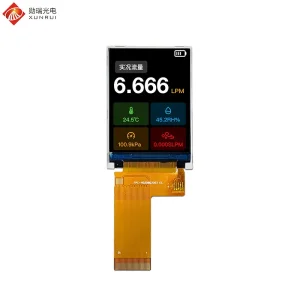
Explore standard, customized, and high-ambient optoelectronic solutions manufactured with ISO-certified zero-defect standards.





Deep Dive Engineering
Engineering Architecture: Why 4-Inch Resistive Displays Dominate Mission-Critical HMI
In high-noise, glove-operated, or contaminant-heavy environments, capacitive screens often falter. The 4.0-inch resistive form factor provides unmatched input deterministic performance, zero false triggering, and wide-temperature stability.
1M+
Point Actuations Lifetime (4-Wire)
35M+
Touch Lifetime (5-Wire Industrial)
-30°C to +85°C
Operating Temperature Envelope
0%
False Touches under Water & Fluids
Pressure-Activated Circuit Topology
Unlike capacitive touch screens relying on ionic skin conduction, a 4-inch resistive touch screen utilizes two transparent Indium Tin Oxide (ITO) conductive sheets separated by micro-insulating dot spacers. When pressure (finger, thick industrial gloves, or stylus) is exerted, the flexible top layer touches the rigid lower substrate, creating a reliable voltage divider loop. This completely eliminates electrostatic discharge (ESD) susceptibility and spurious touch anomalies caused by direct fluid spatter.
Zero False Triggers
10-100g Activation Force
Stylus / Glove Compatible
Industrial Drive Interface Protocols
Our custom 4-inch resistive LCD displays are compatible with native 4-wire, 5-wire, and digital touch controller ICs (e.g., ADS7846, TSC2007) via I2C, SPI, or UART protocols. The underlying TFT display substrates support MCU 8080/6800 parallel, RGB 24-bit, and high-speed SPI interfaces, making integration seamless for cost-effective microcontrollers (STM32, ESP32) as well as complex industrial SoCs (NXP i.MX, TI Sitara).
SPI / I2C / UART
MCU 8080 8/16-bit
RGB 18/24-bit
Optical Performance & Transmittance Tuning
Standard resistive panels often suffer from 18-20% light attenuation due to internal reflections between conductive layers. Xunrui engineers utilize Anti-Glare (AG) chemical etching, Index-Matching ITO coating, and polarization control films, elevating total module optical transmittance beyond 83%. Coupled with high-brightness LED arrays reaching up to 1,000 cd/m², sunlight-readable operation is guaranteed in unshaded marine and field deployment.
AG/AR Coating
83%+ Transmittance
Sunlight Readable
Macro Application Profiles
End-Market Vertical Implementations
Analyzing cross-industry deployment profiles where the 4-inch resistive display represents the optimal convergence of mechanical envelope, thermal resilience, and bill-of-materials efficiency.
Field Instrumentation & Gas Detectors
Handheld gas chromatographs, radiation monitors, and surveying devices operate in rain, snow, and explosive atmospheres. The 4-inch resistive module enables precise stylus logging and button clicking with thick thermal work gloves, compliant with Class I, Division 2 / ATEX intrinsically safe device mechanical designs.
Heavy Machinery & Agriculture Cockpits
Harvester and hydraulic crane auxiliary control pods require compact screens unaffected by heavy vibrations, hydraulic oil splash, and rapid thermal cycling. Reinforced 5-wire resistive layers prevent single-point surface wear, delivering multi-year uncalibrated precision.
Laboratory & Clinical Diagnostics
Syringe pumps, benchtop centrifuges, and sterilization equipment demand chemical wipe-down resilience against harsh solvents (alcohol, chlorine solutions). The resistive screen's hermetically sealed ITO-polyester film barrier protects the core TFT liquid crystals from fluid ingress.
Industrial Automation & Smart Metering
For factory line terminal nodes subjected to extreme high-voltage EMI generated by VFD drives and AC motors, resistive touch screens do not require active algorithmic noise filtering, bypassing firmware hang-ups typical of low-cost capacitive microcontrollers.
Standard Engineering Matrix
4-Inch Series Technical Specifications
Benchmark data for Xunrui 4.0-inch resistive display configurations available for immediate engineering customization.
| Parameter / Metric | Commercial Grade Config | Industrial Grade Config | Ultra-Rugged / Automotive Config |
|---|---|---|---|
| Active Resolution (Pixels) | 480 × 800 (Portrait) / 480 × 480 (Square) | 480 × 272 / 480 × 800 | 720 × 720 / 480 × 800 IPS |
| Touch Sensor Technology | 4-Wire Film-to-Glass Resistive | 5-Wire Long-Life Industrial RTP | Armored Glass-on-Glass Resistive (GRP) |
| Luminance (Backlight) | 250 – 350 cd/m² (Nits) | 500 – 800 cd/m² | 1,000 – 1,200 cd/m² (Sunlight Legible) |
| Operating Temperature | -10°C to +60°C | -20°C to +70°C | -30°C to +85°C (Extended Temp LC) |
| Interface Pinout Support | MCU 8-bit / SPI 4-wire | RGB 24-bit + SPI / MCU 16-bit | MIPI DSI / RGB / LVDS Driver Board |
| Surface Hardness & Coating | 3H Clear / Anti-Scratch | 3H Anti-Glare (AG) Treated | 7H Armored Composite AG/AR/AF |
| Backlight Half-Life | 30,000 Hours (Typ.) | 50,000 Hours | 70,000+ Hours with Smart PWM Dimming |
Factory 4.0 Ecosystem
China Factory 4.0: Supply Chain Agility & Scalability Advantage
Shenzhen Xunrui Optoelectronic Technology operates modern automated COG (Chip-on-Glass), FOG (Flex-on-Glass), and cleanroom lamination lines, delivering global OEMs unmatched manufacturing velocity.
Full In-House Industrial Integration
By producing the raw TFT panel backlights, bonding the touch overlay (RTP or PCAP), stamping customized FPC tail pin-outs, and fabricating adapter driver boards in-house, Xunrui eliminates multi-tier subcontractor margins and risks. This vertically unified approach ensures rapid sample turnaround within 7-14 business days.
Guaranteed 5-to-7 Year Lifecycle Continuity
Industrial design cycles are long and re-certification of equipment (FDA, UL, CE) is cost-prohibitive. Xunrui protects Tier-1 industrial buyers by securing long-term wafer allocations and committing to frozen Bill of Materials (BOM). In the event of upstream component phase-outs, our engineers deliver drop-in pin-compatible replacements without PCB layout revisions.
5-Stage Zero-Defect Quality Gates
Every single custom 4-inch resistive module undergoes comprehensive ISO 9001/14001 testing: Incoming Quality Control (IQC), raw glass AOI micro-defect scanning, FOG ultrasonic bonding inspection, 72-hour thermal stress chamber aging, and final Outgoing Quality Control (OQC) automated visual and touch coordinate calibration.
Next-Gen Optoelectronics
Technical Roadmap: The Next Generation of Resistive Displays
Addressing legacy limitations through cutting-edge material science, tactile haptic feedback integration, and high-performance multi-touch resistive architectures.
Armored Glass-Film-Glass (GFG) Hybrids
Traditional PET top films are vulnerable to razor-sharp tool scrapes. The next-generation 4.0-inch modules feature ultra-thin chemically strengthened flexible glass (0.05mm - 0.1mm) as the primary impact barrier, achieving 7H scratch hardness while maintaining mechanical flexibility for low-pressure resistive activation.
Integrated Piezo Haptic Tactile Confirmation
For machine operators working blind or wearing heavy insulated welder gloves, visual confirmation of virtual button presses is insufficient. Our technical roadmap incorporates miniature ceramic piezoelectric actuators directly along the perimeter bezel of the 4-inch display, delivering sub-millisecond physical click confirmation.
AMR (Analog Matrix Multi-Touch Resistive)
Combining the indestructible noise-free benefits of pressure actuation with dual-touch gesture capabilities (pinch-to-zoom, rotate, multi-finger interlocks) for safety-critical HMI, overcoming the single-touch constraint of legacy 4-wire systems.
Procurement Assurance
Meeting the Exacting Demands of Global Procurement Teams
From initial design-in schematic assistance to international regulatory compliance and overseas stocking logistics, Xunrui provides end-to-end reliability for enterprise supply chains.
Full Regulatory & Environmental Compliance
All display stacks and raw materials are fully compliant with RoHS 3 (EU 2015/863), REACH (SVHC), CE, and FCC electromagnetic emissions regulations. Halogen-free, UL94-V0 fire-rated FPC cables and anti-shatter optical films are standard configurations for critical OEM hardware.
Engineering-to-Engineering (E2E) Support
You speak directly with optoelectronic engineers, not order-takers. We review your STEP 3D CAD files, advise on gasket compression tolerances to prevent false perimeter touches, evaluate timing diagrams, and write sample initialization C-code for your firmware engineers.
Flexible Pilot Batching & Global Hub Stocking
Following custom prototype sign-off, we offer pre-production trial runs of 5 to 500 units to support field trials, beta testing, and regulatory certifications. Volume production is backed by flexible safety stock arrangements via Shenzhen, Hong Kong, and international forwarder hubs.
Technical Knowledge Base
Frequently Asked Questions: 4-Inch Resistive Display Customization
Essential answers regarding mechanical customization, electrical integration, and cost tradeoffs for procurement managers and hardware design teams.
Why choose a 4-inch resistive touch screen over a capacitive (PCAP) display for industrial systems?
Resistive touch screens rely on physical pressure rather than electrical capacitance. This makes them inherently immune to false triggers caused by water sprays, oil splashes, chemical liquids, or heavy electrical EMI noise from nearby motors and power electronics. Additionally, resistive displays can be operated with any input medium: thick leather or rubber work gloves, plastic styluses, or fingernails, which is critical for industrial factory automation, outdoor fieldwork, and medical environments.
What are the differences between 4-wire and 5-wire resistive touch panels on 4.0" TFT LCDs?
A 4-wire resistive screen uses both the top flexible film and bottom glass substrate to sense coordinates (X on one layer, Y on the other). If the top PET layer gets scratched or heavily worn, touch accuracy drops significantly, giving it a typical life of ~1 million touches. A 5-wire resistive screen applies all coordinate voltage sensing to the lower, durable glass substrate, utilizing the top flexible film solely as a conductive probe. Consequently, surface scratches on the top layer do not affect accuracy, elevating operational longevity to over 35 million touches, making 5-wire ideal for intense point-of-sale or heavy machine controls.
How can we improve sunlight readability on a 4-inch resistive LCD module?
Resistive screens have an air gap between the two ITO layers that can cause around 15-20% internal light reflection. Xunrui resolves this through three optoelectronic engineering enhancements: (1) Increasing backlight luminance using high-efficiency industrial LEDs up to 800 - 1,200 nits; (2) Applying chemically etched Anti-Glare (AG) and Anti-Reflective (AR) optical coatings onto the outer PET/Glass surface; and (3) Optical bonding between the TFT cell and the resistive touch sensor to eliminate internal refractive index discontinuities.
What parameters can be customized for a 4.0-inch resistive TFT display project?
Xunrui offers extensive end-to-end customization: module mechanical thickness, active area aspect ratio (standard 4:3, wide 16:9, or square 1:1), FPC flat cable length, shape, shielding (EMI tape), and pinout mappings. We can alter backlight current ratings and color rendering (CRI), configure wide-temperature liquid crystal fluid (-30°C to +85°C), integrate hardware driver boards (HDMI, VGA, AV, USB/UART touch bridges), and customize the outer touch film with custom silk-screened logos, dead-front borders, and custom bezel cutouts.
What is the minimum order quantity (MOQ) and sample lead time for customized units?
For rapid prototyping and R&D verification, engineering samples are built within 10-18 calendar days following drawing sign-off. Once samples are approved, we support small-batch trial production runs of 5 to 500 units to derisk pre-compliance and field testing. Mass production for custom tooling or dedicated FPC layouts carries a production-friendly MOQ of 1,000 units, backed by structured buffer-stock agreements.
How do you prevent the enclosure bezel from causing ghost touches on resistive screens?
A common mechanical engineering pitfall is improper bezel clearance. If the housing presses against the active area or perimeter spacer dots, constant false touch inputs occur. Xunrui provides 3D STEP models with clearly demarcated "Active Area", "Viewing Area", and "Forbidden Clamping Zone" guidelines, as well as customized Poron foam gaskets with specific Shore hardness ratings to cushion against chassis vibration while isolating pressure strictly to intentional inputs.
Comprehensive Catalog
High-Reliability Industrial Display Lineup
Explore additional high-brightness, wide-temperature, and custom resistive/capacitive display modules manufactured at our Shenzhen facility.







