
High-Reliability OEM Display Modules & Systems
Explore our active manufacturing matrix spanning specialized handheld geometries, sunlight-readable industrial terminals, and extreme-environment HMI panels.

Custom 5 inch 480×272 TN TFT LCD Module with resistive touch panel
View Product Specs
Custom 8 inch TFT LCD module 800×1280 MIPI 31pin interface 480nit IPS screen
View Product Specs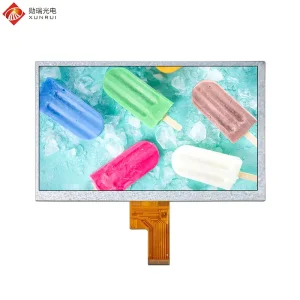
China 7 inch 1024×600 MIPI 30PIN 350nit IPS TFT LCD Display
View Product Specs
Custom 6.9 inch 280×1424 MIPI 30pin interface long strip IPS TFT LCD module
View Product Specs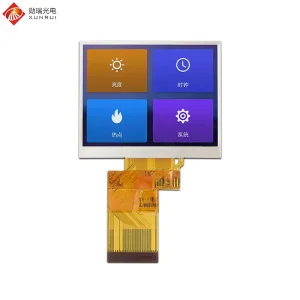
China 3.5 inch 320×240 RGB 54pin interface 350nit TN TFT LCD module
View Product Specs
Custom 21.5 inch 1080×1920 LVDS 30pin 250nits IPS TFT LCD Display
View Product Specs
China 7 inch HDMI 1024×600 IPS TFT LCD Module With driver board and CTP
View Product Specs
China 2.8 inch 240×320 MCU 30pin interface 250nit TN TFT LCD display
View Product SpecsOvercoming Thermal & Optical Boundaries in 4-Inch Architectures
A comprehensive analysis of how fluid dynamics, crystalline matrix formulations, and precision electro-optical packaging prevent blackening defects, crystallization, and latency deterioration in ruggedized applications.
The Physics of Wide-Temperature Liquid Crystal Switching
Standard consumer-grade thin-film transistor liquid crystal displays (TFT LCDs) are typically constrained to operational thresholds between 0°C and 50°C. In sub-zero ambient conditions, standard nematic liquid crystal fluids experience exponential increases in rotational viscosity (γ1). This molecular sluggishness leads to drastic frame lag, image ghosting, and full pixel transition delays exceeding 500 milliseconds.
Conversely, when ambient thermal levels surge beyond 70°C—exacerbated by direct solar radiation absorbing into darker enclosures—standard displays reach their clearing point (Tni). At this threshold, the liquid crystal collapses into an isotropic liquid phase, generating total screen blackening and loss of contrast.
Shenzhen Xunrui Optoelectronic Technology Co., Ltd. (XUNRUI) eliminates these thermodynamic failure modes by synthesizing wide-temperature nematic mixtures with fluorinated molecular structures. Our Custom 4-inch wide temperature LCD modules deliver active crystal alignment from -30°C to +85°C without external heaters, preserving response latency within 25–35 milliseconds across the operational spectrum.
| Parametric Indicator | Commercial Grade | XUNRUI Wide-Temp 4.0" |
|---|---|---|
| Operating Temperature Range | 0°C to +50°C | -30°C to +85°C |
| Storage Temperature Range | -20°C to +60°C | -40°C to +90°C |
| Isotropic Clearing Point (Tni) | < 70°C | ≥ 105°C (Anti-Blackening) |
| Sub-Zero Response Time (-20°C) | > 450 ms (Severe ghosting) | ≤ 35 ms (Fluid switching) |
| Luminance Options | 200–350 cd/m² | 400–1,200+ cd/m² Sunlight |
| Surface Polarizer Grade | Standard Triacetyl Cellulose | Anti-UV Hardcoated Polarizer |
Optical Bonding & Condensation Immunity
Standard displays relying on air-gap perimeter tape fail under cycling thermal dew points, producing internal glass fogging. We utilize high-refractive-index Optical Clear Adhesives (OCA) and Optically Clear Resins (OCR) to fully fuse the LCD polarizers to the touch screen cover glass. This vacuum-autoclaved process eliminates internal reflection boundaries, bolsters shock resistance up to IK08, and eradicates moisture ingress permanently.
Precision Backlight & Thermal Spreading
Achieving sustained 1,000+ nit sunlight readability in a compact 4.0-inch envelope introduces localized thermal challenges. Our proprietary edge-lit LED lightbars feature high-efficacy chips running at reduced drive currents. Coupled with high-thermal-conductivity aluminum nitride (AlN) substrates and flexible graphite dissipation pads, junction temperatures are kept far below silicon aging limits to achieve an MTBF surpassing 50,000 hours.
EMI-Shielded Flexible Printed Circuits (FPC)
Compact industrial equipment packs wireless antennas, switching DC-DC power converters, and relay coils close to the display module. XUNRUI customizes high-speed differential FPCs featuring double-sided electromagnetic interference (EMI) copper shield films and ground termination stitching. This architecture guarantees strict compliance with IEC 61000-4-2 ESD standards (±15kV Air, ±8kV Contact) and CISPR 25 Class 5 vehicle radiation limits.
Global Commercial & Industrial Deployments
How top-tier OEMs deploy 4-inch wide-temperature TFT architectures across severe environments around the globe.
Outdoor EVSE Infrastructure
Level 3 DC Fast Chargers installed across desert zones in the American Southwest and the Middle East face blistering enclosure heat over 65°C. Our wide-temp IPS 4" displays maintain sharp payment prompts and charging graphs without isotropic blackout or color shifting.
Cryogenic Cold Chain Fleet
Automated warehouse telematics and barcode readers in sub-zero logistic hubs (operating at -30°C continuously) require instant touch response. Customized resistive touch or glove-tuned capacitive touch configurations preserve seamless warehouse scanning.
Heavy Mining & AgTech Telematics
Combines, tractors, and open-pit excavators subject displays to unrelenting mechanical shock, UV radiation, and hydraulic pump vibration. Chemically strengthened Corning Gorilla Glass covers with anti-reflective (AR) surface treatments guarantee operator safety and legibility.
Medical Sterilization Terminals
Autoclave-adjacent medical consoles and emergency defibrillators require sealed surface topologies resistant to isopropyl alcohol, bleach, and hospital-grade sanitizers. Our IP67/IP68-rated cover lenses ensure fluid-sealed reliability.
End-to-End Quality Gates & Rigorous Validation Process
Shenzhen Xunrui Optoelectronic Technology Co., Ltd. operates under certified ISO 9001 and ISO 14001 frameworks, enforcing rigorous five-checkpoint screening on every production batch.
IQC Inspection
Incoming raw material optical profiling, polarizers defect spectrometry, glass substrate planarity testing, and LED binning verification.
Glass AOI
Automated Optical Inspection for particle verification, ITO track continuity, and sub-micron glass micro-crack identification.
FOG & Aging
Film-on-Glass (FOG) thermocompression anisotropic conductive film (ACF) bonding followed by electrical stress thermal pre-aging.
Thermal Dwell
High/low-temperature operating burn-in chambers (120 continuous hours from -40°C soak up to +85°C at 90% RH cycling).
Finished QA
100% white balance, color gamut (NTSC/sRGB), parallax alignment, surface cosmetic checks, and touch linearity calibration.
OQC Shipping
Outgoing quality verification with vacuum antistatic hermetic packaging, drop-box simulation, and regulatory compliance clearance.
Global Traceability, Supply Chain Longevity & Regulatory Confidence
Minimizing procurement friction through engineering-level documentation, guaranteed product life cycles, and international environmental compliance.
7–10 Year Roadmapped Longevity
Nothing disrupts industrial OEM profitability like sudden LCD panel discontinuation (EOL). XUNRUI partners with Tier-1 glass foundries to guarantee architectural stability. We freeze BOM configurations, providing formal PCN (Product Change Notification) lead times of at least 6 to 12 months, accompanied by drop-in replacement pin-to-pin guarantees.
Full CE, FCC, RoHS & REACH Conformance
Every component used in our customized wide-temperature 4-inch displays meets European Union RoHS directive 2011/65/EU and REACH (SVHC) substance restrictions. In addition, our modules undergo stringent radiative and conductive emission validation to assist your end terminal in achieving seamless CE, FCC Class B, and UL listing approvals.
Dedicated FAE Direct Engineering Access
We eliminate frustrating distributor intermediaries. From the initial schematic stage, your hardware and firmware teams interface directly with our Shenzhen optical and mechanical engineers. We provide sample FPC gerbers, sample initialization code for STM32, ESP32, NXP, and Rockchip platforms, and complete timing diagrams within 24 hours.
Technological Roadmaps & The Future of Ruggedized Micro-Displays
Anticipating next-generation machine-interface requirements: from localized Mini-LED micro-dimming to ultra-low temperature self-heating matrix structures.
Mini-LED Full Array Local Dimming (FALD)
By migrating from edge-lit LED lightguides to sub-millimeter Mini-LED arrays beneath 4-inch active matrix substrates, contrast ratios jump from 1,000:1 to over 100,000:1. This enables true HDR rendition for night-vision compatible cockpits and high-ambient outdoor monitors while slicing total system power consumption by 35%.
Piezoelectric Haptic Feedback Integration
Next-generation 4.0-inch human-machine interfaces are transcending purely visual data. By integrating microscopic piezoelectric ceramic actuators beneath chemically toughened cover glass, operators receive crisp, tactile clicks confirming critical control inputs—even when operating machinery with heavy duty protective gloves.
Ultra-Wide Extended Formulations (-40°C to +95°C)
Our material research team is formulating novel fluorinated nematic liquid crystal compounds combined with dual-substrate transparent ITO heating traces. This will push cold-boot capability down to -40°C with instant sub-millisecond response, expanding application envelopes into deep-space aerospace instrumentation and Arctic exploration telemetry.
Frequently Asked Questions on Wide-Temperature LCDs
In-depth technical answers addressing liquid crystal chemistry, capacitive touch calibration, interfaces, and volume procurement considerations.
Precision High-Brightness & Specialized TFT Displays
Explore our extended series of ultra-bright sunlight readable panels, touch-integrated displays, and wide-temperature industrial components.

China 7 inch 1024×600 1000nit RGB IPS TFT LCD Display with CTP
View Product Specs
China 12.1 inch 1024×768 LVDS 900nit IPS TFT LCD display with capacitive touch panel
View Product Specs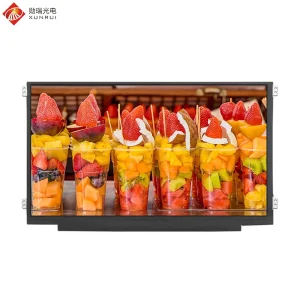
Custom 11.6 inch 1920×1080 EDP 30PIN 220nit IPS TFT LCD module
View Product Specs
Custom 2.4 inch TFT LCD module 240×320 SPI 14pin interface 250nit IPS screen
View Product Specs
Custom 7 inch 1024×600 IPS TFT LCD display with capacitive touch panel
View Product Specs
China 4.3 inch 480×272 RGB 40pin interface 350nit TN TFT LCD module
View Product Specs
Custom 3 inch 240×400 RGB 45pin 400nit IPS TFT LCD Module
View Product Specs