

Custom 7 inch 1024×600 IPS TFT LCD display with capacitive touch panel Manufacturers, Suppliers
View SpecificationsExplore our engineered display solutions matching rigid industrial specifications, including standard, high-brightness, wide-temperature IPS, and advanced capacitive touch assemblies.
Custom 7 inch 1024×600 IPS TFT LCD display with capacitive touch panel Manufacturers, Suppliers
View Specifications
Custom 2 inch 480×240 RGB 40pin 150nit TN TFT LCD Display Supplier, Suppliers
View Specifications
Custom 8 inch TFT LCD module 800×1280 MIPI 31pin interface 480nit IPS screen Suppliers, Factories
View Specifications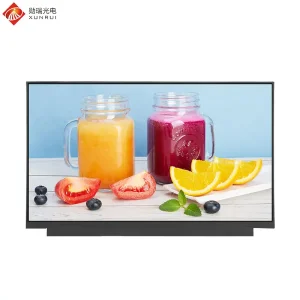
China 13.3 inch 1920×1080 EDP 30PIN 280nit IPS TFT LCD Module Suppliers, Factories
View Specifications
Custom 2.4 inch 240×320 MCU 40pin interface 250nit TN TFT LCD module Manufacturers, Factory
View Specifications
China 8 inch 1024×768 LVDS 40pin interface 300nit IPS TFT LCD module Manufacturer, Supplier
View Specifications
Custom 21.5 inch 1080×1920 LVDS 30pin 250nits IPS TFT LCD Display Manufacturers, Suppliers
View Specifications
Custom 7 inch 800×480 TN TFT LCD display with resistive touch panel Supplier, Factory
View SpecificationsA comprehensive examination of why the 5.7" form factor continues to dominate medical instrumentation, defense terminals, and industrial programmable controllers worldwide.
For decades, the standard 5.7-inch display (traditional 320×240 QVGA and 640×480 VGA) served as the undisputed workhorse for embedded HMIs and oscilloscopes. Modern industrial systems now demand direct drop-in retrofits that provide backwards pinout compatibility alongside high-density IPS color fidelity, wide 85/85/85/85 symmetrical viewing angles, and zero color shift under acute operational angles.
Deployments in chemical processing, steel manufacturing, and heavy transport create difficult physical hurdles: explosive gases, aggressive caustic washdowns, and high acoustic noise. Choosing between Projected Capacitive (PCAP) and 4-Wire/5-Wire Resistive (RTP) requires evaluating input mechanical pressure versus multi-touch gesture fluency.
Air-gap lamination suffers from internal optical boundaries causing roughly 8.5% total light reflectance, severely washing out graphics under direct sunlight. Shenzhen Xunrui Optoelectronics incorporates proprietary Optical Clear Adhesive (OCA) and Liquid Optical Clear Resin (LOCA) bonding methods inside Class 1,000 cleanrooms to eliminate internal interfaces.
Every commercial sector imposes distinctive environmental stresses on touch panels. Our engineering division configures custom 5.7-inch stacks based on deep vertical regulatory demands.
Compliant with strict IEC 60601-1-2 EMC directives. Engineered to withstand continuous exposure to hospital-grade germicidal cleaners (bleach, isopropyl alcohol, glutaraldehyde) without etching or delamination.
Heavy machinery induces high mechanical vibration and intense high-voltage electromagnetic interference from VFDs and servo drives. Modules integrate heavy-duty differential signaling.
Outdoor charging kiosks and smart substation panels require 24/7 legibility under blazing UV light and sudden freezing downpours. High-brightness backlights ensure readability anywhere.
Extreme salt-fog corrosion and wide humidity spectrums demand completely sealed perimeter seals. Designed for night-vision goggle compatibility and instant tactile confirmation.
Minimizing total cost of ownership (TCO) through strategic chip procurement, multi-source glass sourcing, and rigorous obsolescence mitigation protocols.
Consumer display factories regularly cancel panel lines every 18 months, creating costly requalification nightmares for enterprise OEMs. Xunrui Optoelectronics locks in source display glass cuts and maintains backward-compatible IC roadmaps across a minimum 5- to 10-year production horizon.
Our engineering team works closely with leading touch IC providers including EETI, Ilitek, FocalTech, and Goodix. By modifying controller register tables and optimizing drive/sense lines directly in firmware, we guarantee fast response times (<10ms) and multi-finger tracking fidelity.
Navigating the chasm between initial engineering validation and volume rollout requires flexible supplier tooling policies. We eliminate high barriers of entry by offering flexible trial batch minimums followed by high-capacity automated mass manufacturing.
A rigorous phase-gate methodology de-risks every electronic, optical, and mechanical parameter before committing high capital to high-volume injection or glass cutting molds.
Detailed mechanical envelope check, optical target setting (nits, contrast ratio), pinout configuration, and hostile environment evaluation (operating temperatures, ESD, chemicals).
Issuance of complete 2D/3D CAD drawings detailing cover glass radii, custom bezel silk-screen graphics, FPC routing traces, stiffener thicknesses, and touch sensor channel geometries.
Prototyping within 12–18 business days using rapid-tooling glass cutters and CNC profiling. Samples undergo rigorous optical and electrical validation before courier dispatch to your R&D labs.
A controlled production run of 5 to 500 units validates mass assembly tooling jigs, yields, optical bonding consistency, and thermal cycling reliability under actual factory conditions.
Automated FOG (Film-on-Glass) bonding, high-speed SMT component placement, automated optical inspection (AOI), and robotic high-precision LOCA/OCA optical lamination at scale.
100% incoming IQC, bare glass scratch detection, FOG aging, 72-hour high-temperature/high-humidity finished product burn-in, and outgoing OQC functional verification before export packing.
Shenzhen Xunrui Optoelectronic Technology Co., Ltd. builds every custom 5.7" touch panel module inside fully certified ISO 9001 and ISO 14001 facilities equipped with Class 1,000 cleanrooms.
Operating over 5,000 square meters of modern manufacturing floor space in Shenzhen's Bao'an high-tech corridor, our climate-controlled Class 1,000 cleanrooms eliminate particulate contamination during critical OCA and LOCA lamination stages.
Enterprise procurement teams in Europe, North America, and Japan rely on our documented material traceability. Every batch is delivered with complete Certificate of Conformance (CoC) and environmental lab declarations.
Our display modules power mission-critical equipment manufactured by global industrial powerhouses. Through close technical integration, our displays interface seamlessly with architectures from ABB, Siemens, Schneider Electric, Honeywell, and Tesla ecosystem partners.
Explore round, square, ultra-compact, and sunlight-readable display configurations designed to integrate directly with our custom touch panel assemblies.

Custom 5 inch 720×1280 MIPI 40pin 1000nit IPS TFT LCD Display Manufacturer, Supplier
View Specifications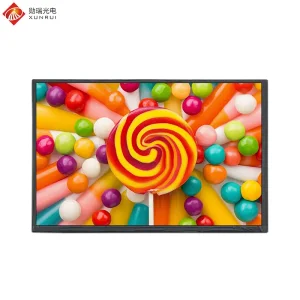
China 10.1 inch 1920×1200 LVDS 45pin 350nit IPS TFT LCD Display Manufacturers, Factories
View Specifications
Custom 10.1 inch 800×1280 MIPI IPS TFT LCD Display with capacitive touch Manufacturer, Suppliers
View Specifications
China 1.8 inch 360×360 MIPI 30pin 400nit IPS Circular TFT LCD Module Manufacturer, Suppliers
View Specifications
China 4 inch 480×480 RGB Square IPS TFT LCD Module with capacitive touch Manufacturer, Supplier
View Specifications
Custom 2.4 inch TFT LCD module 240×320 SPI 14pin interface 250nit IPS screen Manufacturer, Factory
View Specifications
Custom 4 inch IPS 720×720 MIPI 30pin interface Circular TFT LCD module Manufacturer, Factories
View Specifications
Custom 5 inch 800×480 RGB 50pin interface 500nit TN TFT LCD Display Suppliers, Factories
View SpecificationsAnticipating the technological demands of smart industrial automation, robotics, and next-generation field devices through early adoption of integrated architectures.
The convergence of Touch and Display Driver Integration (TDDI) into a single monolithic silicon wafer reduces interconnect complexity. By fusing the capacitive touch sensor layers directly onto the display glass, the entire optical stack becomes noticeably thinner while cutting production costs and boosting optical clarity.
Critical machinery operators require tactile feedback when triggering soft buttons on touch screens. Our advanced R&D roadmap incorporates localized piezoelectric actuators directly beneath the perimeter cover glass, providing crisp mechanical confirmation clicks even through heavy leather safety gloves.
For handheld solar, geological, and agricultural equipment, high-luminance LED backlights can drain battery banks rapidly. Our semi-transmissive (transflective) TFT matrices utilize incoming ambient sunlight as the secondary illuminator, delivering crisp readability outdoors under zero backlight power.
In-depth responses straight from Xunrui's display engineering desk, resolving common concerns regarding integration, longevity, and environmental qualification.
Yes. Custom flexible printed circuit (FPC) routing is one of our primary core competencies. If you are retrofitting a discontinued legacy display from manufacturers like Sharp, Kyocera, or Ampire, our engineers can tailor the FPC length, bend radius, connector pitch (e.g., 0.5mm or 1.0mm), and exact pinout assignments to match your existing motherboard, eliminating the need for expensive PCB redesigns.
Following final CAD sign-off, customized tooling and functional samples are typically delivered within 12 to 18 business days. After sample qualification, we support a small trial batch of 5 to 500 units to validate your pilot build. Full custom volume production generally requires an MOQ of 1,000 units, backed by our continuous long-term scheduled delivery programs.
Air-gap perimeter tape bonding leaves a 0.2mm–0.5mm air cushion between the touch sensor and the TFT glass, creating two internal reflective boundaries that produce internal glare and lower contrast in bright sunlight. Optical bonding uses an optically clear adhesive (refractive index matched at 1.49) to completely seal the interface. This setup eliminates internal reflection, improves impact resistance by roughly 300%, prevents condensation, and provides superior heat dissipation.
We incorporate advanced industrial touch ICs from EETI and Ilitek programmed with mutual capacitance and self-capacitance hybrid scanning algorithms. The firmware actively calculates water droplet impedance signatures and suppresses localized parasitic noise, enabling the operator to continue multi-touch tracking even when saline fluid or water puddles accumulate across the active display area.
Yes. We chemically strengthen high-grade aluminosilicate and soda-lime glass substrates (Corning Gorilla Glass or Dragontrail equivalents) with depths of layer (DOL) exceeding 40µm and compressive stress (CS) above 650MPa. By selecting cover glass thicknesses between 2.0mm and 6.0mm, our assemblies reliably pass ball-drop impact tests achieving IK08, IK09, and IK10 ratings without fracturing.
Every single batch passes through our comprehensive 5-gate quality control system: (1) IQC incoming raw material screening, (2) automated bare glass defect detection, (3) FOG bonding verification with high-temperature burn-in, (4) 100% finished product optical/electrical inspection with 72-hour thermal aging, and (5) OQC outgoing pre-shipment audits. Units undergo thermal shock (-30°C to +85°C), high humidity (90% RH at 60°C), and vibration stress testing.