
Featured Display Showcase: High-Performance LCD Modules
Explore our flagship standard and semi-custom TFT LCD display lineup, engineered to deliver exceptional optical performance, thermal resilience, and seamless touch integration.



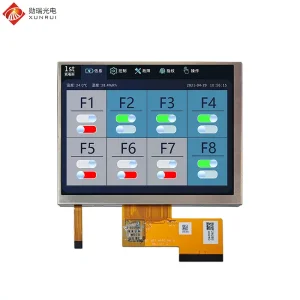


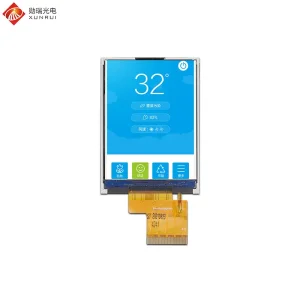

Why China Factory Sourcing Delivers Unmatched Edge for 6.2" LCDs
Shenzhen Xunrui Optoelectronic Technology Co., Ltd. (XUNRUI) pairs raw manufacturing capacity with deep optoelectronic engineering to deliver cost, lead-time, and customization advantages.
Fully Integrated Supply Chain
Located in Shenzhen's Bao'an optoelectronics corridor, our factory maintains direct raw material partnerships with Tier-1 glass and polariser foundries, slashing bill-of-materials costs while safeguarding glass consistency.
By bringing COG, FOG bonding, backlight injection, and optical bonding under our own roof, we reduce multi-vendor latency and prevent production bottlenecks.
Tier-1 Cleanroom Infrastructure
Our 5,000 m² modern manufacturing plant houses Class 1,000 and Class 100 cleanrooms equipped with precision automated vision-guided alignment machines and thermal aging chambers.
Stringent static-free controls and HEPA-filtered staging guarantee low particulate counts, minimizing pixel defects and optical aberrations on custom 6.2" glass surfaces.
Agile NPI & Customization Flexibility
Unlike massive panel suppliers bound to high minimums, XUNRUI offers balanced agile prototyping. We provide single-batch runs from 5 to 500 units to validate mass-production feasibility before launching full 1,000+ unit runs.
Our engineering design cycle provides rapid mechanical FPC layout revisions, bespoke LED lightguide re-engineering, and touch profile calibration within 7–10 working days.
Comprehensive Engineering & Customization Architecture
Our bespoke 6.2-inch display modules are tailored across optical, mechanical, and electronic dimensions to fit exacting OEM space constraints and operational conditions.
Optical Backlight Engineering
We tailor brightness from standard indoor 350-nit builds to ultra-bright sunlight-readable modules exceeding 1,200 nits. High-efficiency Nichia or Osram LED arrays are paired with military-grade light guides and optical films to deliver maximum lumen efficiency without thermal overload.
Advanced Touch Panel Integration
Choose between Projected Capacitive (PCAP) multi-touch and durable 4-wire analog resistive touch panels. We provide cover lenses up to 6mm thick with AG (anti-glare), AR (anti-reflective), AF (anti-fingerprint), and antimicrobially coated glass designed for industrial glove and wet-finger input.
FPC & Signal Interface Tailoring
Our engineers support RGB 24-bit, MIPI DSI (4-lane), LVDS, MCU 8080/6800, and SPI bus protocols. We customize Flexible Printed Circuit (FPC) routing, shield against EMI/EMC radiation, integrate ferrite filters, and relocate connector pinouts to align precisely with your existing carrier boards.
Extended Thermal & Environmental Sealing
Built for demanding outdoor and in-vehicle applications, our wide-temperature liquid crystal fluid configurations support operating ranges from -30°C to +85°C. Structural opto-gel and optical bonding (OCA/LOCA) eliminate the air gap between LCD and touch glass, preventing internal condensation.
Industry Trends Shaping the 6.2" Display Ecosystem
Market dynamics in specialized display formats are driven by demand for sleeker aspect ratios, wider viewing angles, and power-efficient embedded driver IC architectures.
1. Widespread Transition from TN to IPS
Older TN (Twisted Nematic) 6.2-inch displays suffered from color inversion and contrast degradation when viewed off-axis. OEM buyers have moved almost exclusively toward All-Viewing-Direction IPS (In-Plane Switching) panels. IPS ensures constant color chromaticity (85/85/85/85 viewing cones), critical for vehicle cluster panels and collaborative medical terminals.
2. High-Density Integration & Low-Power Architecture
Industrial handheld and portable medical devices require reduced parasitic power draw. Trends favor single-chip Driver ICs integrating gate/source drivers, charge pumps, and power management into a compact chip-on-glass footprint. Coupled with high-lumen, low-forward-current LED backlights, modern 6.2" displays cut power draw by up to 35% compared to legacy generations.
3. Full Optical Lamination as Default Baseline
Air-bonding techniques are giving way to advanced optical bonding using UV-curable liquid optical clear adhesives (LOCA) or dry OCA films. Optical bonding matches the refractive index of the display glass to the touch sensor, eliminating internal boundary reflections. This boosts contrast by up to 400% in bright ambient conditions and improves shock absorption up to IK08/IK09 impact ratings.
Localized Application Scenarios & Case Deployments
The specialized 6.2-inch display form factor bridges compact handheld devices and mid-sized desktop interfaces, serving varied commercial, transit, and industrial workflows.
Automotive Dashboard & Center Stack
Widely adopted across two-wheelers, EV charging piles, commercial fleet telematics, and secondary automotive consoles. Designed to meet AEC-Q100 driver IC qualification, survive thermal spikes from -30°C to +85°C, and resist vibration-induced micro-fretting corrosion on connector interfaces.
Medical Diagnostics & Patient Monitors
Integrated into portable patient monitors, infusion pump interfaces, automated external defibrillators (AEDs), and handheld ultrasound diagnostics. Engineered with antimicrobial surface chemistry, electromagnetic immunity (IEC 60601-1-2), and high-contrast color fidelity for precise medical wave-graph rendering.
Industrial Automation & Smart Metering
Ideal for DIN-rail machine HMIs, smart water and power substation monitoring cabinets, logistics barcode scanning docks, and outdoor field inspection tablets. Features 4-wire resistive or industrial-grade PCAP configurations that maintain input accuracy through heavy grease, water mist, and insulated utility gloves.
Technical Engineering Specifications Matrix: Custom 6.2" LCD
Reference data sheet parameters showing the balance of optical clarity, power consumption, and mechanical durability across standard and extended-temp options.
| Specification Parameter | Standard Commercial Grade | High-Brightness Outdoor Grade | Ruggedized Industrial / Automotive |
|---|---|---|---|
| Active Screen Diagonal | 6.2 Inch (16:9 / Custom Ratios) | 6.2 Inch (16:9 Aspect Ratio) | 6.2 Inch (Custom Form Factor) |
| Resolution (Pixels) | 800 × 480 (WVGA) / 1024 × 600 | 1024 × 600 (WSVGA) / 1280 × 720 | 800 × 480 / 1280 × 720 (HD) |
| Display Technology | TFT IPS All Viewing Direction | IPS Optical Lamination | IPS Ultra-Wide Viewing (85/85/85/85) |
| Luminance (Brightness) | 350 – 500 cd/m² (nits) | 800 – 1,200 cd/m² (Sunlight Readable) | 600 – 1,000 cd/m² (Dimming Capable) |
| Contrast Ratio | 800:1 Typ. | 1000:1 Typ. | 1000:1 to 1200:1 Typ. |
| Interface Support | RGB 24-bit / SPI / MCU | MIPI DSI 4-Lane / LVDS | Dual LVDS / RGB / Customized FPC |
| Operating Temperature | -20°C to +70°C | -20°C to +70°C | -30°C to +85°C (Extended Temp) |
| Touch Sensor Type | Optional 4-Wire Resistive (RTP) | Capacitive Multi-touch (PCAP) | PCAP with Thick Cover Glass (IK08) |
| Backlight Lifespan | 30,000 Hours (Min) | 50,000 Hours (Typ to 50% brightness) | 50,000 Hours with High-grade LEDs |
Global OEM Procurement Pain Points & Factory Solutions
Procuring custom optoelectronics comes with risks around lead times, component obsolescence, and optical quality shifts. Here is how XUNRUI protects your bill of materials.
5-to-7 Year Product Longevity
The Challenge: Rapid consumer glass obsolescence can force costly mechanical and software redesigns for enterprise and medical hardware.
Our Solution: We select industrial-grade roadmaps from raw glass foundries, guaranteeing form, fit, and function stability for 5 to 7 years. When component changes occur, we provide formal PCN notices at least 6 months ahead along with drop-in alternatives.
Five-Gate Quality Assurance System
The Challenge: High defect rates, optical unevenness, and early backlight failures can lead to expensive field warranty claims.
Our Solution: Every panel passes our comprehensive 5-step validation gate: (1) IQC raw material inspection, (2) glass polariser screening, (3) FOG bonding checks with high-temp aging, (4) finished-module burn-in tests, and (5) OQC pre-shipment testing under calibrated illuminants.
Turnkey Electronic Integration
The Challenge: Sourcing the LCD module, touch panel, and driver board from separate vendors creates integration gaps and finger-pointing during failures.
Our Solution: XUNRUI serves as a unified system partner. We design and deliver matched driver boards (supporting HDMI, VGA, AV, Type-C, or LVDS) alongside optically laminated touch sensors, providing single-source accountability for the complete display sub-assembly.
Frequently Asked Questions (FAQ) for Engineering & Sourcing Teams
Practical answers to common technical, commercial, and operational questions asked by procurement and engineering teams prior to sampling.
What is the standard lead time for custom 6.2" LCD samples and mass production?
Initial mechanical and optical drawing approvals take 3 to 5 working days. Custom tooling for FPCs, backlights, and cover glass takes 15 to 20 days, followed by sample delivery within 7 to 10 days. After golden sample sign-off, mass production runs are fulfilled in 4 to 6 weeks depending on volume.
Can XUNRUI customize the 6.2" display to be readable in direct sunlight?
Yes. We use high-efficiency LED edge arrays delivering 800 to 1,200+ nits luminance, paired with transflective polarizers or full optical bonding (OCA) with anti-reflective (AR) surface glass. This setup maintains sunlight readability while controlling heat dissipation.
What is the minimum order quantity (MOQ) for custom vs. standard models?
For custom configurations, we support low-risk prototype validation through pilot batches of 5 to 500 pieces. Full custom mass production typically requires an MOQ of 1,000 pieces. For off-the-shelf and standard sizes, lower quantities can be ordered directly from inventory.
How does XUNRUI handle EMI/EMC compliance issues during display design?
We incorporate silver-paste or copper-mesh FPC shielding, strategically position ground planes, and add differential pair terminations for LVDS and MIPI channels. We also supply custom ferrite beads to help your end device pass CE, FCC, or medical IEC 60601-1 EMC testing.
Additional TFT LCD Modules & Integrated Solutions
Explore our wider range of high-brightness, bar-type, capacitive touch, and wide-temperature modules manufactured in our Shenzhen cleanrooms.







