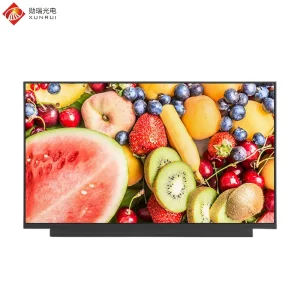
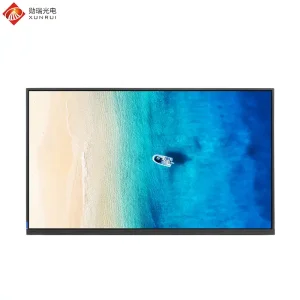
⚙ Featured Micro & Industrial Display Selection (Part I)
Comprehensive standard-line modules directly fabricated at our ISO 9001/14001 Shenzhen manufacturing facility.


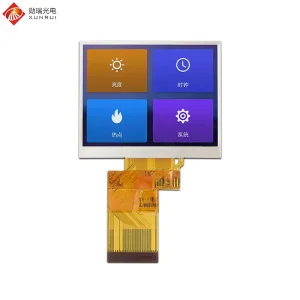
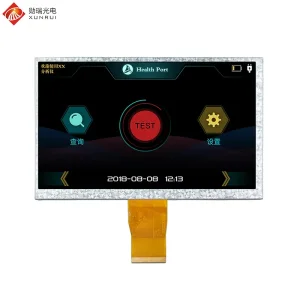




⌘ Global Procurement Demand for TFT 128x160 Displays
Analyzing procurement dynamics, supply stabilization, and lifecycle lifecycle durability across western OEM projects.
01 Architecture & Density
The 128x160 resolution represents a foundational micro-display standard, usually mapped to 1.44-inch and 1.77/1.8-inch diagonal panels. Utilizing driver ICs such as ST7735S or ILI9163C, these panels provide high visual density with ultra-low pin count requirements, making them indispensable for low-power microcontrollers (MCUs) relying on 3-wire or 4-wire SPI protocols.
02 BOM Optimization
Enterprise procurement teams globally leverage 128x160 TFT modules to bridge the functional gap between legacy monochrome character displays and cost-prohibitive high-resolution IPS panels. By maintaining competitive unit economics, OEM designers achieve full-color graphic UI status (RGB 65K/262K colors) within strict BOM budgets.
03 Reliability & Obsolescence
A primary bottleneck for global buyers is sourcing continuity. Xunrui ensures stable silicon-to-glass supply chains, avoiding sudden IC phase-outs. Custom glass cutting, integrated FPC pinning adaptations, and backward-compatible driver implementations safeguard clients against line re-certification risks across a 7-to-10-year device lifespan.
✦ Technical Roadmap & Engineering Solutions
From advanced driver tuning to optical bonding, discover our end-to-end manufacturing workflows.
⚡ Optical Enhancements
Standard 128x160 panels typically provide 200–300 nits. Xunrui offers sunlight-readable customizations scaling up to 1000+ nits with customized LED lightguides, transreflective polarizers, and 3M optical films without exceeding thermal envelope limitations.
⌬ Custom Tailored FPC & Pinout
Direct PCB routing optimization via modified FPC routing, gold-finger pitch re-alignment (0.5mm to 1.0mm), through-hole soldering connections, or integrated ZIF connectors tailored precisely to the buyer's internal enclosure mechanics.
🛡 Ruggedized Cover Assemblies
Integration of chemically strengthened Corning or Asahi cover glass up to 3mm thickness, custom silk-screening, Anti-Glare (AG), Anti-Reflective (AR), and Anti-Fingerprint (AF) surface coatings designed for extreme field conditions.
✔ Industrial Applications & Compliance Frameworks
Meeting mission-critical demands across medical instruments, industrial IoT nodes, and automotive interfaces.
✚ Portable Medical Handhelds
Applied extensively in blood glucose meters, pulse oximeters, and automated dosing pumps requiring crisp visibility, deterministic data refreshing, and biocompatible peripheral gasket integration compliant with ISO 13485 standards.
⚙ Smart Utilities & Metering
Deployed inside gas, water, and power infrastructure sub-assemblies. Featuring wide-temperature operating liquid crystals (-20°C to +70°C or extended -30°C to +80°C), eliminating crystal freeze-out or ghosting in harsh outdoor climates.
⛨ Global Regulatory Compliance
Fully compliant with RoHS 3, REACH, and conflict minerals protocols. Stringent adherence to IPC-A-610 Class 2 and Class 3 electronic assembly criteria, accompanied by documented production tracing for audit-ready compliance.
? Technical FAQ: Custom TFT 128x160 Procurement
Critical engineering considerations, validation stages, and driver integration insights.
What are the common driver ICs used in custom 128x160 TFT modules?
Most 128x160 displays utilize the ST7735S or ILI9163V controller chips. These integrated controllers handle display RAM, timing signals, and support SPI (3-line or 4-line) as well as 8-bit parallel MCU buses, simplifying firmware development across ESP32, STM32, and custom ASIC architectures.
Can we implement touch functionality on such a small footprint?
Yes. We can design custom projected capacitive (PCAP) touch sensors using I2C micro-controllers (e.g., FocalTech or Goodix) or traditional 4-wire resistive touch panels (RTP) optimized for glove or stylus operations on factory floors.
What is the minimum order quantity (MOQ) for fully customized FPC or backlight modifications?
Sample engineering units are typically delivered in batches of 5 to 20 pcs for mechanical and firmware validation. After sign-off, pilot trial batches range from 50 to 500 pcs, and volume mass manufacturing has a sustainable baseline MOQ of 1,000 units.
How do you handle backlight longevity and degradation?
We source industrial-grade Nichia or high-efficiency San'an LED dies paired with constant-current drivers, rated for up to 50,000 operational hours to half-brightness (L50), preventing uneven luminescence and yellow shift across field lifecycles.
What documentation and quality reports are delivered with production batches?
Every bulk dispatch incorporates full Outgoing Quality Control (OQC) inspection reports, dimensional CMM data, FOG bonding tensile pull-test results, optical spectrometer lum-color data, and Certificate of Conformity (CoC) documents.
⚙ Featured Micro & Industrial Display Selection (Part II)
Extended display solutions supporting wide viewing angles, capacitive multi-touch, and specialized form-factors.