Industrial Display Products Showcase
Direct supply line components engineered by factory-grade cleanrooms, covering custom touch integration, wide-temperature builds, and sunlight readability.

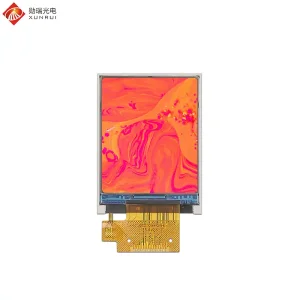






Global Industrial Dynamics of 3.2-Inch IPS Modules
Why the 3.2-inch form factor serves as the golden aspect ratio for handheld micro-computing, field instrumentation, and mission-critical embedded Human-Machine Interfaces (HMI).
Crystal Alignment & IPS Supremacy
Unlike conventional Twisted Nematic (TN) cells that succumb to severe grayscale inversion and contrast shifting under non-perpendicular perspective angles, In-Plane Switching (IPS) aligns liquid crystal molecules horizontally along the substrate plane. A 3.2-inch IPS glass cell guarantees chromatic fidelity at 89° in all four quadrants (89/89/89/89), ensuring instant, error-free operator telemetry in safety-critical medical and avionics terminals.
Thermal Dissipation & Ambient Stress
China 3.2 inch IPS panel factories design custom backlight light guide plates (LGP) featuring high-transmittance optical polymethyl methacrylate (PMMA) alongside high-efficiency Nichia or San'an LED chips. Delivering luminance ratings from standard 300 nits to sunlight-readable 1,500 nits, specialized thermal interface copper heat sinks prevent localized thermal trapping, halting bubbling, yellowing, or polarizer degradation under continuous 24/7 duty cycles.
Bus Protocol Versatility
Modular integration demands electrical flexibility. Shenzhen production ecosystems accommodate legacy parallel MCU 8080/6800 architectures (8/16-bit), RGB 18/24-bit interfaces for zero-latency frame rates, Quad-SPI or 4-wire serial bus solutions for microcontrollers with constrained I/O pins, up to high-speed differential MIPI DSI lane configurations natively driven by ILI9341V, ST7789V, or ST7701S driver controllers.
Inside an Industrial TFT LCD Module Facility
Rigorous, five-tier quality gates eliminate the risks of micro-flicker, particle entrapment, and latent electrostatic discharge across all small-to-medium form factors.
| Quality Gate Phase | Standard Operating Protocol | Metrology & Testing Equipment | Defect Elimination Target |
|---|---|---|---|
| Gate 01: IQC Incoming Material | Automated optical inspection (AOI) of mother glass, polarizers, and driver IC tape carriers. | High-magnification digital microscopy, surface resistance probes. | Cracks, pinholes, ITO open circuits, non-conforming sheet resistivity. |
| Gate 02: FOG (Flex-on-Glass) | High-precision anisotropic conductive film (ACF) thermal compression bonding. | Automated FOG alignment bonders, ACF micro-conductive particle density analyzers. | Electromigration, open alignment shifts (<3μm tolerance), micro-bridging. |
| Gate 03: Optical Lamination | LOCA / OCA vacuum optical bonding of Cover Lens (CG) and Touch Sensor (CTP). | Cleanroom Class 100/1,000 autoclave chambers, bubble-stripping pressure ovens. | Newton rings, optical refraction haze, trapped atmospheric micro-voids. |
| Gate 04: Thermal Aging Chamber | Continuous static and dynamic pattern illumination stress testing under thermal stress. | Calibrated burn-in aging rooms: +60°C / 90% RH and -20°C chambers. | Early infant mortality of LED arrays, display flickering, driver latch-up. |
| Gate 05: OQC Final Metrology | Full optical characterization of luminance uniformity, contrast, and color temperature. | Konica Minolta CA-410 colorimeters, luminance spectrophotometers. | Color coordinate drifting (CIE 1931), delta E deviations, dark room light bleeding. |
Mission-Critical Use Cases for 3.2" IPS Displays
Engineered to deliver uninterrupted visual telemetry and human control across diverse high-vibration, chemically aggressive, and moisture-rich environments.
Smart Metering & IoT Grid Nodes
Smart electrical utility cabinets and IoT edge computing hubs demand continuous legibility under sharp sunlight and freeze cycles. Integrated with 3.2-inch transflective or ultra-bright IPS cells, edge controllers guarantee data readouts in rural substations across -30°C to +80°C ranges without needing external active heaters.
Point-of-Care Handheld Medical
Infusion pumps, ultrasound remote heads, and portable blood gas analyzers rely on chemically toughened, anti-fingerprint (AF) cover lenses. IPS liquid crystals ensure anesthesiologists and clinicians observe blood oxygenation curves and pulse alarms without color-shift distortions from non-perpendicular vantage points.
Factory Industrial Automation (HMI)
Ruggedized production interfaces encounter airborne oils, vibration, and EMI from heavy AC servomotors. Paired with custom thick glass covers and high-noise-immunity touch controller ICs (e.g., ILITEK, FocalTech), these displays support palm rejection, water immunity, and heavy synthetic glove operation.
Global Compliance, Continuity & Lifetime Management
Decoupling your production schedule from semiconductor volatility through proactive glass roadmaps and end-to-end certification assurance.
5 to 7-Year Component Longevity
Redesigning an embedded display due to mid-cycle end-of-life (EOL) components costs tens of thousands in recertification. Direct partnership with Chinese panel fabs ensures a strict 5 to 7-year availability guarantee on mother glass, backlight drivers, and FPC designs, backed by a mandatory 6-month Last-Time-Buy (LTB) notification window.
Stringent Global Environmental Directives
Every module manufactured under XUNRUI optoelectronic supervision strictly complies with EU RoHS (Restriction of Hazardous Substances), REACH regulations, and halogen-free directives. Raw materials are audited for conflict-free minerals, with complete material safety datasheets (MSDS) supplied to streamline export clearance.
Direct Engineering-to-Engineering Support
Eliminate intermediaries and communication barriers. Global clients interface directly with dedicated firmware, mechanical, and optical design engineers. From initializing custom timing registers on novel RTOS kernels to adapting tailor-made flexible printed circuits (FPC), prototyping cycles drop from months to weeks.
Technology Roadmap: The Evolution of Compact IPS Cells
Navigating upcoming technological breakthroughs across micro-optics, integrated touch controllers, and ultra-low power display silicon.
In-Cell Touch (TDDI) Integration
The display landscape is transitioning from discrete add-on Projected Capacitive (PCAP) laminates toward Touch and Display Driver Integration (TDDI). By integrating touch sensing electrodes directly inside the liquid crystal cell structure, 3.2-inch modules shed 25% of their total z-height, cut production weight, and eliminate optical boundary reflections.
Micro-LED & Mini-LED Hybrid Backlights
Next-generation 3.2-inch IPS displays incorporate high-density Mini-LED local dimming arrays. Reaching peak contrast ratios beyond 100,000:1 with true deep black states, this technology delivers surgical clarity without the organic burn-in risks and ultraviolet degradation inherent to OLED panels.
Surface Science & Polarizer Nanocoating
Advancements in nanometer-scale sputtering are introducing chemically bonded Anti-Glare (AG), Anti-Reflective (AR), and Anti-Microbial coatings directly onto industrial cover glass. These finishes preserve total specular reflectance below 0.5%, maintaining sharp contrast in harsh, direct solar washdown conditions.
Frequently Asked Questions on 3.2" IPS Panel Sourcing
Clear, unvarnished insights into minimum orders, optical bonding differences, customization costs, and thermal performance validation.
Extended Optoelectronic Solutions
Explore our complete production line of round, bar-type, and wide-format industrial display modules engineered for global hardware builders.