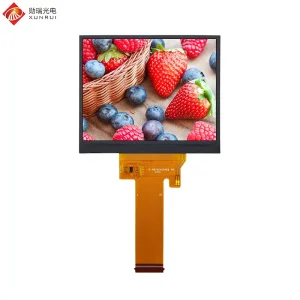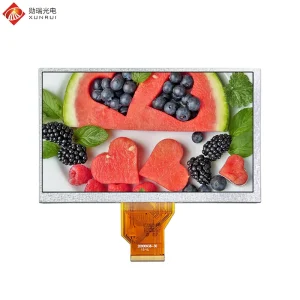
High-Precision Standard & Custom Display Modules
Direct-factory certified display architectures featuring custom pinout topologies, optical enhancement bonding, and industrial-grade silicon drivers.
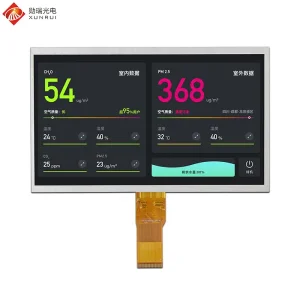
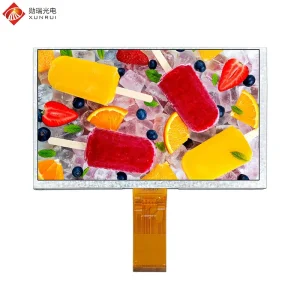
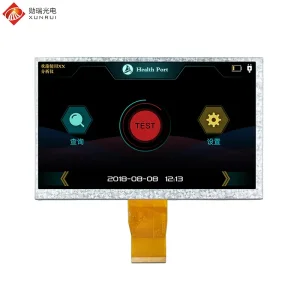
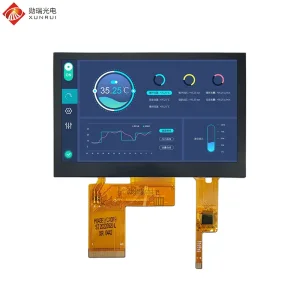
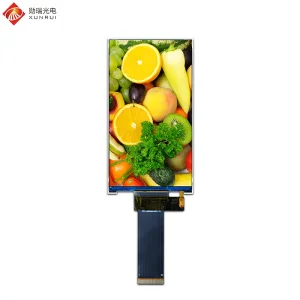
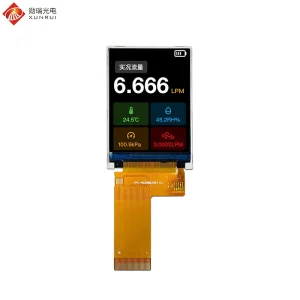
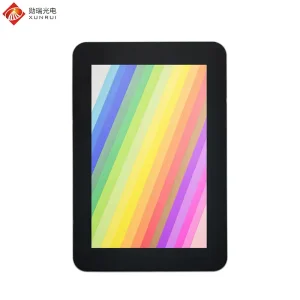
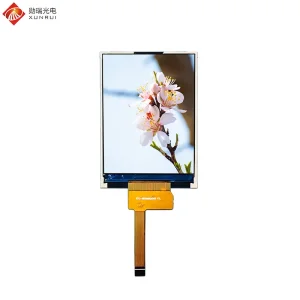
Engineering the 3.2-Inch Touch TFT LCD Ecosystem
A rigorous examination of compact human-machine interface (HMI) parameters, optoelectronic integration, and bus-level connectivity for industrial systems.
Optoelectronic & Panel Physics
The 3.2-inch form factor typically operates at a native resolution of 240×320 (QVGA) or 320×480 (HVGA), yielding a pixel density exceeding 180 PPI. Leading Chinese factories deploy In-Plane Switching (IPS) liquid crystal modes over standard Twisted Nematic (TN) glass, achieving 80/80/80/80 all-direction symmetric viewing angles without grayscale inversion, underpinned by advanced rubbing techniques and high-transmittance color filters.
Touch Integration: PCAP vs. RTP
Modern production lines accommodate both Projected Capacitive (PCAP) with I²C/SPI interface controller ICs (such as FocalTech, Goodix, or Ilitek) and 4-wire analog Resistive Touch Panels (RTP). PCAP architectures utilize optical clear adhesive (OCA) or liquid optical clear resin (LOCA) full lamination, eliminating inner-air-gap reflections, improving contrast ratios, and enabling reliable touch handling with 5mm industrial safety gloves.
Bus Protocols & Controller Stacks
Industrial firmware architectures utilize dynamic pin configuration matrices. 3.2-inch TFT modules provide comprehensive compatibility across 8080/6800 MCU parallel buses, 3-wire/4-wire Serial Peripheral Interface (SPI) for constrained pin counts, and RGB interfaces for fluid UI rendering. Integrated driver ICs like the ST7789V, ILI9341, and ILI9488 supply embedded display RAM (GRAM) to relieve host CPU overhead in edge-compute nodes.
| Parameter | Industrial Grade Target | Medical / Precision Target | Consumer IoT / Smart Device |
|---|---|---|---|
| Active Diagonal | 3.20 Inch (Diagonal) | 3.20 Inch (Diagonal) | 3.20 Inch (Diagonal) |
| Resolution | 240×320 (QVGA) / 320×480 (HVGA) | 320×480 (HVGA) High Density | 240×320 (QVGA) |
| Luminance (Nits) | 800 – 1200 cd/m² (Sunlight Readable) | 450 – 600 cd/m² (Uniform Optical) | 300 – 400 cd/m² (Power Optimized) |
| Operating Temp Range | -30°C to +85°C | -20°C to +70°C | -10°C to +60°C |
| Touch Architecture | PCAP (G+G) / RTP (Anti-EMI) | PCAP (Anti-Bacterial Chem Tempered) | PCAP (G+F/G+F+F Cost Optimized) |
China Factory 4.0: Resilient Supply Chains & Cleanroom Automation
Shenzhen and the Pearl River Delta display manufacturing hub leverage localized vertical integration to mitigate component volatility and streamline lead times.
Cleanroom Automation & FOG Precision
Our manufacturing cluster features ISO Class 5 (Class 100) and Class 6 (Class 1,000) cleanrooms deploying fully automated Chip-on-Glass (COG) and Flex-on-Glass (FOG) hot-bar bonding machines. Real-time vision alignment algorithms ensure micron-level anisotropic conductive film (ACF) compression, avoiding microscopic trace misalignment and ensuring zero contact degradation during long operational lifecycles.
Component Agility & BOM Longevity
A core challenge in overseas hardware design is unexpected component obsolescence. Chinese Tier-1 optoelectronic factories guarantee 5 to 7 years of active lifecycle continuity for industrial 3.2-inch product lines. In the event of upstream silicon phase-outs, our in-house engineering group executes seamless driver chip migrations (e.g., matching ILI9341V to alternative hardware register maps) with pin-compatible FPC redesigns.
Macro-Industry Solutions for 3.2" Form Factors
Engineered for high utility across rigorous mission-critical sectors requiring extreme durability, responsive touch, and compact enclosures.
Industrial Handhelds & Diagnostics
Field multimeters, laser measurement devices, and barcode scanners demand high mechanical strength. We deliver 3.2" assemblies equipped with chemically strengthened cover glass (up to 7H hardness) capable of withstanding 1.5-meter drop tests onto concrete without delamination or pixel failure.
Medical Diagnostic Equipment
Portable patient monitors, infusion pumps, and clinical analyzers require pristine optical readability and biological fluid resistance. We utilize anti-microbial glass coatings, optical bonding to eliminate internal condensation, and custom firmware tuned for reliable surgical glove operation.
Smart Metering & IoT Thermostats
Building automation hubs and utility metrics require extended MTBF ratings and low operational power budgets. High-efficiency white LED backlights integrated with intelligent step-down converter circuitry permit optimal battery-backed life and continuous 24/7/365 run times.
Global Enterprise Sourcing, Localized Support & Compliance
Addressing Western OEM enterprise needs: end-to-end trace documentation, rigorous export packaging, and transparent supply assurance.
RoHS, REACH & Conflict Minerals
Every single bill of materials (BOM) deployed across our 3.2-inch production lines is strictly certified under EU Directive 2011/65/EU (RoHS 2.0), REACH (EC 1907/2006), and verified free of conflict minerals. Comprehensive SGS material composition laboratory test reports are provided on demand.
Mil-Spec Drop & ESD Packaging
International shipments undergo rigorous packaging design to eliminate electrostatic discharge (ESD) and mechanical vibration failure. Custom antistatic vacuum trays (PET/PS conductive material) combined with desiccants and moisture-barrier aluminum foil ensure factory-fresh arrival across European and North American ports.
Bilingual Engineering Consultation
Eliminate project delays caused by technical miscommunication. Direct interaction with dedicated English-fluent application engineers (AEs) ensures that your timing diagrams, register configuration code, and custom FPC layout design files (Altium/Gerber) are validated before fabrication.
Technology Roadmap: The Next Decade of Compact Displays
Continuous investment in optoelectronic innovation driving high performance, lower thermal signatures, and integrated smart surfaces.
Quantum Dot Enhancement (QDEF)
Integrating quantum-dot-doped films into 3.2-inch backlights expands the NTSC color gamut coverage from 72% standard to over 98%, unlocking true-to-life color rendering for handheld clinical colorimetry and photo-spectrometer instruments without exceeding low battery budgets.
TDDI Architecture (Touch & Display Driver)
Transitioning from discrete two-chip topologies (Display Driver IC + Touch Controller IC) to unified Touch and Display Driver Integration (TDDI). This reduces FPC trace density, trims module thickness by 0.4mm, and significantly lowers high-frequency RF interference in compact enclosures.
Transflective & Sunlight Readability
Advanced optical hybrid stacks incorporate micro-structured transflective layers that harness ambient solar radiation to increase panel illuminance under direct outdoor sunlight, drastically reducing active backlight draw and mitigating thermal throttling in outdoor edge devices.
Frequently Asked Questions for Global Procurement Teams
In-depth responses resolving engineering qualifications, customization limits, and supply contracts.
What parameters of a 3.2-inch Touch TFT LCD can be customized?
What are the typical MOQ and lead-time schedules for custom tooling?
How do Chinese display factories prevent display burn-in and optical degradation?
Can capacitive touch panels operate accurately in humid or wet environments?
What interface should I choose between SPI, MCU Parallel, and RGB for 3.2" panels?
High-Brightness & Custom Optical Formats
Explore additional standard and bespoke display modules designed across our ISO 9001:2015 and ISO 14001 certified manufacturing facilities.