High-Performance TFT LCD & Capacitive Touch Modules
Industrial, medical, and embedded human-machine interfaces engineered by certified Chinese factories for high-reliability deployments worldwide.

Custom 2.4 inch TFT LCD module 240×320 SPI 14pin interface 250nit IPS screen
View Product Specifications
Custom 10.1 inch 800×1280 MIPI IPS TFT LCD Display with capacitive touch
View Product Specifications
China 7 inch 800×480 1000nit Wide Operating Temperature Range TN TFT LCD Display
View Product Specifications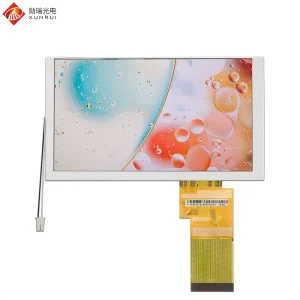
China 6.2 inch 800×480 RGB 60pin 500nit TN TFT LCD Module
View Product Specifications
Custom 5 inch 800×480 TN TFT LCD display with capacitive touch panel
View Product Specifications
Custom 2 inch 480×240 RGB 40pin 150nit TN TFT LCD Display
View Product Specifications
China 7 inch 1024×600 1000nit High brightness IPS TFT LCD module
View Product Specifications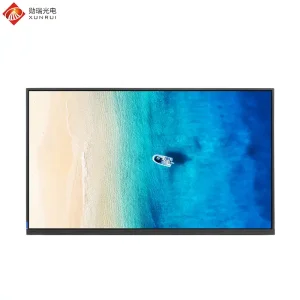
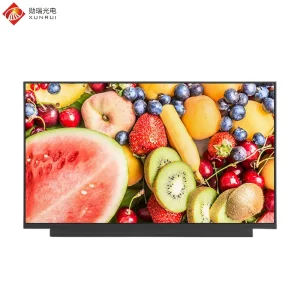
Custom 15 inch 1920×1080 EDP 30pin 300nit IPS TFT LCD Display
View Product SpecificationsMacro Industry Landscape: 4-Inch Capacitive Touch in Global Smart Edge Systems
Comprehensive engineering insights into projected capacitive (PCAP) integration, substrate economics, and the shift toward intelligent compact human-machine interfaces.
Form-Factor Optimization
The 4-inch display sector (spanning 4.0", 4.3", and custom 720×720 square or 480×800/480×480 variants) acts as the bridge between handheld ergonomics and full-featured desktop dashboards. Modern smart building nodes and handheld diagnostic tools demand maximum data density without sacrificing battery performance.
PCAP Architecture Migration
While resistive touch remains viable for extreme mechanical pressure applications, the global market is aggressively shifting to mutual capacitive multi-touch arrays. China factories provide I2C and USB interface controller IC integration (such as FocalTech, Goodix, and Ilitek) supporting thick cover glass, water rejection algorithms, and surgical or thermal glove input.
Supply Chain Resilience
Shenzhen and the Pearl River Delta offer an unmatched ecosystem of raw float glass suppliers, chemical strengthening plants, ITO coating facilities, and high-speed SMT bonding lines. Sourcing direct from vetted ISO 9001:2015 factories reduces lead times from 16 weeks to standard 4-6 week production cycles.
Engineering Anatomy: 4-Inch Capacitive Touch Screen Assembly
A rigorous examination of stack-up configurations, optical treatments, and controller calibrations for Tier-1 industrial buyers.
| Architecture Component | Standard Commercial Grade | XUNRUI Industrial-Grade Specification | Operational Engineering Benefit |
|---|---|---|---|
| Cover Lens (CG) Material | 0.7mm Soda-Lime Glass | 1.1mm - 3.0mm Chemically Strengthened Glass (Corning Gorilla / AGC) | IK07 to IK10 impact protection, scratch resistance exceeding 7H/9H pencil hardness. |
| Optical Surface Treatments | Untreated Clear Glossy | Anti-Glare (AG), Anti-Reflective (AR), Anti-Fingerprint (AF/AS) | Prevents ambient reflection washouts while keeping haze below 5% and light transmission above 88%. |
| Sensor Structure | G+F (Glass + Film) | G+G (Glass + Glass) or G+F+F Dual ITO Sensors | Extreme temperature stability (-30°C to +85°C) avoiding film warping, yellowing, or delamination. |
| Bonding Technology | Air Gap / Perimeter Tape Bonding | Full Optical Bonding (OCA or OCR / LOCA Liquid Optical Resin) | Eliminates internal air cavity reflections, mitigates condensation/fogging, enhances thermal dissipation. |
| Touch Controller IC | Generic 2-point consumer IC | Ilitek / Goodix / FocalTech Automotive/Industrial Grade | High Signal-to-Noise Ratio (SNR > 45dB), wet finger tracking, frequency hopping against high-voltage EMI. |
| Backlight Assembly | 250–350 nits edge-lit | 800–1200+ nits High-Brightness Constant-Current Array | Guaranteed sunlight readability in direct outdoor exposure with 50,000+ hour LED half-life ratings. |
End-to-End Manufacturing Process: From Raw Glass to Certified Display Assembly
Our Shenzhen manufacturing facility enforces a 5-gate quality control pipeline ensuring zero line fallout for OEM/ODM clients.
Substrate Fabrication
Precision CNC cutting of raw float glass, edge chamfering (2.5D/3D), followed by chemical strengthening in a potassium nitrate molten bath at 400°C for 4-8 hours to guarantee deep surface compression stress.
ITO Photolithography
Class 100 cleanroom vacuum sputtering and acid etching of Indium Tin Oxide (ITO) conductive lines. Pitch accuracy held within ±5μm to prevent visible moiré interference against the underlying TFT pixel matrix.
FPC Thermal Bonding
Automated ACF (Anisotropic Conductive Film) pre-attachment and high-precision pulse-heat thermode bonding connecting the touch FPC to sensor glass. Microscopic conductive particle burst rate verified at 99.8%.
Optical Bonding & Stress Aging
Automated roller OCA optical lamination of sensor to cover lens and TFT module. High-pressure autoclave debubbling followed by 72-hour thermal cycle burn-in (-20°C to +70°C) prior to final automated electro-optical inspection.
Application Scenarios: Custom Field Solutions for 4-Inch PCAP Systems
Case-proven implementations solving severe mechanical, thermal, and electrical interference challenges across global markets.
Smart Home 86-Box Wall Controllers
Standard European and Asian electrical wall-box standards (86×86mm) require compact 3.95" to 4.0" square capacitive touch displays (480×480 or 720×720 resolution). XUNRUI provides custom black-matrix ceramic silk printing that conceals the active viewing perimeter, paired with anti-smudge oleophobic coatings for effortless cleaning in smart lighting and HVAC hubs.
Portable Medical Diagnostics
Handheld ultrasound scanners, pulse oximeters, and infusion control pumps require sterile, completely sealed touch interfaces. Our custom cover glasses support aggressive medical chemical wipe downs (Isopropanol, Bleach, Quaternary Ammonium) without surface erosion, alongside tuned firmware that registers touch commands through multi-layered latex or nitrile medical gloves.
EV Charging Piles & Outdoor HMI
Public commercial charging points face sun exposure, direct rainfall, and vandalism. We supply 1000+ nit sunlight readable IPS panels bonded with 3mm chemically tempered cover glass featuring IK08 impact ratings. Specialized firmware ensures zero ghost touches caused by continuous water sheeting or pooled droplets on the capacitive surface.
Localized Support, International Certifications & Lifecycle Guarantees
Minimizing supply chain risk through global regulatory compliance and dedicated engineering escalation channels.
Environmental & Safety Compliance
All display components—including ITO glass, liquid crystal fluids, polarizers, FPC assemblies, and OCA adhesives—strictly conform to RoHS 3 (EU 2015/863), REACH (SVHC list), and UL 94V-0 flammability ratings. Every shipment includes certified material safety declarations for frictionless customs clearance across Europe, North America, and APAC.
Engineering-Led Field Support
XUNRUI supports global engineering teams with direct factory-level FAE access. We supply reference Linux and Android driver source codes, provide I2C/SPI timing register calibration, and assist with custom PCB bridge board layouts (HDMI to RGB, MIPI DSI, LVDS) to shorten client time-to-market by up to 40%.
5-7 Year Longevity Guarantee
Industrial product development demands consistent component availability. Unlike consumer panel manufacturers that obsolete panels annually, XUNRUI offers an explicit 5-to-7 year form-fit-function supply commitment. In the event of an unavoidable glass fab migration, we provide backward-compatible FPC revisions and minimum 6-month EOL advance notification.
Technology Roadmap: The Next Generation of 4-Inch Human-Machine Interfaces
Pioneering advancements in low-power bistable drivers, in-cell integration, and tactile feedback mechanisms.
On-Cell & In-Cell Touch Integration
Advancing from discrete Out-Cell (G+G) architectures to In-Cell touch structures where mutual capacitance sensors are embedded directly inside the TFT LCD liquid crystal cell. This reduces total module thickness by 0.6mm, improves light transmission by 8%, and lowers BOM cost for high-volume automated production lines.
Haptic Feedback & Force Sensing
Integrating localized piezoelectric actuators directly beneath the capacitive glass border. When a virtual button is pressed, the panel delivers microsecond tactile mechanical feedback, enabling operators to manipulate critical equipment in high-vibration factory or vehicle environments without taking their eyes off the task.
Transflective Ultra-Low Power Arrays
Developing hybrid transmissive-reflective micro-structures that recycle direct ambient sunlight for readability while shutting down active LED backlight power. This drops operating power draw from 1.5W to under 120mW, dramatically extending runtime for battery-powered industrial IoT fieldwork devices.
Frequently Asked Questions: 4-Inch Capacitive Display Sourcing
Crucial mechanical, electrical, and commercial information for OEM/ODM hardware engineers and procurement leaders.
What are the key technical differences between G+G and G+F capacitive touch architecture in 4-inch screens?
G+G (Glass Cover + Glass Sensor) provides structural rigidity, high scratch resistance, superior optical transparency (>88%), and wide operating temperature ranges (-30°C to +85°C) without risk of warping. G+F (Glass Cover + Film Sensor) is slightly thinner and more economical for low-cost consumer gadgets, but can suffer from internal film shrinkage, yellowing, and bubbling when deployed in harsh industrial or automotive environments.
How do China factories resolve wet finger or water droplet false triggers on capacitive screens?
High-reliability capacitive touch performance under water exposure requires dual-mode firmware architecture (Self-Capacitance combined with Mutual-Capacitance scanning). Leading controller ICs like FocalTech, Goodix, or Ilitek detect the large baseline capacitance change caused by water sheets, dynamically adjust touch threshold algorithms, and track true localized touch vectors without registering phantom inputs.
Can XUNRUI customize the cover glass thickness, shape, and surface printing for custom enclosures?
Yes. We offer fully customizable cover glass solutions ranging from 0.55mm up to 6.0mm chemically strengthened safety glass. We support circular, rectangular, chamfered, and asymmetric contour CNC edging, hole drilling for mechanical knobs or cameras, custom multi-color silk screening, and optical coatings including Anti-Glare (AG), Anti-Reflective (AR), and Anti-Fingerprint (AF).
What interface protocols are supported for 4-inch TFT LCD and capacitive touch integrations?
For the TFT display panel, our modules support RGB (16/18/24-bit), MCU 8080/6800, SPI (3-wire/4-wire), MIPI DSI, and LVDS. For the capacitive touch panel, standard communication is conducted via high-speed I2C (400kHz) or native USB 2.0 with HID driver compatibility across Windows, Linux, and Android systems.
What is the minimum order quantity (MOQ) and prototype delivery lead time for custom display tooling?
Following drawing sign-off, functional prototype tooling and sample fabrication typically require 3 to 4 weeks. After sample approval, we offer an initial pilot production batch of 5 to 500 units to support field trials. Customized mass production projects generally require an MOQ of 1,000 units, backed by our 5-to-7 year product supply continuity commitment.
Explore Additional Standard & Custom Display Modules
From ultra-compact wearable displays to high-definition industrial monitors, examine our complete catalog engineered in Shenzhen, China.

Custom 4.3 inch 480×272 TN TFT LCD display with resistive touch panel
View Product Specifications
China 5 inch 800×480 TN TFT LCD display with resistive touch panel
View Product Specifications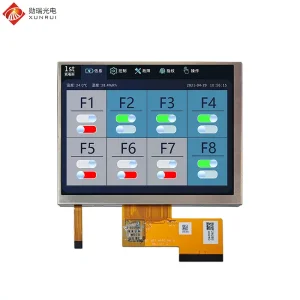
China 5.7 inch 640×480 RGB LVDS MIPI Interface IPS TFT LCD Module
View Product Specifications
China 4.3 inch 480×272 RGB 40pin interface 350nit TN TFT LCD module
View Product Specifications
Custom 10.1 inch 1024×600 TN TFT LCD display with resistive touch panel
View Product Specifications
China 7 inch HDMI 1024×600 IPS TFT LCD Module With driver board and CTP
View Product Specifications
China 7 inch 800×480 RGB 40pin 450nit TN TFT LCD Display
View Product Specifications