
Featured Industrial & Custom TFT Display Modules
High-performance display solutions manufactured by Shenzhen Xunrui Optoelectronics, configured for extreme operating environments, medical precision, and human-machine interfaces.




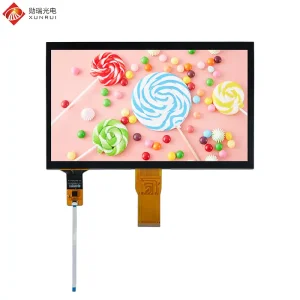
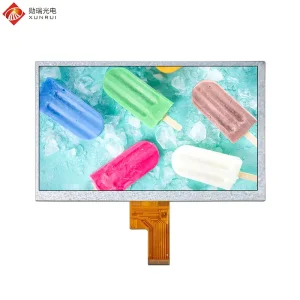

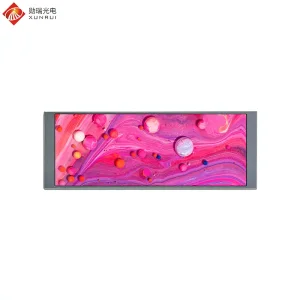
Executive Summary: The Strategic Evolution of 6.2-Inch TFT LCD Architectures
In the competitive landscape of optoelectronic hardware, the 6.2 inch LCD TFT screen has emerged as a quintessential bridge between compact handheld industrial terminals and expansive vehicular telematics dashboards. Historically, device architects were constrained to traditional 4:3 legacy displays or conventional 5.0" to 7.0" 16:9 modules. However, modern ergonomic human-machine interfaces (HMIs) and space-constrained 2-DIN dashboard retrofits increasingly demand elongated active viewing areas without inflating the device’s physical chassis footprint.
Today's 6.2-inch TFT panels—predominantly manufactured across advanced fabrication hubs in Shenzhen, Guangdong—feature modern aspect ratios such as 16:9, 18:9, and customized ultra-wide bar geometries. These displays combine ultra-wide viewing angle In-Plane Switching (IPS) liquid crystal cell arrays, high-density pixel layouts (reaching up to FHD 1080×2400 resolutions or hardened WVGA 800×480 configurations), and robust solid-state LED backlighting matrices. For OEM hardware engineers, systems integrators, and strategic procurement directors, partnering with experienced China 6.2 inch LCD TFT screen suppliers and factories ensures not only technological agility, but also price stabilization, custom glass tailoring, and sustained product life-cycle availability across 5 to 7+ years.
IPS True-Color Optical Stacks
Unlike legacy Twisted Nematic (TN) displays prone to severe grayscale inversion and chromatic shift when viewed off-axis, modern 6.2" IPS cells deliver symmetrical 85°/85°/85°/85° all-direction viewing cones. This maintains critical color integrity (up to 72%–85% NTSC gamut coverage) across patient monitors, industrial crane remote pendants, and automotive center stacks.
Sunlight Readability (Up to 1500 Nits)
Standard consumer displays (250–350 nits) wash out under intense direct ambient sun. Chinese optoelectronic manufacturers configure high-efficiency Nichia or San'an LED arrays driven by constant-current drivers, generating 800 to 1,500+ nits luminance with custom thermal sinks that dissipate heat without inducing optical yellowing or blister defects.
Rugged Extended Thermal Envelopes
Factory automation and transportation hardware cannot tolerate phase changes in liquid crystals. Qualified 6.2-inch modules utilize wide-temp liquid crystal fluids and high Tg polarizers, guaranteeing standard continuous operation from -30°C to +85°C, with non-volatile storage ratings extending between -40°C and +90°C.
Global Enterprise Procurement Demands: Total Cost of Ownership & Longevity
Supply chain volatility in display components can halt entire device manufacturing lines. Enterprise engineering teams mandate strict BOM locking, component second-sourcing, and validated compliance protocols before drafting a single purchase order.
Engineering Specification Breakdown for 6.2-Inch TFT Variants
When specifying a 6.2" display panel, engineering teams face multiple physical and electrical permutations. Below is the industrial baseline matrix supplied by top-tier Shenzhen manufacturing facilities:
| Parameter | Standard Commercial Grade | Industrial Rugged Grade | Automotive / Telematics Spec |
|---|---|---|---|
| Typical Resolution | 800×480 (WVGA) / 720×1280 (HD) | 1080×2400 (FHD+) / 720×1560 | 1280×720 (HD IPS) / 1920×720 Bar |
| Luminance (Nits) | 300 – 450 cd/m² | 800 – 1,200 cd/m² | 1,000 – 1,500 cd/m² (Auto-Dimming) |
| Operating Temperature | -10°C to +60°C | -20°C to +70°C | -30°C to +85°C (AEC-Q100 Compliant) |
| Interface Protocol | RGB 24-bit / MCU 8/16-bit | MIPI-DSI (4-Lane) / Dual LVDS | eDP 1.2 / SerDes (FPD-Link / GMSL) |
| Touch Sensor Architecture | Standard Capacitive (G+F) | Projected Capacitive (G+G, 3mm Glass) | Automotive PCAP (Glove, Wet, EMC Class B) |
| Surface Treatment | Clear Glare / Hard Coating (3H) | Anti-Glare (AG) + Anti-Fingerprint (AF) | AG + Anti-Reflective (AR) + IK08 Impact |
China Factory 4.0: Supply Chain Resilience, Automation & Production Scale
The global dominance of Shenzhen-based optoelectronic manufacturers is driven by localized industrial cluster density. Shenzhen Xunrui Optoelectronic Technology Co., Ltd. demonstrates how automated cleanroom assembly lines and vertically integrated sub-tier networks insulate buyers from production delays.
Cluster Density (1-Hour Radius)
From raw mother glass thinning, ITO sputtering, polarizers, and driver IC tape (COF/COG) to backlight injection molding, 95% of the bill of materials resides within the Pearl River Delta, eliminating weeks of cross-border freight transit.
Class 1,000 / 100 Cleanrooms
Optical particulate contamination causes catastrophic sub-pixel occlusions. Modern 6.2" lines utilize Class 1,000 overall cleanrooms with localized Class 100 HEPA laminars at critical chip-on-glass (COG) and flex-on-glass (FOG) bonding stations.
Multi-Gate Automated QC
Every production batch passes 5 stringent quality milestones: IQC raw glass test, automated optical inspection (AOI) for particle detection, high-temperature dynamic burn-in aging (FOG aging), high-pot isolation, and final OQC optical spectroradiometry.
Agile Pilot-to-Mass MOQs
Unlike inflexible mega-foundries requiring 50,000-unit commitments, our specialized factory model supports small-batch trial runs (5–500 units) to validate prototyping before escalating to seamless, high-yield mass production (>1,000 units).
Target Application Domains for 6.2-Inch TFT LCD Architectures
The mechanical envelope of a 6.2" screen makes it uniquely versatile across mobile, vehicle-mounted, and wall-mounted form factors. Below are key real-world integration architectures:
Automotive In-Dash & Commercial Fleets
Widely deployed in 2-DIN aftermarket head units, motorcycle instrument clusters, and commercial telematics tablets. Requires 1,000+ nit sunlight cancellation, optical bonding with anti-glare etching to prevent reflection blindness, and broad thermal endurance for unconditioned automotive cabins.
Rugged Handheld Terminals (PDA) & Barcode Scanners
Logistics scanning devices utilize slim-bezel 6.2" IPS screens with MIPI 4-lane interfaces. Paired with 1.1mm to 1.8mm chemically tempered cover glass, these modules withstand repeat 1.5-meter concrete drop impacts while maintaining responsive capacitive multi-touch with wet hands or heavy work gloves.
Medical Telemetry & Patient Infusion Pumps
Critical care devices demand high pixel clarity (high DPI) for real-time waveform visualization. Fitted with antibacterial cover lenses resistant to hospital-grade chemical disinfectants (bleach, isopropyl alcohol), these screens ensure zero capacitive jitter from adjacent electro-surgical equipment.
Smart Home Intercoms & Access Consoles
Modern building automation control panels require portrait-mounted 6.2" slim touch panels. Interfaces easily bridge to Linux or Android SBCs via MIPI or LVDS, operating reliably 24/7 without pixel burn-in or backlight decay.
Factory Automation (HMI) & CNC Controllers
In industrial automation cabinets, 6.2-inch displays serve as localized machine control panels. Designed to withstand industrial motor electrical noise (surge, EFT, ESD) through high-noise-immunity touch ICs from Goodix, FocalTech, or Ilitek.
EV Charging Terminals & Outdoor POS
Public charging stations and payment kiosks face rain, condensation, and UV radiation. Optical bonding using UV-resistant silicone or acrylic liquid optical clear adhesive (LOCA) prevents moisture condensation between display layers and eliminates internal reflection.
Customization Matrix: Tailoring the 6.2" Stack to Your Enclosure
OEM buyers rarely integrate an off-the-shelf panel without mechanical or optical tailoring. Xunrui Optoelectronics offers precision in-house tooling and design customizations across every physical layer.
Full Optical Bonding (OCA/LOCA)
Replacing traditional air-gap perimeter tape with full solid-refractive optical adhesive eliminates two reflective surfaces. This cuts internal reflection from ~13.5% down to under 0.2%, dramatically improving sunlight contrast ratio while reinforcing impact resistance against mechanical shock.
FPC Custom Routing & EMI Shielding
Flexible Printed Circuits (FPCs) can be custom routed in length, bend radius, and connector pin-out to match your existing motherboard header. We integrate silver conductive foil or black copper EMI shielding films to guarantee zero RF desense in portable communication gear.
Custom Cover Glass & Silk Screen
We customize tempered cover plates ranging from 0.7mm to 6.0mm chemically strengthened soda-lime or high-aluminosilicate glass (Gorilla Glass equivalent). Features include custom border silkscreen logos, chamfered 2.5D edges, drill cutouts, and IK07–IK10 shatter ratings.
Technical & Sourcing Questions Answered by Display Engineers
Direct answers to key commercial and electrical inquiries raised by enterprise procurement managers and hardware design teams before placing sample orders.
Explore Complementary Displays & Custom Sizes
In addition to custom 6.2" configurations, Shenzhen Xunrui manufactures a complete spectrum of micro, compact, square, and large-format TFT modules from 0.96" up to 27".








Accelerate Your Product Launch with Xunrui Engineering
Send us your mechanical CAD files, target display resolution, interface constraints, and environmental operating thresholds. Our Shenzhen engineering hub will generate complete FPC schematics, pinout documentation, and optical stack recommendations within 48 business hours.