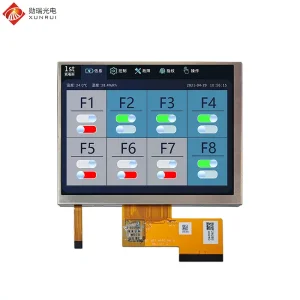
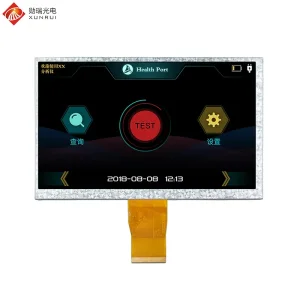
Featured Standard & Custom Display Modules
Direct-from-factory optoelectronic modules optimized for mission-critical instruments, handhelds, and industrial embedded architectures.



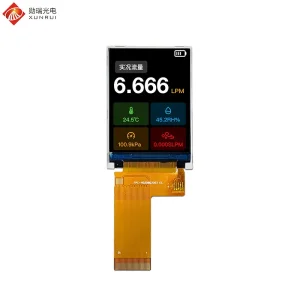


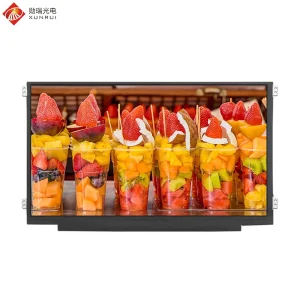
Macro Industry Landscape: The 4-Inch Display Convergence
Bridging ultra-compact smart nodes with rugged industrial visual interfaces across global manufacturing lines.
The 4-Inch Ergonomic Sweet Spot
In industrial and commercial HMI design, the 4-inch display profile (ranging from 4.0-inch 480×800 portrait to 4.0-inch 720×720 square matrices) represents the ergonomic apex. It affords sufficient graphic density for multi-parameter telemetry while fitting comfortably inside single-hand held diagnostic instruments and DIN-rail enclosure profiles.
Global Supply Chain Resilience
OEM buyers frequently encounter product phase-outs with consumer-grade panels. Xunrui Optoelectronics mitigates component obsolescence by securing direct raw glass allocation from tier-1 glass fabs, providing a transparent 5 to 7-year longevity guarantee with backwards-compatible FPC pin-out engineering.
Optical Architecture Differentiation
Unlike generic reseller channels, our direct Shenzhen cleanroom manufacturing supports custom light guide plates (LGP), high-efficiency Nichia LED arrays, wide-viewing In-Plane Switching (IPS) polarizers, and optical adhesive (LOCA/OCA) touch bonding directly applied to custom IK08/IK10 rated front glass panels.
Full-Stack Custom Engineering Capabilities
From low-level signal timing to optical physics tuning: tailoring the 4-inch display platform to your exact hardware envelope.
High-Luminance Optical Engineering
Outdoor field equipment requires readability exceeding ambient diffuse reflection. We configure custom LED driver boost topologies and transflective or high-brightness backlights delivering 800 to 1,500 nits, integrated with Anti-Reflective (AR) and Anti-Glare (AG) chemical etching to achieve contrast ratios above 1000:1 under direct solar irradiation.
Interface Bus Adaptability
Host processor constraints vary across microcontrollers (MCU) and application processors (MPU). Our 4-inch modules support native 4-wire SPI, 8080 MCU parallel (8/16-bit), RGB 16/18/24-bit interfaces, high-speed 2/4-lane MIPI-DSI, and bridge configurations converting MIPI/RGB to LVDS or HDMI for rapid system integration.
Ruggedized Capacitive & Resistive Touch
Integrating industrial touch controllers (such as FocalTech, Goodix, or Ilitek) calibrated for wet fingers, saline spray, and up to 5mm thick protective cover glass. For harsh electromechanical interference (EMI) or heavy glove operation, 4-wire or 5-wire resistive touch overlays provide deterministic input precision.
Localized Application Scenarios & Compliance Standards
Deploying compliant, certified 4-inch display hardware across European, North American, and Asia-Pacific regulatory regimes.
Medical Telemetry & Infusion Devices
Conforming to ISO 13485 standards, our IPS 4.0" displays deliver symmetrical 85/85/85/85 viewing angles without chromatic shifting or grayscale inversion, critical for infusion pumps and ECG monitors where viewing angles can dictate rapid diagnostic assessments.
Industrial Automation & Smart Metering
Factory automation requires continuous 24/7 reliability in ambient temperatures spanning sub-zero winter storage to high-heat motor enclosures. Our modules pass stringent thermal shock cycling, thermal aging at 85°C/85% RH, and ESD contact/air discharge testing per CE-EMC and FCC Part 15 standards.
Smart Thermostats & Edge Building IoT
Modern architectural smart panels favor high-DPI 4.0-inch 720×720 square or round displays. Integrated optical bonding eliminates internal air gaps, suppressing internal reflection while providing an aesthetic piano-black front surface that blends into residential and commercial decor.
Six-Gate Quality Assurance Workflow
Every custom 4-inch LCD module undergoes an audited, multi-checkpoint validation procedure to eliminate field infant mortality.
IQC Raw Glass & IC Screening
Incoming raw mother glass, polarizing films, driver ICs (COG), and backlights are 100% inspected for particle defects, optical transmission rates, and electrical integrity.
Automated COG & FOG Bonding
Sub-micron accuracy anisotropic conductive film (ACF) thermo-compression bonding joins IC chips and Flexible Printed Circuits (FPC) to the TFT glass electrodes.
High-Temp Dynamic Burn-In
100% of assembled display cells undergo powered dynamic burn-in cycles in heated chambers (up to +60°C) to accelerate latent defect screening before optical bonding.
Class 1,000 Cleanroom Lamination
Capacitive touch panels and cover glass are laminated in positive-pressure cleanrooms using high-refraction optical adhesives, preventing bubble formation and micro-dust inclusions.
Chroma & Gamma Calibration
Automated optical inspection (AOI) instruments measure luminance uniformity, chromaticity coordinates (CIE 1931), white balance balance, and flicker to verify display consistency.
OQC Verification & ESD Packaging
Final outgoing quality control samples mechanical dimensions via coordinate measuring machines, validates FPC peel strength, and packs modules in anti-static, hermetically sealed blisters.
Technology Roadmap: Next-Gen 4.0" Visual Platforms
Forward engineering directives shaping next-generation human-machine interfaces.
Mini-LED Local Dimming
Integrating multi-zone Mini-LED backlighting into 4-inch industrial form factors to achieve dynamic contrast ratios exceeding 100,000:1 with ultra-low thermal dissipation, vital for night-vision instrumentation and aerospace cockpits.
On-Cell & In-Cell Touch Integration
Transitioning from traditional external Out-Cell touch sensors to monolithic In-Cell architectures where touch electrodes share pixel thin-film substrates. This reduces total module thickness by 30% while increasing optical transmission by up to 12%.
Haptic & Force Touch Feedback
Incorporating integrated piezoelectric actuator drivers directly onto the display chassis, enabling targeted tactile haptic response when a touch target is confirmed, preventing accidental user inputs in turbulent transit or factory settings.
Frequently Asked Technical Questions
Direct answers to core integration, interface timing, optical customization, and supply chain logistics.
What is the typical development cycle for custom 4.0-inch tooling?
Engineering drawing generation takes 2 to 3 working days after interface and enclosure specification confirmation. FPC layout and backlight tooling take 12 to 15 calendar days, with functional T1 golden samples shipped via courier by day 20. Mass production ramping is executed in 4 to 5 weeks following pilot batch validation.
Can you provide custom cover glass with physical button cutouts and logo printing?
Yes. We mill custom chemical-strengthened Corning Gorilla Glass or high-alumina silicate glass up to 6mm thickness. Capabilities include CNC circular and irregular hole drilling, ceramic ink border printing, Anti-Smudge/Anti-Fingerprint (AF) oleophobic coatings, and optical bonding to the LCD module.
How does Xunrui handle low-volume pilot testing before mass production?
Recognizing that industrial programs require comprehensive firmware bring-up and mechanical tolerance verification, we offer small pilot runs ranging from 5 to 500 units after sample sign-off. Once client validation is verified, full series production transfers smoothly with an MOQ baseline of 1,000 units.
What is the difference between TN and IPS technologies in 4-inch displays?
Twisted Nematic (TN) panels are cost-effective but exhibit grayscale inversion and color shifts when viewed from steep angles (typically 6 o'clock or 12 o'clock perspective). In-Plane Switching (IPS) aligns liquid crystal molecules parallel to the glass, delivering true 178°/178° viewing angles and consistent color saturation across high-demand industrial monitors.
Comprehensive Industrial Panel Portfolio
Explore our broader selection of display formats, interfaces, and touch configurations available for custom integration.