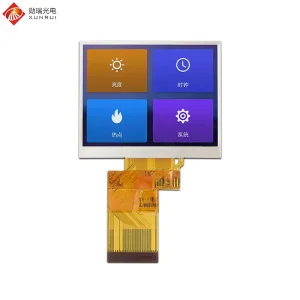
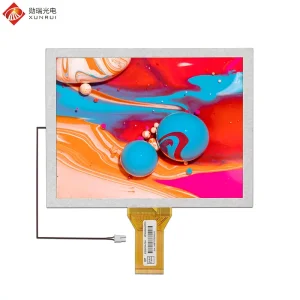
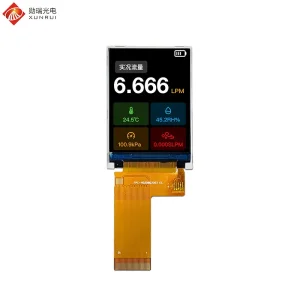
Featured Industrial Display Product Portfolio
Explore our high-reliability standard and semi-custom TFT LCD modules engineered for rigorous environmental endurance, high optical performance, and guaranteed lifecycle longevity.





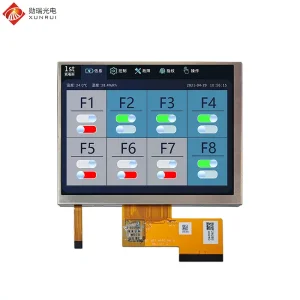


5.7" Industrial LCD Modules: Global Engineering & Sourcing Analysis
A comprehensive technical brief examining the mechanical retrofit dynamics, optical upgrades, signal integrity, and supply chain efficiencies for 5.7-inch display modules.
1. Global Market Landscape: The Resurgence of the 5.7-Inch Architecture
The 5.7-inch LCD display module occupies a historically pivotal position across the global industrial ecosystem. Characterized by its classic 4:3 aspect ratio and standardized 640×480 (VGA) resolution, the 5.7-inch panel was the foundational architecture for the first three generations of industrial programmable logic controllers (PLCs), computer numerical control (CNC) operator terminals, medical infusion pumps, and portable diagnostic analyzers deployed throughout Europe, North America, and Japan during the 2000s and 2010s.
In the contemporary display market, many Tier-1 consumer glass fabs (such as Samsung Display and LG Display) have completely divested from legacy 4:3 a-Si TFT production lines to reallocate capital expenditure toward ultra-large Gen 8.5/Gen 10.5 television motherglass and Gen 6 mobile OLED substrates. This structural supply contraction triggered widespread End-of-Life (EOL) crises for long-lifecycle industrial original equipment manufacturers (OEMs). Global medical and aerospace instruments often require uninterrupted production cycles spanning 7 to 15 years, where chassis retooling or regulatory requalification (e.g., FDA 510(k), CE-MDR, or UL certifications) costs hundreds of thousands of dollars.
To address this critical supply vacuum, professional Chinese TFT LCD manufacturers have modernized the 5.7-inch form factor. By transitioning from obsolescent Twisted Nematic (TN) architectures with restrictive viewing cones and Cold Cathode Fluorescent Lamp (CCFL) backlights to advanced In-Plane Switching (IPS) TFT arrays powered by high-efficiency solid-state LED arrays, modern 5.7" displays deliver symmetrical 85°/85°/85°/85° viewing angles, contrast ratios exceeding 1000:1, and backlighting operational life spans exceeding 50,000 hours. The result is a seamless, form-fit-function replacement that preserves existing front-bezel cutouts while dramatically enhancing optical fidelity.
2. Technical Comparison: Modern IPS vs. Legacy TN 5.7-Inch Configurations
When specifying a customized 5.7-inch display, design engineers must weigh optical requirements against thermal and power budgets. The comparative table below outlines the technological shift from legacy legacy modules to next-generation customized IPS solutions produced in our Shenzhen facility:
| Parameter | Legacy 5.7" Industrial Spec (CCFL/TN) | Standard Commercial 5.7" (LED/TN) | Customized Industrial 5.7" IPS (XUNRUI Tech) |
|---|---|---|---|
| Display Technology | TN (Twisted Nematic) Normal White | TN (Twisted Nematic) Standard | Full-View IPS (In-Plane Switching) |
| Native Resolution | 320×240 (QVGA) / 640×480 (VGA) | 640×480 (VGA) | 640×480 (VGA) with ultra-fine sub-pixel routing |
| Viewing Angles (L/R/U/D) | 60° / 60° / 50° / 60° (Gray Inversion) | 70° / 70° / 60° / 70° | 85° / 85° / 85° / 85° (Zero Inversion) |
| Surface Luminance | 150 – 220 cd/m² (Degrades rapidly) | 300 – 400 cd/m² | 600 – 1200 cd/m² (Sunlight Readable) |
| Contrast Ratio | 250:1 (Narrow Sweetspot) | 400:1 | 800:1 to 1200:1 |
| Operating Temperature | 0°C to +50°C (Unheated) | -10°C to +60°C | -30°C to +85°C (Extended Industrial Glass) |
| Backlight Lifespan (MTBF) | 15,000 Hours (Inverter Failure prone) | 30,000 Hours | 50,000 to 70,000 Hours (Constant-Current) |
| Touch Interface Match | 4-Wire Analog Resistive (Film-to-Glass) | Resistive / Air-bonded PCAP | Optical Bonded PCAP / Wet-Finger & Glove Support |
3. Chinese Manufacturing Cluster Advantage & Supply Chain Efficiency
The manufacturing ecosystem anchored in the Shenzhen-Dongguan-Huizhou corridor represents a consolidated optoelectronic cluster that delivers decisive advantages in total cost of ownership (TCO), rapid turnaround, and engineering flexibility. For global tier-1 buyers, sourcing custom 5.7-inch LCD modules directly from an integrated Shenzhen manufacturer unlocks substantial supply chain efficiencies:
1. Hyper-Localized Raw Material Integration: Within a 30-kilometer radius in the Pearl River Delta, our facility interfaces with top-tier raw glass suppliers, polarizer slitters, ITO sensor coaters, LED phosphor packaging fabs, and precision FPC lithography houses. This spatial proximity compresses component delivery lead times from weeks to hours, allowing rapid prototyping iterations that western or non-clustered assemblers cannot match.
2. In-House Cleanroom Tooling & Automation: Xunrui Optoelectronics operates Class 1,000 and Class 100 cleanrooms equipped with automated high-speed Chip-on-Glass (COG) and Film-on-Glass (FOG) thermo-compression bonding machinery. By maintaining automated optical inspection (AOI) inline, sub-micron alignment accuracy is maintained on high-density FPC pinouts, drastically eliminating cold solder joints, open traces, or micro-cracks under harsh thermal cycling.
3. Low-Volume Prototyping to High-Volume Scalability: Global multinational enterprises frequently face prohibitive Minimum Order Quantities (MOQs) when dealing with state-backed mega-fabs. We address this friction through a bifurcated production framework: offering pilot/trial runs of 5 to 500 units for engineering verification test (EVT) and design verification test (DVT) stages, followed by scalable mass production exceeding 1,000 to 50,000 units monthly.
4. Global Application Scenarios for Custom 5.7-Inch LCD Modules
The 5.7-inch form factor's structural proportion makes it optimal for specific industrial and commercial niches where balance between information density and compact chassis footprint is paramount:
Industrial CNC & Automation
Ideal for retrofitting legacy Siemens, Fanuc, or Mitsubishi CNC panels. Ruggedized with anti-vibration steel bezels, 4-wire resistive touch for thick oily glove operation, and high-noise-immunity LVDS receivers resistant to inductive motor EMI.
Medical Diagnostics & Infusion
Integrated into hemodialysis systems, blood gas analyzers, and portable infusion monitors. Chemically tempered cover glass with anti-microbial treatments and optical bonding prevents liquid ingress and withstands hospital disinfectant wipe-downs.
Marine & Navigation Displays
Engineered with optical-bonded anti-reflective (AR) surface polarizers and high-efficiency Nichia LED backlight arrays generating 1000–1200 cd/m² luminance for crystal-clear readability under unshaded mid-day maritime sunlight.
EVSE & Outdoor Kiosks
Deployed in public EV DC fast chargers and automated parking terminals. Features wide-temperature liquid crystal fluid operating down to -30°C and up to +85°C without sluggish refresh rates or crystal blackening under UV radiation.
5. Emerging Technological Trends in 5.7" Display Module Engineering
As industrial systems transition toward Industry 4.0 architectures and edge computing paradigms, the technical requirements for custom 5.7-inch modules have evolved far beyond standard pixel counts:
Full Optical Bonding (OCA & OCR): Traditional industrial displays utilized air-gap perimeter tape bonding between the TFT polarizers and the protective front glass or touch screen. This introduces two refractive index boundaries (Glass-to-Air, Air-to-Polarizer), causing roughly 8.5% of ambient light to reflect internally, severely degrading outdoor contrast. Xunrui integrates Optical Clear Adhesive (OCA) and liquid Optical Clear Resin (OCR) lamination under vacuum. Optical bonding eliminates internal reflections, boosts impact resistance up to IK08/IK10 standards, prevents internal fogging in humid climates, and drastically improves structural rigidity under mechanical shock.
Advanced Projected Capacitive (PCAP) Firmware Customization: Industrial users demand capacitive touch functionality identical to consumer smartphones, but with robust environmental tolerances. Modern 5.7-inch PCAP overlays utilize industrial-grade touch ICs (e.g., Ilitek, EETI, or FocalTech) flashed with custom-engineered firmware algorithms. These algorithms provide water-rejection filtering (preventing false actuations when exposed to conductive water droplets or saline solutions), heavy leather glove tracking (up to 5mm thickness), and thick vandal-proof cover glass penetration (up to 8mm chemically strengthened aluminosilicate glass).
Bridging Interfaces and Native Signal Conversion: System architects frequently face the dilemma of integrating a legacy 5.7-inch 640×480 RGB display with modern system-on-chips (SoCs) such as NXP i.MX8, Raspberry Pi CM4, or Rockchip platforms that only output MIPI-DSI, HDMI, or eDP signals. Rather than forcing expensive host redesigns, our engineering team supplies integrated bridging hardware: compact active carrier boards featuring ICN6211 or Realtek ICs integrated directly onto the display's FPC tail, allowing direct high-speed MIPI-DSI or HDMI connectivity without requiring external driver boxes.
EMI & ESD Hardening
Custom FPC tails with silver shielding paste and ground planes prevent electro-magnetic emissions and withstand contact discharge up to ±8kV and air discharge up to ±15kV per IEC 61000-4-2 standards.
Surface Treatments: AG/AR/AF
Chemically etched Anti-Glare (AG) reduces surface specular glare; Anti-Reflective (AR) vapor deposition maximizes light transmittance; Anti-Fingerprint (AF) oleophobic coatings resist grease accumulation.
Guaranteed 7-Year Longevity
Disciplined product roadmap stability with active BOM component lock-in, formal Product Change Notifications (PCN) 6-12 months in advance, and guaranteed last-time-buy (LTB) inventory buffers.
6. OEM Quality Assurance Architecture: 5-Gate Testing Protocol
In critical industrial devices, display failure can shut down production lines or jeopardize patient safety. Xunrui's ISO 9001 and ISO 14001 manufacturing lines implement a mandatory five-stage quality gate protocol before any batch leaves our facility:
Gate 1: Incoming Quality Control (IQC): Comprehensive spectrometer and micrometer verification of raw TFT cells, polarizing film scratch inspections, LED chip binning (ensuring strict chromaticity CCT uniformity), and microscopic checking of FPC bonding fingers.
Gate 2: Bare Glass Micro-Defect Inspection: Automatic Optical Inspection (AOI) scans incoming motherglass for micro-scratches, point defects, and particulate inclusions prior to thermo-compression bonding.
Gate 3: FOG (Film-on-Glass) Thermo-Compression & Pre-Aging: High-precision anisotropic conductive film (ACF) bonding evaluated via microscopic cross-section inspections, followed by thermal stress pre-baking to weed out infant mortality.
Gate 4: Finished Assembly High-Temp / Humidity Aging: 100% of finished display assemblies undergo continuous operational aging under full-white and pattern cycling inside specialized environmental chambers (+50°C to +60°C at 90% RH) for a minimum of 24 to 72 continuous hours.
Gate 5: Outgoing Quality Control (OQC): Final verification of optical luminance, contrast, touch coordinate linearity, chromaticity consistency across all four corners, and high-voltage dielectric insulation testing prior to anti-static vacuum sealed export packaging.
Engineering & Procurement FAQ: 5.7-Inch LCD Modules
Clear, definitive technical answers addressing timing constraints, optical enhancements, touch customization, and procurement lifecycle management.
Can Xunrui produce drop-in replacements for obsolete 5.7" displays from Kyocera, Sharp, or Ampire?
What is the difference between air-gap bonding and full optical bonding for a 5.7" display?
How do you achieve sunlight readability without causing excessive heat dissipation?
What is the standard development timeline and sample MOQ for custom 5.7-inch projects?
- Engineering Drawings & Optical Simulation: Issued within 3 to 5 business days for customer design sign-off.
- Functional Prototype Samples: Delivered within 2 to 3 weeks after drawing approval.
- Sample Trial Batch: We provide small-batch trial production runs between 5 and 500 units to support customer DVT/PVT stages and internal verification.
- Mass Production MOQ: Standard mass production minimum order quantity begins at 1,000 units, supported by guaranteed long-term delivery agreements.
Can the projected capacitive (PCAP) touch screen be tuned for wet-finger and heavy glove operation?
What interface protocols can be supported for a custom 5.7" LCD module?
- Parallel RGB (18-bit / 24-bit): Standard interface for direct connection to microprocessors with integrated LCD controllers.
- LVDS (Single-Channel 6-bit / 8-bit): Preferred for high noise-immunity and long cable runs up to several meters.
- MIPI-DSI: Modern high-speed serial differential interface for connection to mobile-derived SoCs.
- HDMI / VGA / AV Carrier Boards: Compact embedded bridging boards integrated on the rear chassis, allowing direct standard cable connectivity to industrial PCs.
- MCU 8080/6800: Supported via integrated controller/framebuffer architectures for low-pinout microcontrollers.
Complementary Custom Displays & Embedded Modules
Explore our broader line of precision small-format displays, high-density widescreen panels, and custom-shaped display modules engineered in our Shenzhen factory.