
High-Performance Display Modules & Assemblies
Explore standard and bespoke form factors manufactured with high optical precision, robust mechanical integrity, and wide interface flexibility.
-

China 5 inch 800×480 1200nit High brightness TN TFT LCD module Suppliers, Factories
-

Custom 2.8 inch 240×320 SPI 10pin 250nit TN TFT LCD Display Supplier, Factories
-

China 7 inch 1024×600 1000nit RGB IPS TFT LCD Display with CTP Manufacturer, Suppliers
-

China 5 inch 480×272 TN TFT LCD Module with capacitive touch panel Manufacturers, Factory
-
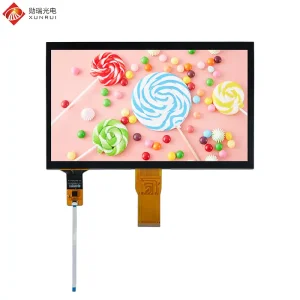
China 10.1 inch 1024×600 RGB IPS TFT LCD Module with capacitive touch Manufacturers, Factories
-
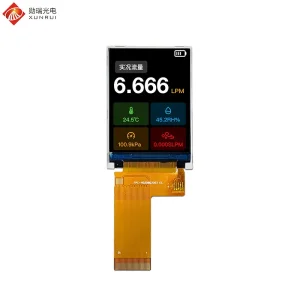
China 2 inch 240×320 SPI 30PIN 250nit IPS TFT LCD Module Manufacturer, Suppliers
-

China 8 inch 1024×600 1300nit TN TFT LCD with capacitive touch panel Manufacturers, Factory
-

China 7 inch 800×480 RGB 40pin 450nit TN TFT LCD Display Manufacturers, Suppliers
Macro Dynamics of the 5.7 Inch Industrial Display Market
The 5.7-inch LCD panel occupies a vital niche in the global display ecosystem. Originally standardized around classic 4:3 resolutions (such as QVGA 320×240 and VGA 640×480), the form factor remains quintessential for heavy-duty human-machine interfaces, military instrumentation, medical analytics, and avionics control. Engineering procurement teams worldwide balance legacy retrofits with next-generation high-resolution IPS retrofits.
Supply Chain Longevity & EOL Mitigation
Industrial product cycles span upwards of 7 to 15 years. Unlike consumer-tier displays that face rapid obsolescence, custom 5.7 inch LCD manufacturers specialize in component lifecycle management, preserving mechanical footprints, pin assignments, and driver timings over prolonged deployment periods.
High Ambient Light Operability
Modern outdoor terminals, marine steering columns, and agricultural telematics require readability under direct sunlight. Custom 5.7" engineering integrates high-efficiency backlights exceeding 1,000 to 1,500 nits, combined with anti-reflective coatings and advanced index-matched optical bonding.
Modernized Signal Bridging
Legacy systems rely on parallel RGB or classic MCU bus architectures. Contemporary OEM designs favor serialization protocols including LVDS, MIPI-DSI, or integrated HDMI/eDP bridging to reduce harness wiring, suppress EMI emissions, and facilitate seamless Linux/Android system convergence.
Engineering Architecture: Optimizing the 5.7" Form Factor
A comprehensive examination of physical layer stack-ups, thermal mitigation, and touch integration paradigms for Tier-1 equipment manufacturers.
| Evaluation Parameter | Legacy TN Industrial Architecture | Advanced IPS/Super-TFT Architecture | High-Reliability Transflective |
|---|---|---|---|
| Viewing Angles (U/D/L/R) | 70/70/60/70 (Grayscale Inversion Risk) | 85/85/85/85 (Free Viewing Axis) | 80/80/75/75 (Ambient Light Augmented) |
| Luminance Envelope | 250 – 500 nits | 500 – 1,500 nits (Driver Controlled) | 350 – 800 nits + Natural Sunlight Reflector |
| Operating Temperature | -20°C to +70°C | -30°C to +85°C (Extended Liquid Crystal) | -40°C to +85°C (Military/Avionics Spec) |
| Touch Compatibility | 4-Wire / 5-Wire Resistive Primary | Projected Capacitive (Multi-Touch / Glove) | Ruggedized Armored PCAP or Resistive |
| Typical Lifespan (MTBF) | 30,000 Hours (Half Brightness) | 50,000 – 70,000 Hours | 100,000 Hours High Reliability LED |
Thermal Dissipation & Backlight Management
Packing 1,000+ nits into a 5.7-inch chassis introduces dense thermal concentrations. Custom factories deploy aluminum back-chassis heatsinking, ultra-efficient white LED die sorting, and pulse-width-modulation (PWM) drivers that dynamically throttle thermal load without introducing visual artifacts.
Industrial PCAP & Glove/Water Rejection
Equipping an LCD with touch functionality requires advanced firmware algorithms. Utilizing industrial touch controllers (such as ILITEK, EETI, or FocalTech), panels are calibrated to reject stray fluid drops, salt mist, and electrical interference (EMC/EMI), while allowing thick work-glove actuation.
Glass Chem-Strengthening & Surface Treatments
Cover lens options range from 0.7mm up to 6.0mm chemically tempered glass delivering high IK-ratings (IK08 to IK10 impact resistance). Anti-Fingerprint (AF), Anti-Glare (AG), and Anti-Reflective (AR) optical sputtering deliver maximum optical clarity under extreme factory illumination.
End-Market Solutions: Where 5.7" Displays Excel
Explore real-world industrial systems engineered specifically around the unique physical and electrical characteristics of custom 5.7-inch modules.
Process Control & PLC Terminals
Factory automation systems utilize 5.7" displays as primary teach pendants and cabinet panels. Immunity to electrical spikes, long-term vibration stability, and high MTBF ratings safeguard plant uptime.
Diagnostic & Surgical Medical Tech
Ultrasound scanners, infusion systems, and telemetry devices require precise color stability, high contrast, and compliance with anti-microbial chemical wash-down standards.
Heavy Machinery & Fleet Guidance
Harvesters, cranes, and marine steering clusters rely on wide-temperature fluid cells (-30°C to +85°C) combined with IP67-sealed front bezels to withstand weather extremes.
Testing & Measurement Labs
Benchtop oscilloscopes, spectrum analyzers, and field calibrators utilize customized pin-outs, low-noise LVDS shielding, and non-glare coatings to guarantee accurate readings under bright laboratory lamps.
Stringent Factory Auditing, ISO Systems & Reliability Assurance
Total transparency across every manufacturing tier ensures that each custom module matches strict industrial parameters before departure.
Multi-Stage Verification Checkpoints
Every single production batch executes a rigorous multi-gate inspection routine: IQC incoming inspection, raw glass testing, FOG bonding validation with heat/humidity aging, completed assembly burn-in (under 50°C load), and outgoing OQC batch certification.
Environmental & Regulatory Conformance
All display stacks conform to international statutory directives, including RoHS 3 (EU 2015/863), REACH compliance, CE marking, and Conflict Mineral disclosures. Manufacturing cleanrooms operate in strict ISO Class 6/7 environments.
Engineering Traceability & BOM Locking
Avoid unexpected redesign cycles. When a 5.7-inch display configuration is signed off, the full Bill of Materials (BOM) — polarizers, driver ICs, FPC schematics, glass substrates, and LED light bars — is frozen and documented with formal Engineering Change Notification (ECN) protocols.
Emerging Technologies in 5.7" Industrial Displays
Discover how solid-state display technologies are elevating the classic 5.7-inch footprint to modern performance expectations.
Mini-LED Zone Dimming
Integrating local Mini-LED array backlights allows 5.7" panels to achieve HDR performance with contrast ratios surpassing 100,000:1, while dramatically lowering overall system power consumption in portable military terminals.
Haptic Feedback PCAP Assemblies
Tactile confirmation without mechanical switches: next-gen custom PCAP designs embed piezoelectric actuators within the cover glass stack, providing definitive tactile feedback to equipment operators wearing heavy protective gear.
Smart UART / CAN Interface Engines
Eliminate complex graphic controller overhead on your main MCU. Future 5.7-inch modules feature integrated hardware acceleration engines running GUI firmware over RS485 or CAN-bus networks.
Precision Assemblies & Specialized Controllers
Comprehensive display solutions designed for low EMI, ultra-wide viewing angles, and extended environmental operational ranges.
-

Custom 5 inch 720×1280 MIPI 40pin 1000nit IPS TFT LCD Display Manufacturer, Supplier
-
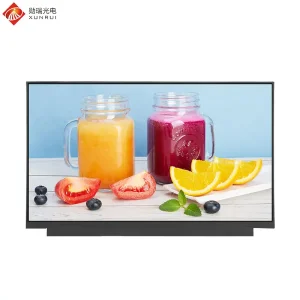
China 13.3 inch 1920×1080 EDP 30PIN 280nit IPS TFT LCD Module Suppliers, Factories
-

Custom 2.4 inch TFT LCD module 240×320 SPI 14pin interface 250nit IPS screen Manufacturer, Factory
-

Custom 3.5 inch IPS TFT LCD 320×480 MCU 40pin interface 300nit Manufacturer, Factories
-
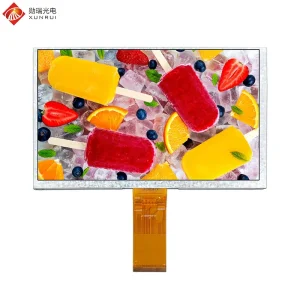
Custom 9 inch TFT LCD Module 1024×600 LVDS 60pin 400nit IPS Screen Suppliers, Factory
-

Custom 2.4 inch 240×320 MCU 40pin interface 250nit TN TFT LCD module Manufacturers, Factory
-

China 7 inch 1024×600 LVDS 40pin interface 350nit IPS TFT LCD module Manufacturer, Manufacturers
-

Custom 10.4 inch 1024×768 LVDS 30pin 600nit IPS TFT LCD Module Factories, Factory
Frequently Asked Questions on Custom 5.7" Modules
Essential guidance addressing engineering tolerances, interface conversion, and minimum order commitments.
Can a custom 5.7" display replace obsolete legacy panels (e.g., Kyocera, Sharp)?
Yes. Custom display manufacturers routinely execute drop-in replacement projects. Engineering teams reproduce identical physical outlines, active area coordinates, connector pin assignments, and timings to eliminate the necessity for mother-board revisions or structural tooling overhauls.
What is the typical minimum order quantity (MOQ) for custom tooling?
Following initial prototype sign-off, pilot validation batches between 5 to 500 units are offered to verify manufacturing repeatability. Full volume production orders typically specify an MOQ of 1,000 units, structured to accommodate rolling annual releases.
When should an engineer specify Optical Bonding over Air Bonding?
Optical bonding (using solid OCA or liquid LOCA resin) eliminates the internal air gap between the LCD and cover glass. This eradicates internal light reflection, prevents condensation in humid conditions, doubles mechanical impact tolerance, and maximizes sunlight readability.
Which customization options are available for the Flexible Printed Circuit (FPC)?
FPCs are fully customizable: shape routing, total length, connector pitch (e.g., 0.5mm, 1.0mm ZIF or board-to-board), integrated EMI shielding layers (silver foil or copper mesh), and surface-mounted passive bypass filters for harsh industrial environments.