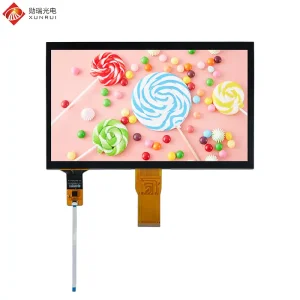
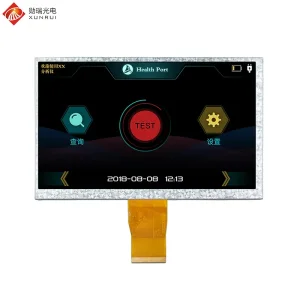
High-Precision TFT LCD Modules & Engineered Displays
Explore standard, industrial-grade, and custom-engineered display solutions manufactured under rigorous quality gates for global deployment.

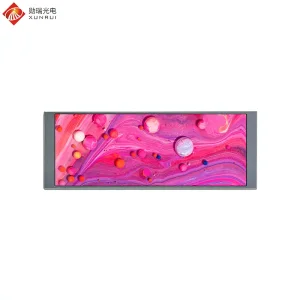

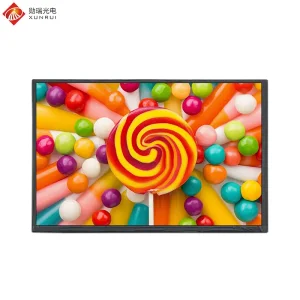

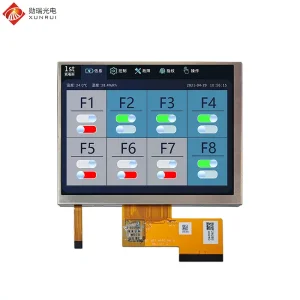
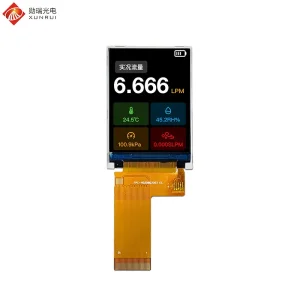
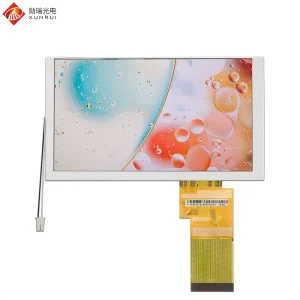
Technical Architecture & Anatomy of the 5.7" Industrial TFT Panel
A rigorous examination of electrical layout, active-matrix switching physics, luminance control, and interface architecture designed to replace obsolete legacy panels or power high-performance HMIs.
Native 4:3 Aspect Ratio & VGA Resolution
The 5.7 inch TFT LCD panel occupies a uniquely vital geometric niche in industrial design. Presenting an active display area of approximately 115.20(W) × 86.40(H) mm with a 4:3 aspect ratio and 640×480 (VGA) resolution (140 PPI), it serves as the golden standard for precision instrumentation. This pixel density provides tack-sharp vector rendering of oscilloscopes, CNC coordinates, and medical waveforms without requiring resource-heavy GPU scaling chips.
Whether migrating from monochromatic STN/FSTN liquid crystal setups or replacing discontinued legacy displays from Japanese fabricators, our module designs retain exact mechanical mounting envelopes while delivering vibrant 18-bit or 24-bit true color reproduction (262K / 16.7M colors).
IPS vs. TN Cell Physics & Viewing Angles
We produce 5.7" panels using both advanced Twisted Nematic (TN) and In-Plane Switching (IPS/ADS) liquid crystal modes. While standard TN cells offer cost advantages and rapid response times (10-15ms) for budget-constrained indicator panels, industrial applications increasingly specify our full-viewing IPS modules. IPS technology aligns liquid crystal molecules parallel to the glass substrates rather than perpendicular.
This planar switching geometry eliminates gray-scale inversion entirely and provides symmetrical 85°/85°/85°/85° (L/R/U/D) viewing cones. Critical operator telemetry remains completely legible regardless of whether the technician views the console from low mounting angles or side perspectives.
Thermal Dissipation & Backlight Luminescence
Luminance performance is dictated by the thermal behavior of the backlighting array. Our factory engineers high-power white LED (WLED) arrays configured in series-parallel topologies capable of achieving brightness ratings from 350 nits (standard indoor HMI) up to 1,200 nits (sunlight-readable outdoor dispensers).
To prevent premature LED degradation, our modules utilize aluminum back-plate carriers that act as heat spreaders. By optimizing current density through each die (running under 80% maximum rated current), we extend the LED backlight half-life (MTBF to 50% initial brightness) beyond 50,000 to 70,000 operating hours across industrial temperature envelopes (-30°C to +85°C).
| Parameter | Standard Commercial Tier | Industrial High-Reliability Tier | Custom Outdoor Ruggedized Tier |
|---|---|---|---|
| Active Diagonal | 5.7 Inch (4:3 Aspect Ratio) | 5.7 Inch (4:3 Aspect Ratio) | 5.7 Inch (4:3 Aspect Ratio) |
| Resolution & Color | 640 × 480 (VGA) / 262K Colors | 640 × 480 (VGA) / 16.7M Colors | 640 × 480 (VGA) / 16.7M Colors |
| Liquid Crystal Mode | TN (Normally White) | IPS / ADS (Normally Black) | IPS Transflective / High-Transmittance |
| Luminance (Typical) | 300 - 400 cd/m² (Nits) | 500 - 700 cd/m² (Nits) | 1,000 - 1,400 cd/m² (Sunlight Readable) |
| Viewing Angles (CR≥10) | 70°/70°/60°/70° (L/R/U/D) | 85°/85°/85°/85° Free Viewing Angle | 88°/88°/88°/88° Symmetrical Full View |
| Operating Temperature | -10°C to +60°C | -20°C to +70°C | -30°C to +85°C (Extreme Range) |
| Interface Supported | RGB 18-bit / MCU 8/16-bit | RGB 24-bit / 1-ch LVDS (6/8-bit) | LVDS / MIPI DSI / Custom HDMI Board |
| Touch Integration | 4-Wire Resistive (RTP) | Optical Bonding PCAP (I²C/USB) | Rugged PCAP (6mm Cover + Water Reject) |
Full-Stack Tailored Customization for 5.7" Displays
From flexible printed circuit (FPC) redesign to complex optical stacks, our Shenzhen facility transforms standard panels into drop-in turnkey components.
FPC Geometry & Pinout Remapping
Discontinued displays often force engineers to undergo costly mainboard redesigns due to mismatched pinouts or FPC routing obstacles. Our factory provides custom flexible printed circuit (FPC) development with NRE cycles as fast as 7-10 business days.
We incorporate custom gold-plated connector fingers, integrated EMI shielding meshes, tailored bend radiuses, and surface-mounted electronic components such as step-up LED drivers, discrete ESD suppression diodes, and voltage regulators directly onto the flexible circuit.
Cover Glass & Optical Surface Coatings
For demanding medical environments, cleanrooms, and outdoor kiosks, the display exterior requires tailored physical protection. We fabricate bespoke chemically strengthened cover glass (CSG) up to 6.0mm in thickness, supporting drop-ball impact ratings from IK07 to IK10.
We execute state-of-the-art optical vacuum sputtering, applying Anti-Reflective (AR) layers to boost outdoor contrast, Anti-Glare (AG) chemical etching to disperse specular glare, and oleophobic Anti-Fingerprint (AF) surface treatments for effortless sanitization using hospital-grade isopropyl alcohols.
Touch Integration: PCAP vs. RTP
We accommodate both traditional and contemporary touch interaction models. For high-EMI manufacturing plants or operator scenarios where thick insulating rubber gloves or styluses are mandatory, we laminate robust 4-wire or 5-wire analog resistive touch panels (RTP).
For modern multi-touch gesture interfaces, we implement Projected Capacitive (PCAP) touch sensors driven by high-noise-immunity ICs (such as ILITEK, Goodix, or FocalTech). These controllers are tuned by our firmware engineers to maintain faultless tracking in wet environments, rejecting false touches caused by water droplets, saline mist, or conductive surface debris.
Shenzhen Manufacturing Cluster: The Core Supply Chain Engine
How our direct manufacturing infrastructure in Bao'an, Shenzhen provides unmatched cost advantages, tier-one raw glass access, and agile production velocity for international OEM purchasers.
Direct Upstream Mother-Glass Access
Operating in the heart of the Guangdong-Hong Kong-Macao Greater Bay Area optoelectronics cluster provides Xunrui direct, first-tier procurement ties with major mother-glass foundries including BOE, HannStar, Innolux, and AUO. This eliminates the price markups and logistics bottlenecks associated with middle-tier brokers.
We secure prime, Grade-A amorphous silicon (a-Si) wafer sheets directly, cutting and profiling substrates with micron-scale CNC diamond scoring machines. This integration guarantees consistent panel transmittance, minimal cell defect ratios, and consistent batch-to-batch chromaticity.
High-Precision Automated FOG/COG Assembly
Manual bonding introduces unacceptably high variance in fine-pitch industrial modules. Our cleanrooms utilize state-of-the-art Japanese and Taiwanese automated Chip-On-Glass (COG) and Flex-On-Glass (FOG) alignment bonders.
These systems deploy anisotropic conductive film (ACF) with closed-loop pressure and temperature monitoring, securing driver ICs with pitch clearances under 15 microns. This level of automation prevents micro-cracking and electrical drift, ensuring high yields and continuous field reliability under severe vibrational stress.
Bilingual Engineering & Global Logistics
Overseas procurement teams often encounter critical project stalls due to language barriers or slow technical exchanges. At Xunrui, your RFQ is reviewed directly by bilingual application engineers who evaluate Gerber files, 3D STEP models, and interface constraints within 24 business hours.
Coupled with our strategic proximity to Shenzhen International Airport and Hong Kong maritime hubs, urgent air shipments of validated engineering prototypes reach customer labs in North America, Germany, the UK, and Japan within 3 to 5 business days of final testing sign-off.
Resolving Procurement Bottlenecks for Global Tier-1 Buyers
A strategic breakdown addressing Total Cost of Ownership (TCO), product lifecycle longevity, risk management, and qualification protocols for industrial supply chain executives.
Total Cost of Ownership (TCO) Optimization
Initial module unit cost is only one component of hardware expenditure. Shrewd procurement managers know that unanticipated field failures, high return merchandise authorization (RMA) rates, and unannounced end-of-life (EOL) announcements quickly erase fractional upfront savings.
By engineering with industrial-grade gate drivers, robust voltage protection, and standardized mechanical layouts, we drive RMA rates down to below 0.15% across initial 3-year operating windows. This structural reliability significantly lowers maintenance overhead for field-deployed assets.
Comprehensive Phase-Gate Validation
We mitigate qualification risk through an uncompromising 6-stage engineering validation process. Prior to mass production retooling, clients receive full optical colorimeter reports (CIE 1931 coordinates), photometric uniformity mappings (9-point inspection >80%), and precise mechanical CMM coordinate verification data.
Our unique 5 to 500-unit pilot-batch program bridges the gap between proof-of-concept hand-built samples and volume assembly, giving your firmware, mechanical, and QA teams the physical hardware needed to validate enclosure assembly lines before volume tooling capital is locked.
Obsolescence Protection & Form-Fit-Function Drop-Ins
Consumer display panels frequently face abrupt obsolescence within 18 to 24 months, devastating industrial and medical products designed for decade-long operational cycles. Xunrui guarantees a 7 to 10-year product longevity roadmap on our core 5.7" industrial lines.
If an upstream IC or glass supplier issues an EOL notification, our engineering team manages the transition proactively. We redesign the internal FPC or carrier board to preserve the outer mechanical dimensions, pin definitions, and timing parameters, giving your procurement department a seamless form-fit-function replacement without forcing chassis modifications.
Strict Quality Control & Global Compliance Assurance
Our quality management framework spans raw material lot control, automated optical inspection, and rigorous international environmental compliance certifications.
The 5-Tier Quality Inspection Protocol
Zero-defect production begins with rigorous quality control at each station. Every 5.7-inch panel batch undergoes a standardized five-tier quality inspection cycle:
- IQC (Incoming Quality Control): Microscopic analysis of glass substrates, polarizer cleanliness, LED die binning, and FPC conductor integrity.
- Glass Defect Screening: Automated optical inspection (AOI) detecting micro-scratches, edge chipping, and ITO layer irregularities.
- FOG Bonding & Thermal Aging: Constant resistance checks during thermal bonding, followed by intermediate power-on testing.
- Full Burn-In & High-Temp Aging: 100% of panels undergo 24 to 72 hours of thermal chamber aging at 50°C-60°C under dynamic pattern loads to eliminate infant mortality.
- OQC (Outgoing Quality Control): Final optical calibration, touch sensor linearity verification, and MIL-STD-105E AQL inspection prior to anti-static ESD packaging.
Environmental & Chemical Safety Protocols
Exporting to European, North American, and East Asian markets demands strict adherence to chemical substance restrictions and flame retardancy standards. All Xunrui 5.7" display modules are fully certified and documented with authentic test laboratory reports:
All polarizing films, optical adhesives (OCA/OCR), structural tapes, and potting silicones comply with UL94 V-0 or V-1 self-extinguishing ratings, ensuring full safety compliance inside sealed industrial enclosures.
Electromagnetic Compatibility (EMC / EMI)
Industrial machinery generates severe electromagnetic interference from nearby variable frequency drives (VFDs), relays, and switching power supplies. Poorly shielded displays can suffer from image flicker, horizontal tearing, or touch latch-up.
Our 5.7" modules feature integrated rear silver-paste grounding planes, copper foil shielding wraps around the FPC flex cables, and ferrite core dampeners where requested. Modules pass stringent CE and FCC Class B radiated emission standards and endure IEC 61000-4-2 Level 4 electrostatic discharge (ESD) tests (up to ±8kV contact and ±15kV air discharge).
Mission-Critical Applications of the 5.7" Form Factor
Real-world integration scenarios demonstrating how our customized 5.7" display modules resolve environmental, electrical, and optical challenges across demanding industries.
Industrial Automation & CNC Workstations
Computer numerical control (CNC) systems, teaching pendants, and programmable logic controller (PLC) user panels require reliable 4:3 display formats that integrate into standard DIN-rail cutouts or rack-mounted operator stations.
By pairing our high-contrast 5.7" IPS glass with a durable 4-wire resistive touch layer, machinists can operate menus while wearing heavy oil-coated work gloves. The display assembly resists machine vibration up to 3G rms (5 to 500 Hz) without mechanical ribbon unseating or optical delamination.
Medical Diagnostics & Patient Infusion Pumps
Electromedical gear demands consistent color fidelity, wide viewing angles, and absolute hygiene. Our 5.7" VGA IPS panels deliver consistent chromaticity, allowing attending nurses to accurately assess vital sign waveforms from any angle in the room.
Modules are laminated to seamless anti-microbial cover glass using full optical bonding (liquid OCR), eliminating the air gap. This optical construction prevents internal condensation during washdowns and ensures the monitor functions flawlessly alongside high-frequency electrosurgical tools without touch errors.
EV Charging Stations & Outdoor Fuel Pumps
Commercial outdoor infrastructure faces demanding operating stresses: harsh solar heat, freezing winters, direct sunlight, and vandalism risks. Our sunlight-readable 5.7-inch outdoor modules deliver up to 1,200 nits of active LED backlight luminance.
The display is bonded to 4.0mm chemically tempered vandal-proof glass meeting IK09 mechanical impact resistance. Integrated UV-blocking polarizers prevent liquid crystal solar burn (isotropic blackout) when installations are exposed to continuous desert sunlight.
Emerging Technology Trends in the 5.7" Industrial Sector
A technical preview of next-generation advancements shaping the future of medium-format embedded industrial displays.
Mini-LED Local Dimming Backlights
Traditional edge-lit LED backlights provide uniform brightness across the entire panel, limiting dynamic range and resulting in higher power draw. Our R&D team is qualifying matrix Mini-LED backlighting for select high-reliability 5.7" panels.
By segmenting the backlight into hundreds of localized dimming zones, contrast ratios jump from standard 800:1 up to an extraordinary 100,000:1. Deep blacks and vivid highlights appear without light bleed, while overall system power consumption drops by 35% in dark-themed user interfaces.
Haptic Feedback & Force-Sensing PCAP
Flat capacitive touchscreens have historically lacked the physical tactile confirmation of mechanical pushbuttons. We are closing this gap by embedding piezoelectric haptic actuators directly behind the display frame.
Coupled with specialized touch controllers that sense applied finger pressure (force touch), our next-gen 5.7-inch modules produce localized mechanical clicks. This gives operators unmistakable sensory feedback that an industrial valve or motor command has executed, without taking their eyes off the machinery.
Smart UART & Integrated Embedded Drivers
Interfacing raw RGB or LVDS data requires dedicated video pipelines on the host application processor, tying up valuable system resources. To streamline development, we offer 5.7" modules with integrated intelligent serial UART / RS485 / CAN-bus driver boards.
These smart displays house onboard flash memory and graphic rendering microcontrollers, allowing developers to upload UI assets and trigger animations using straightforward ASCII or binary commands. This architecture slashes embedded firmware development time from months to weeks.
Frequently Asked Questions: 5.7" TFT Engineering & Sourcing
Comprehensive answers compiled by our senior display engineers addressing mechanical, optical, and procurement inquiries from enterprise hardware teams.
Can your 5.7" TFT LCD replace obsolete panels from Kyocera, Sharp, or Ampire?
What is the difference between Optical Bonding (OCA/OCR) and Tape/Air Bonding?
What minimum order quantity (MOQ) and sample lead times does your factory enforce?
How do you ensure stable display performance across -30°C to +85°C temperatures?
Which interface should I choose: 18-bit RGB, 24-bit RGB, or LVDS?
Can your PCAP touch panels support gloved operation and water-rejection?
How does Xunrui protect international customers against sudden component obsolescence?
What certifications and test documentation accompany shipment lots?
Additional Industrial & Specialized Display Formats
Explore custom bar-type displays, ultra-wide view IPS screens, and custom resistive/capacitive modules engineered for international OEMs.