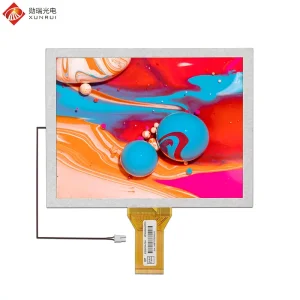
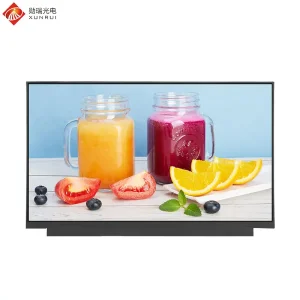
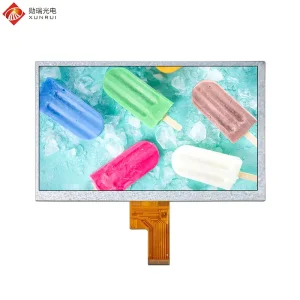
Custom 5 inch 720×1280 MIPI 40pin 1000nit IPS TFT LCD Display Manufacturer, Supplier
Configure Specifications

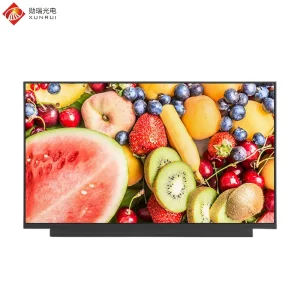



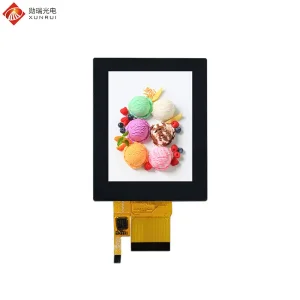

As global OEMs transition from standard consumer panels to ruggedized human-machine interfaces (HMI), the custom 6.2-inch form factor emerges as the sweet spot balancing handheld ergonomics, high pixel density, and high-ambient readability.
Standard indoor displays (250–400 nits) wash out under direct outdoor solar radiation. Our 6.2-inch high-brightness series integrates specialized LED arrays and enhanced light guide plates (LGP) to produce 1000 to over 1500 nits of luminance without thermal runaway.
The 6.2-inch envelope is increasingly engineered into elongated bar-types, ultra-wide vehicle dashboards, and specialized 16:9 or 18:9 form factors that fit non-standard mechanical enclosures where conventional 7-inch displays fail to integrate.
Engineered for mission-critical reliability, these panels integrate wide-temperature liquid crystal fluid operating seamlessly from -30°C to +85°C, coupled with polarizers resistant to yellowing, UV damage, and solar clear-point blackening.
Established in 2016 in Shenzhen's advanced technology corridor, Xunrui Optoelectronic balances nimble R&D with hyper-scaled industrial supply systems, directly neutralizing traditional cost barriers for global OEM clients.
By leveraging native upstream TFT glass from top-tier mother glass foundries, our in-house cleanrooms conduct custom laser glass-cutting, polariser lamination, and automated Fog (Flex-on-Glass) bonding with micro-micron alignment precision.
While global conglomerates require 6 to 9 months for customized FPC pinouts or LED re-engineering, our agile technical team issues CAD/Gerber designs within 48 hours and completes custom tooling validation batches in weeks.
We eliminate display failure via 5 mandatory test gates: Raw IQC inspection, glass optical check, FOG thermal cycling, finished-product high-temperature burn-in aging, and final OQC outgoing verification under ISO 9001 and ISO 14001 auditing.
| Module Feature | Standard Production Capability | Customized 6.2" Engineering Options |
|---|---|---|
| Luminance Rating | 250 – 500 cd/m² (Typical indoor) | 800 to 1,600+ cd/m² Sunlight Readable with Dimming Circuits |
| Interface Integration | Standard RGB / MCU / LVDS | High-speed MIPI DSI, eDP, SPI+RGB, or Custom HDMI Driver Board |
| Optical Bonding | Air Bonding / Perimeter Tape | Full OCA / OCR Optical Bonding to eliminate internal air reflections |
| Touch Layer | Bare Glass / 4-Wire Resistive | Multi-touch Projected Capacitive (PCAP) with 3–6mm Cover Glass (IK08+) |
| Glass Treatments | Standard Clear Soda Lime | Anti-Glare (AG), Anti-Reflective (AR), Anti-Fingerprint (AF), Chemically Strengthened |
From heavy telematics to critical healthcare automation, discover how global product managers leverage our tailored optoelectronic architectures.
Motorcycle digital clusters, e-bike smart cockpits, and agricultural machinery consoles face non-stop exposure to intense sun and vibrations. Our 6.2-inch wide-temperature panels maintain optical contrast and legible telemetry even in desert and tropical climates.
Handheld defibrillators, ultrasonic imaging units, and ambulatory monitors demand vivid true-to-life colors and wide IPS viewing angles so physicians can view clinical wave data from any posture without color shifting or optical dead zones.
Electric vehicle charging points (EVSE) and outdoor pay terminals require panels that operate continuous 24/7 cycles. Paired with anti-vandal IK08 cover glass, these 6.2-inch high-bright panels resist extreme UV degradation and condensation.
Operating over open water presents severe glare. With full optical bonding and circular polarizing filters (sunlight readable with sunglasses), our displays provide drone pilots and marine navigators with uncompromised clarity under raw direct sunlight.
Inventory management, rugged scanning, and port logistics hardware necessitate lightweight, high-resolution screens operated with heavy protective gloves, rain, or oily surfaces, made possible by custom industrial touch controllers.
Modern cobots and robotic teach pendants need compact visual feedback systems immune to electro-magnetic interference (EMI) generated by servo drives, utilizing shielded FPC cables and industrial-grade timing controllers.
Navigating component lifecycles, thermal management, and touch integration paradigms for next-generation hardware designs.
As backlight brightness scales past 1200 nits, heat generation can degrade liquid crystal viscosity and induce isotropic blackout. Xunrui utilizes high-conductivity aluminum back-chassis architectures and low-power high-efficiency LED dies that run 20% cooler than standard modules.
Consumer devices update every year, but industrial equipment needs long-term reliability. Xunrui guarantees 5 to 7 years of product lifecycle stability for our 6.2-inch panel series, giving procurement teams complete supply stability with seamless form-fit-function revisions.
Air-bonded stacks suffer internal refractions and condensation in humid environments. Global buyers are moving to optical resin (OCA/OCR) bonding, which eliminates the internal air gap, cuts ambient surface reflectivity by up to 300%, and increases mechanical impact resistance.
Clear, engineering-driven answers to support your display hardware and firmware design requirements.