
Specialized Embedded TFT & IPS Display Modules
Direct OEM manufacturing portfolio ranging from standard RGB interfaces to high-speed MIPI, LVDS, and sunlight-readable high-luminance industrial integrations.





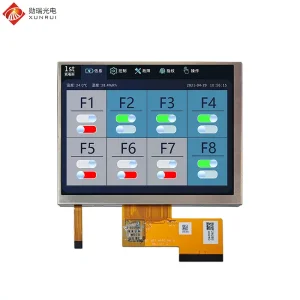

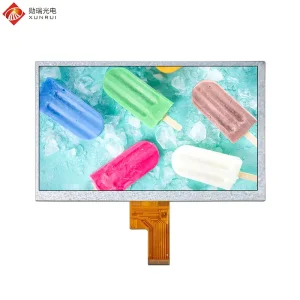
Technological Evolution of the 6.2-Inch IPS LCD Module
Bridging handheld portability with high-density visual telemetry. Why global industrial designers are shifting from traditional sub-5-inch formats to customized 6.2-inch widescreen IPS modules.
In-Plane Switching (IPS) Optical Coherence
Unlike legacy Twisted Nematic (TN) panels that suffer from severe grayscale inversion and contrast shifting when viewed off-axis, custom 6.2-inch IPS (In-Plane Switching) cells align liquid crystal molecules in parallel with the glass substrate. This orientation maintains chromatic fidelity across full 178-degree horizontal and vertical viewing planes, essential for multi-angle industrial operator stations.
- Zero color washout across broad angular vectors
- Consistent transmissive luminance under shifting ambient angles
- No touch-induced rippling or trailing (firm molecular anchoring)
High-Density Aspect Ratios (18:9 & 19:9)
The industrial surge toward 6.2-inch modules is heavily propelled by ergonomic form factors. Originally developed in mobile consumer electronics, the elongated 18:9, 19:9, or 19.5:9 display architecture gives rugged handheld terminals and space-constrained smart dashboards a vertical data envelope without increasing the device chassis grip width. Technicians operate complex multi-tiered UI software with single-handed thumb dexterity.
- Expanded vertical UI real estate for diagnostic telemetry
- Optimized for portrait barcode scanning and handheld mobility
- Enhanced pixel pitch enabling crisp micro-typography rendering
Luminescence Engineering & Thermal Balance
Deploying a 6.2-inch display in outdoor kiosks, EV charging stations, or tractor cabs requires daylight readability (upwards of 1,000 to 1,500 cd/m²). Driving miniature LED strings at high current generates significant localized thermal flux. Advanced manufacturing couples high-efficiency Nichia LED dice with low-loss optical light guide plates (LGP) and aluminum-backed dissipaters, maintaining operating temperatures within safe junctions.
- High efficiency LGP yielding >1,200 nits at modest wattage
- Integrated thermal heat dissipation backplates
- PWM dynamic dimming support from 1% to 100% duty cycle
Custom 6.2" IPS LCD Technical Procurement Parameters
Critical optical, electrical, and mechanical criteria for drafting RFPs and locking Bill-of-Materials (BOM) contracts with tier-1 Chinese module manufacturers.
| Specification Category | Standard Commercial Grade | Custom Industrial OEM Grade (XUNRUI Engineered) | Procurement & Validation Significance |
|---|---|---|---|
| Active Display Size | 6.18 ~ 6.22 Inch Diagonal | Custom active display cut (18:9, 19:9, or custom aspect ratio) | Determines enclosure window bezel tooling and structural gaskets. |
| Pixel Resolution | 720×1520 (HD+) | 720×1560, 1080×2240, or 1080×2340 (Full HD+ IPS) | PPI scaling drives font rendering sharpness for complex schematics. |
| Viewing Angle (CR≥10) | 80/80/80/80 (Typ.) | 85/85/85/85 or 89/89/89/89 (Full IPS All-Round Angle) | Eliminates critical operator readout errors during angled viewing. |
| Luminance (Brightness) | 300 - 450 cd/m² (Indoor) | 800 - 1500 cd/m² (Sunlight Readable Optical Stack) | Directly impacts legibility under harsh solar irradiance. |
| Interface Bus | MIPI DSI (4-Lane) | MIPI DSI, eDP, RGB/LVDS via integrated bridge adapter PCB | Matches host SoC/MCU hardware pipeline, throughput, and EMI ceilings. |
| Touch Panel Stack | Air-bonded Capacitive | Full Optical Bonding (OCA/LOCA), 2mm-6mm AG/AR/AF Tempered Glass | Prevents internal condensation; provides IK08/IK10 impact resistance. |
| Operating Temperature | -10°C to +50°C | -30°C to +85°C (Automotive / Harsh Industrial Specification) | Protects crystal fluid from freezing or isotropic phase transitions. |
| Lifecycle Protection | 12 - 18 Months | 5 to 7+ Years Guaranteed Availability with Formal PCN/EOL | Safeguards OEM certifications (FDA, CE, UL) against sudden redesigns. |
China Factory 4.0: Supply Chain Resilience & Shenzhen Efficiency
Shenzhen Xunrui Optoelectronic Technology operates at the epicenter of the global flat-panel supply chain, transforming raw mother glass into zero-defect custom sub-assemblies.
Automated COG & FOG Cleanroom Bonding
Operating Class 1,000 cleanrooms (with localized Class 100 laminar hoods), high-speed ultrasonic thermocompression bonders precisely mount driver ICs directly onto raw glass (Chip-on-Glass) and flexible printed circuits (Flex-on-Glass) with micron-level alignment tolerances.
- Anisotropic Conductive Film (ACF) precision bonding
- In-line micro-pitch inspection avoiding open/short traces
- Automated UV resin potting for FPC mechanical strain relief
Upstream Glass Ecosystem Integration
By partnering directly with tier-1 TFT mother glass foundries (BOE, Innolux, AUO, HannStar), our Bao'an facility procures high-yield mother glass arrays. We cut, profile, polarize, and calibrate backlights locally, insulating overseas clients from raw material shortages.
- Direct allocations shielding projects from market spikes
- High throughput automated diamond & laser glass dicing
- Stable raw material inventory buffers for multi-year builds
5-Tier Gate Quality Architecture
Certified under ISO 9001 and ISO 14001, every custom 6.2-inch module undergoes strict multi-stage verification: Incoming Quality Control (IQC), Polarizer/Glass Inspection, FOG Optical Bonding + Hot Aging, Final Functional Burn-in Testing, and Outgoing Quality Control (OQC).
- 100% automated optical inspection (AOI) for sub-pixel checks
- Dynamic high-temperature burn-in chambers (+60°C continuous)
- Full traceability barcoding tracking every glass lot and IC batch
Agile Scale: From Trial to Mass Production
Engineering-driven product development requires flexible validation. Xunrui supports OEM buyers with small-batch trial manufacturing runs (5 to 500 units) to verify form-fit-function prior to greenlighting automated mass production batches exceeding 1,000+ units.
- 5–500 pcs pilot run capability for fast prototype validation
- Rapid FPC pinout and backlight brightness iteration
- Over 2,000,000 units monthly total module capacity
Mission-Critical Deployment Scenarios for 6.2" IPS Displays
From smart logistics hand-terminals to EV fast-chargers, the custom 6.2-inch format delivers the optimal physical footprint for responsive, graphic-intensive human-machine interfaces.
Rugged Industrial Handhelds & Warehouse PDAs
Modern barcode and RFID inventory scanners demand widescreen layouts for digital inventory pick lists, 3D rack navigation, and digital signature capture. Custom 6.2-inch IPS modules provide Full HD resolution, glove-touch capacitive sensitivity, and optical bonding that withstands recurring 1.8-meter drops to concrete without panel delamination.
Smart EVSE & Commercial DC Charging Kiosks
Outdoor EV charging posts operate under severe direct sun, rainfall, and UV exposure. Customized with high-luminance backlights (1,000+ nits), anti-reflective (AR) chemically strengthened cover glass, and wide-temperature liquid crystals (-30°C to +80°C), our 6.2" modules deliver clear charging telemetry and contactless payment workflows.
Portable Medical Diagnostics & Patient Monitors
Handheld ultrasound scanners, infusion pumps, and portable ECG monitors demand pristine color separation and wide viewing angles so doctors see undistorted vital waveform tracings from acute perspectives. Antibacterial cover glass and saline-tolerant capacitive touch firmware ensure complete clinical cleanliness.
Two-Wheeler EV Dashboards & Fleet Telematics
Electric scooters, e-motorcycles, and construction telematics require compact, widescreen displays fitted into narrow handle fairings. 6.2-inch bar/widescreen IPS modules integrated via CAN-bus to MIPI/LVDS controller boards provide vehicle speed, turn-by-turn navigation, and battery SOC data with instantaneous refresh rates.
Smart Home Energy Storage (BESS) Consoles
As residential solar and battery storage systems become mainstream, wall-mounted gateway panels require sleek, tablet-grade aesthetic interfaces. The 6.2-inch 19:9 form factor sits flush inside home enclosures, rendering energy flow graphics with deep black contrast and minimal standby current draw.
Six-Stage Custom TFT/IPS Module Development Process
From initial mechanical step files to volume container shipments, our milestone-gated engineering pipeline guarantees risk-free integration into your host device.
Requirement Feasibility & Spec Lock
Our engineering team reviews your CAD files, bezel tolerances, host SoC display pipelines (MIPI DSI lanes, LVDS pairs, or RGB pins), backlight power envelopes, and operating environment constraints.
2D/3D Design & FPC Routing Sign-Off
We generate full optical stackup drawings, customized Flexible Printed Circuit (FPC) routing with EMI shielding foil, and cover glass artwork with custom silkscreen logos, buttons, and chamfered edges.
Rapid Prototype Sample Fabrication
Precision tooling produces initial working functional prototypes. Modules undergo optical bench calibration (color chromaticity, uniformity, nit output) before express courier dispatch to your R&D lab.
Pilot Run (5 to 500 Pcs Validation)
Following sample approval, we offer a dedicated pilot production run to test your assembly jigs, surface-mount lines, and field beta testing, ensuring structural fit without massive capital risk.
Automated Cleanroom Mass Production
Custom projects transition into high-speed automated manufacturing lines utilizing ACF thermocompression bonding, automated optical inspection, and rigorous multi-hour burn-in cycles under load.
Audited OQC & Life-Cycle Management
Every shipment passes Mil-STD AQL inspection, packaged in anti-static ESD trays and climate-controlled cartons, backed by our long-term supply agreements and formal PCN change notifications.
Frequently Asked Questions: Sourcing Custom 6.2" IPS Displays
Clear, engineering-level answers addressing electrical design, custom tooling costs, lead times, and panel longevity.
Why choose a 6.2-inch IPS module over standard 5.0" or 7.0" displays?
What parameters can Xunrui customize on a 6.2" IPS LCD module?
How does Xunrui solve sunlight readability on 6.2-inch displays?
What is the minimum order quantity (MOQ) for custom tooling?
What typical lead times apply to tooling, samples, and mass production?
How is lifecycle management and component obsolescence handled?
Industrial Grade Modules, Displays & Touch Systems
Discover our comprehensive range of specialized form factors—including compact square panels, sunlight-readable modules, and harsh-environment displays.

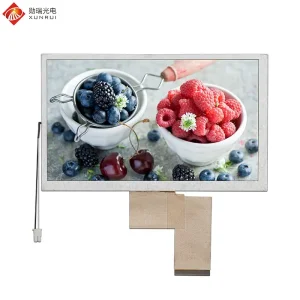



China 7 inch 800×480 1000nit Wide Operating Temperature Range TN TFT LCD Display
Explore Specifications


Initiate Your Custom 6.2-Inch Display Design Today
Collaborate directly with Shenzhen Xunrui's senior optoelectronic engineering team. Share your enclosure drawings, target luminance, and interface pinout requirements for a comprehensive DFM design review and trial prototype estimation within 24 business hours.