
Direct Factory Catalog · Batch One
Featured Standard & Custom Micro-Display Solutions
Explore our production-grade IPS and high-performance TFT LCD display modules engineered for instrumentation, automotive dashboards, smart-home controllers, and portable medical terminals.

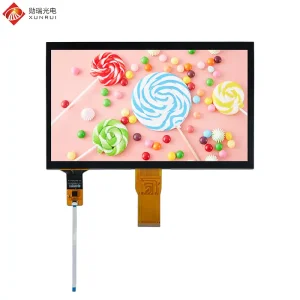
China 8 inch 1024×600 1300nit TN TFT LCD with capacitive touch panel Manufacturers, Factory
View Product Specs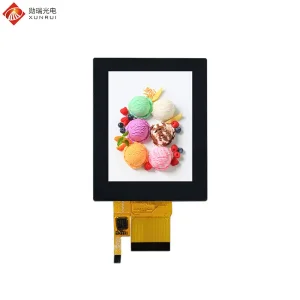
China 2.8 inch 480×640 MIPI/RGB IPS TFT LCD Display with capacitive touch Supplier, Factories
View Product Specs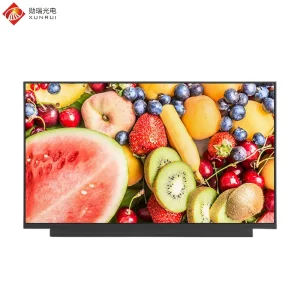
China 15.6 inch 1920×1080 EDP 30PIN 400nit IPS TFT LCD Module Supplier, Factories
View Product Specs
Custom 2.8 inch 240×320 SPI 10pin 250nit TN TFT LCD Display Supplier, Factories
View Product Specs
Custom 15 inch 1920×1080 EDP 30pin 300nit IPS TFT LCD Display Manufacturer, Factories
View Product Specs
Custom 7 inch 1024×600 IPS TFT LCD display with capacitive touch panel Manufacturers, Suppliers
View Product Specs
China 4.3 inch 800×480 IPS TFT LCD Module with capacitive touch panel Manufacturer, Suppliers
View Product Specs
Industrial Solution Architecture
The Strategic Imperative of Custom 4-Inch IPS Form Factors
In modern cyber-physical systems, edge computing nodes, and distributed automation frameworks, micro-displays represent the vital bridge between deterministic sensor telemetry and operational decision-making.
2,000,000+
Monthly Module Output (PCS)
5,000m²
Shenzhen High-Tech Cleanroom
5-500pcs
Agile Engineering Pilot Batches
85/85/85/85
All-Angle IPS Viewing Cone (U/D/L/R)
Eliminating Grayscale Inversion in Embedded Panels
Legacy TN (Twisted Nematic) displays suffer from acute chromatic wash-out and grayscale inversion when inspected off-axis. By standardizing on In-Plane Switching (IPS) technology across 4-inch square (480×480, 720×720) and 4-inch WVGA/FWVGA (480×800) formats, liquid crystal molecules rotate parallel to the glass substrate. This architecture guarantees total chromatic accuracy, exceptional black levels, and 178-degree symmetrical visibility across all viewing planes—an uncompromising requirement for wall-mounted HVAC controllers, patient-side infusion pumps, and DIN-rail process monitoring systems.
High-Efficiency Optical Backlight Stacks
Outdoor automated kiosks, portable industrial tachometers, and smart EV charging pedestals require display readability under unmitigated direct sunlight exceeding 100,000 lux. Our Shenzhen cleanroom lines construct custom 4-inch IPS backlight assemblies utilizing high-efficacy Nichia LED arrays, optical-grade light guide plates (LGP), and dual micro-prismatic brightness enhancement films (BEF). Luminance profiles scale from an ultra-low energy 350 nits for battery-powered handhelds up to 1,200+ nits sunlight-readable displays with optimized thermal dissipation and zero hot-spot degradation.
Optical Bonding (OCA/OCR) vs. Air-Gap Engineering
Ambient optical reflections at boundary air layers routinely degrade screen readability. We integrate in-house dry optical clear adhesive (OCA) and wet optical clear resin (OCR) cleanroom bonding lines. By matching refractive indices between the chemically strengthened cover glass (CSG), the projected capacitive sensor matrix (PCAP), and the 4-inch IPS TFT cell, total internal reflection is cut by more than 85%. Furthermore, full optical lamination eliminates condensation risk, eliminates dust ingression, and vastly improves mechanical shock resistance to IK08/IK10 impact thresholds.
Parametric Architecture Matrix
Comparative Matrix: 4-Inch IPS vs. Alternative Display Topologies
Engineers must rigorously weigh optical clarity, interface bandwidth, thermal budget, and bill-of-materials lifecycle stability. Below is our engineering benchmark for custom micro-display architectures.
| Evaluation Parameter | XUNRUI Custom 4-Inch IPS LCD | Standard Commercial TN Panel | Small-Format Consumer AMOLED |
|---|---|---|---|
| Viewing Angle (CR ≥ 10) | 85°/85°/85°/85° (Full Symmetrical Cone) | 65°/65°/50°/60° (Prone to Inversion) | 88°/88°/88°/88° (Wide, off-axis color shifts) |
| Luminance Scalability | 350 to 1,500+ nits (Tunable Backlight Array) | 200 to 450 nits (Limited headroom) | 400 to 800 nits (Subject to thermal throttles) |
| Operating Temperature | -30°C to +85°C (Automotive / Industrial Grade) | -20°C to +70°C (Standard grade) | -20°C to +60°C (Accelerated burn-in at heat) |
| Touch Sensor Synergy | PCAP (I²C / USB) or 4-Wire RTP, Water Rejection | Basic Resistive Overlay (High haze) | On-Cell PCAP (Vulnerable to noise coupling) |
| Controller Interfaces | MIPI-DSI (2/4-lane), RGB 24-bit, SPI/QSPI, MCU | MCU 8/16-bit or RGB 18-bit | Primarily high-speed MIPI-DSI only |
| Operational Half-Life (MTBF) | 50,000 to 70,000 Hours (Continuous Duty) | 20,000 to 30,000 Hours | 15,000 to 25,000 Hours (Static image burn-in) |
| BOM Supply Lifecycle | 5 to 7+ Years Guaranteed Form-Fit Continuity | 1 to 3 Years (Frequent EOL cycles) | 6 to 18 Months (Consumer turnover risk) |
High-Speed MIPI-DSI & RGB Interfaces
We tailor 4-inch IPS display flex cables (FPC) with integrated differential impedance matching to support 1-lane or 2-lane MIPI-DSI configurations, alongside traditional 18/24-bit parallel RGB. Our onboard chip-on-glass (COG) controllers—such as the ST7701S, ST7703, and ILI9806E—feature highly configurable register maps, enabling ultra-smooth 60 fps UI animations driven by low-cost Cortex-M7 microcontrollers (STM32, NXP i.MX RT) and embedded Linux platforms (Raspberry Pi CM4, Allwinner, Rockchip).
Custom Cover Glass & Surface Coatings
Device aesthetics and field survivability demand bespoke cover lens engineering. XUNRUI provides custom soda-lime, aluminosilicate, and Corning Gorilla Glass thicknesses from 0.55mm to 6.0mm. We apply optical nanometer vacuum coatings including Anti-Glare (AG chemically etched gloss reduction), Anti-Reflective (AR sputtered multilayer interference coating with reflectance <0.5%), and Anti-Fingerprint (AF oleophobic coating with water contact angle >115°), ensuring absolute scratch, smudge, and solvent resistance.
EMI Shielding & Industrial Noise Immunity
Industrial environments subject display assemblies to harsh conductive and radiated electromagnetic noise generated by variable frequency drives (VFD), high-voltage relays, and wireless modems. We integrate custom grounded ITO (Indium Tin Oxide) shield planes, double-sided silver paste EMI shielding tape on flex interconnects, and high-frequency ferrite filtering to achieve full compliance with EN 61000-4-3 radiated immunity and EN 55032 Class B emission standards.
Global Supply Chain & Localized Engineering
Shenzhen Agile Manufacturing Backed by Worldwide OEM Assurance
Sourcing direct from our Shenzhen optoelectronics base bridges the gap between mass-market LCD foundries and the specialized, agile engineering support required by overseas OEM system developers.
Stage 01
Design & Feasibility Review
Our firmware, optical, and mechanical engineers evaluate your 3D enclosure CAD drawings, optical transmission goals, power budgets, and microcontroller pin assignments, establishing feasible tooling configurations within 48 business hours.
Stage 02
Rapid Tooling & Prototype Sampling
Custom FPC tooling, bespoke LED light guide molds, and screen-printed cover lenses are turned around within 12 to 18 business days. Engineering evaluation samples ship with complete parametric initialization code and timing diagrams.
Stage 03
Small-Batch Trial (5-500 Units)
Unlike rigid mega-fabs that require upfront tens-of-thousands unit commitments, XUNRUI offers one-time pre-series validation runs from 5 to 500 units, allowing field testing, clinical pilots, and regulatory emissions audits before volume lock-in.
Stage 04
5-Stage Quality Inspection Gates
Every batch must clear IQC incoming raw wafer testing, glass dimensional profiling, automatic cleanroom Flex-on-Glass (FOG) hot-bar bonding with automated optical inspection (AOI), thermal burn-in aging chambers, and strict OQC outgoing audit.
Stage 05
Volume Scale-Up (1,000+ Units)
Supported by our 5,000 square-meter production facility and 2,000,000 PCS monthly capacity, customized volume production scales smoothly with locked BOMs, dedicated automated production lines, and traceable lot serializations.
Stage 06
Obsolescence Management & Guarantee
We provide guaranteed multi-year component continuity. When underlying IC or glass sub-components approach EOL, XUNRUI issues minimum 12-month advance notifications along with pin-compatible dropped-in replacement re-engineering support.
Engineering Deployments
Mission-Critical Deployment Scenarios for 4-Inch IPS Panels
Engineered to excel in demanding environments where failure is not an option. Discover how our 4-inch display modules anchor intelligent hardware globally.
Smart Thermostats & 86-Type Wall Switch Panels
The square 4.0-inch 720×720 or 480×480 IPS panel has become the global standard for smart home automation hubs and British/European 86-type junction box wall switches. Featuring true black bezel matching, circular or square custom cover glass cutouts, and ultra-wide viewing angles, users observe zero contrast fading whether looking from standard room eye level or walking past the installation switchboard.
Point-of-Care Medical Diagnostics & Syringe Pumps
Portable veterinary analyzers, portable defibrillators, and automated infusion pumps mandate vivid color differentiation of critical waveform vectors. Our custom 4-inch IPS modules provide NTSC 70% color saturation, IP65-sealed front cover plates that withstand medical hospital-grade disinfectant wipe downs (isopropyl alcohol, bleach solutions), and water-rejection capacitive touch controllers capable of saline splash rejection.
Commercial EV Chargers & Outdoor Smart Terminals
Level-2 and Level-3 DC fast-charging pedestals operate in unshaded commercial parking environments exposed to direct solar thermal loading and sub-zero winter temperatures. Outfitted with high-transmittance polarizers, UV-inhibiting adhesive layers, -30°C to +85°C operating liquid crystals, and 1,000+ nits luminance output, our 4-inch displays deliver uninterrupted 24/7 reliability and complete immunity to black solar isotropic degradation.
Future Horizons 2026–2030
Technological Roadmap: Next-Generation Embedded Micro-Displays
As artificial intelligence workloads shift toward localized neural processing units (NPU) at the hardware edge, the human-display interface is evolving rapidly into a low-latency, hyper-responsive cognitive dashboard.
Mini-LED Direct Full-Array Local Dimming
We are transitioning select high-end 4-inch display models to localized Mini-LED matrix backlights featuring over 256 independent dimming zones. This provides native 100,000:1 dynamic contrast ratios rivaling OLED performance, while completely bypassing organic degradation and permanent static screen burn-in issues inherent to OLED sub-pixels.
Integrated TDDI (Touch and Display Driver Integration)
Traditional builds utilize separate discrete ICs for display timing control and touch coordinate processing. Next-gen XUNRUI 4-inch platforms leverage monolithic TDDI silicon architectures. This slashes FPC pin count by 40%, eliminates cross-talk noise between display refresh scans and touch sensing cycles, and reduces overall module thickness down to sub-1.8mm profiles.
Ultra-Low Power Oxide TFT (IGZO) Substrates
For remote IoT asset monitors, solar-powered field sensors, and military handheld equipment, our roadmap includes Indium Gallium Zinc Oxide (IGZO) transistor backplanes. IGZO demonstrates electron mobility 20 to 50 times greater than conventional amorphous silicon (a-Si), permitting display static frame holding down to 1 Hz refresh rates with micro-watt idle power consumption.
Engineering Knowledgebase
Frequently Asked Technical & Procurement Questions
Practical insights compiled by XUNRUI lead optical and firmware engineers to accelerate your hardware design cycle.
What is the typical minimum order quantity (MOQ) for custom 4-inch IPS screens?
To support design verification and early product testing, XUNRUI offers an initial small-batch trial production run of 5 to 500 units following engineering prototype approval. Once your hardware reaches the commercial rollout phase, customized mass-production MOQ typically begins at 1,000 units. For completely standard, off-the-shelf panel configurations, flexible inventory sampling is supported.
How does XUNRUI handle high-ambient temperature dissipation for 1000+ nit displays?
Driving backlight LEDs to 1,000 to 1,500 nits produces significant thermal flux. We engineer customized aluminum or graphite-clad heat-spreading back chassis, high-thermal-conductivity flexible printed circuits (FPC), and utilize industrial-grade wide-temperature liquid crystal fluid (-30°C to +85°C clearing point). This ensures the display panel never reaches the clearing point or exhibits isotropic black splotches in direct desert sun.
Can our engineering team customize the FPC shape, pinout, and connector type?
Yes. FPC customization is one of our primary core competences. We routinely adjust flex length, dynamic bend radius, connector gender (ZIF, BTB board-to-board, or hot-bar soldering pads), and reassign pinouts to match your mainboard routing. We also embed onboard ESD diodes, boost step-up circuits, and I²C pull-up resistors directly onto the flex tail.
Which touch panel technology is best suited for 4-inch industrial applications?
If your instrument is operated indoors, requires multi-touch swipe gestures, or uses a flush edge-to-edge protective glass fascia, Projected Capacitive (PCAP) with optical bonding is recommended. We tune touch controllers (e.g., FocalTech, Goodix, ILITEK) for thick glove support and water immersion immunity. If your field device is subjected to extreme electromagnetic interference, heavy industrial lubricants, or stylus input, a durable 4-wire resistive touch panel (RTP) provides bulletproof mechanical tactile response.
What quality certifications and compliance benchmarks govern your factory?
Our Shenzhen manufacturing facility operates under strict ISO 9001:2015 Quality Management and ISO 14001:2015 Environmental Management accreditations. All materials comply 100% with RoHS 3 (EU 2015/863), REACH (EC 1907/2006), and halogen-free standards. Finished modules are certified to comply with CE, FCC Class B, and UL94V-0 flame-retardant classifications.
How does XUNRUI supply driver boards and interface bridge adapters?
To simplify embedded integration, we develop companion driver boards supporting HDMI-to-MIPI, USB-C-to-eDP, and AV/VGA-to-RGB conversion. We also produce custom microcontroller adapter boards carrying integrated level-shifters and LED constant-current backlight drivers, ensuring plug-and-play evaluation on Windows, Linux, Android, and RTOS environments.
Direct Factory Catalog · Batch Two
Specialized Industrial, Bar-Type & High-Brightness Displays
Explore our broader production capability spanning ultra-wide aspect ratio strip displays, high-reliability TN modules, and ruggedized high-resolution widescreen panels.
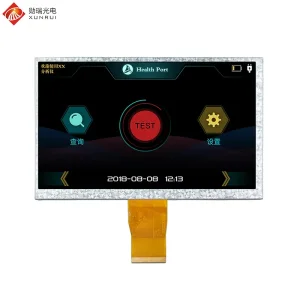
Custom 7 inch 1024×600 RGB 50pin 350nit TN TFT LCD Display Manufacturer, Supplier
View Product Specs
China 1.44 inch 128×128 SPI 15pin 250nit TN TFT LCD Module Supplier, Factories
View Product Specs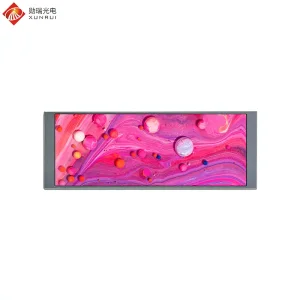
Custom 6.86 inch 480×1280 MIPI 40pin 700nits IPS Strip TFT LCD Module Supplier, Factory
View Product Specs
China 10.1 inch TFT LCD module 1280×800 LVDS 40pin interface 350nit IPS screen Manufacturer, Manufacturers
View Product Specs
China 12.3 inch 1920×720 EDP 60pin 400nit IPS Strip TFT LCD Display Supplier, Suppliers
View Product Specs
Custom 6.9 inch 280×1424 MIPI 30pin interface long strip IPS TFT LCD module Manufacturer, Factories
View Product Specs
China 7 inch 800×480 1000nit Wide Operating Temperature Range TN TFT LCD Display Manufacturer, Manufacturers
View Product Specs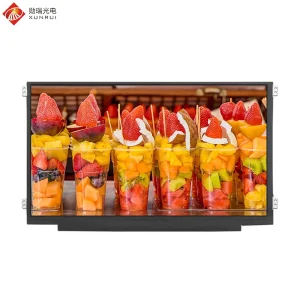
Custom 11.6 inch 1920×1080 EDP 30PIN 220nit IPS TFT LCD module Supplier, Suppliers
View Product SpecsTransform Your Embedded Hardware with Custom 4-Inch IPS Engineering
Partner directly with Shenzhen Xunrui Optoelectronic Technology Co., Ltd. Eliminate middleman markups, obtain verified sample units within 14 days, and secure long-term guaranteed component lifecycles for your mission-critical products.