
Next-Gen Optoelectronic Architecture
Custom 4 TFT Suppliers & Factories: Global Industrial Engineering Playbook
Comprehensive architectural guide for global OEMs, systems integrators, and tier-1 procurement managers looking for mission-critical custom 4" (3.5" to 4.3" class) and micro-to-large TFT-LCD displays, precision touch bonding, and agile high-yield fabrication.
Top-Tier Portfolio Catalog
Featured Industrial TFT-LCD Display Modules
High-reliability TFT panels featuring ultra-wide view angles, sunlight-readable high-nit options, and high-density pinouts engineered for rapid deployment.

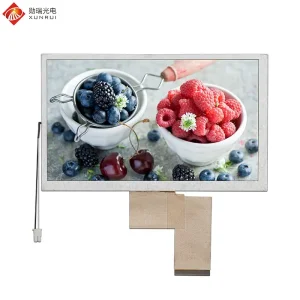
China 5 inch 800×480 1200nit High Brightness TN TFT LCD Module
View Specifications
Custom 10.1 inch 800×1280 MIPI IPS TFT LCD Display with CTP
View Specifications
Custom 8 inch 1200×1920 MIPI 40pin 350nit IPS TFT LCD Display Module
View Specifications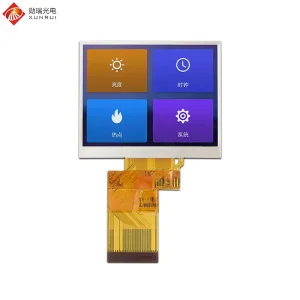
China 3.5 inch 320×240 RGB 54pin 350nit TN TFT LCD Module
View Specifications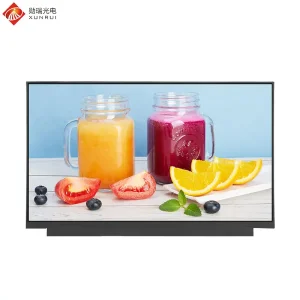
China 13.3 inch 1920×1080 EDP 30PIN 280nit IPS TFT LCD Module
View Specifications
China 4.3 inch 800×480 IPS TFT LCD Module with Capacitive Touch Panel
View Specifications
Custom 10.1 inch 1024×600 RGB 50pin 350nit TN TFT LCD Module
View SpecificationsMacro Dynamics & Market Evolution
The Strategic Role of 4-Inch Class Displays in Edge Computing
In modern industrial hardware architecture, the "4-inch class" (encompassing 3.5", 4.0", and 4.3" formats) forms the baseline standard for responsive edge-computing nodes, portable telemetry, and mission-critical control enclosures.
Convergence of IPS & High-Density Pixel Matrices
Traditional TN-mode displays have historically dominated compact instrumentation due to unit economics. However, current global procurement is aggressively shifting to In-Plane Switching (IPS) substrates in 4-inch modules. IPS delivers symmetrical 85°/85°/85°/85° viewing envelopes, eliminating grayscale inversion during overhead industrial wall mounting or dynamic mobile vehicle telemetry.
Thermal & Power Optimization for Industrial IoT
Next-generation embedded hardware platforms operating under low-power envelope constraints require display panels engineered for low thermal dissipation. Custom 4 TFT fabricators are incorporating high-efficiency LED drivers alongside silicon backplanes that lower quiescent current draws while maintaining 800+ cd/m² sunlight readability under direct radiation.
Hybrid Controller Interface Standardization
Interfacing compact displays historically introduced bus bottleneck dilemmas. Modern 4-inch class custom engineering solves this by supporting multi-protocol flex FPCs capable of dynamic routing between 8/16-bit parallel MCU, 3/4-wire Serial Peripheral Interface (SPI), RGB24 high-speed streaming, and high-efficiency 2-lane MIPI-DSI protocols directly on a unified backplane footprint.
Procurement Specification Matrix
Global OEM Requirements: Evaluating 4-Inch TFT Sourcing Metrics
Hardware engineering teams cannot afford unverified panel specifications. The following architectural matrix breaks down standard vs. tier-1 industrial customization thresholds for demanding international deployments.
| Performance Dimension | Consumer Off-the-Shelf (COTS) | Custom 4 Industrial Grade | OEM Operational Benefit |
|---|---|---|---|
| Operating Temperature | -10°C to +60°C | -30°C to +85°C (Extreme Range) | Prevents liquid crystal freezing in sub-zero oilfields and clears solar thermal baking without panel blacking. |
| Luminance Rating | 250 – 350 nits | 800 – 1500 nits (Sunlight Legible) | Uncompromised outdoor user visibility without washing out critical telemetry indicators. |
| Bonding Technology | Frame Air-Gap Tape Bonding | Optical Clear Resin (OCR/OCA) Wet Bonding | Eliminates internal air-glass reflections, condensation risks, and increases shatter resistance against mechanical shock. |
| FPC Tail Customization | Fixed Pinout / Single Direction | Custom Shape, EMI Grounding, Custom Connector | Drops directly into legacy industrial cavities without requiring carrier board redesigns or PCB daughter-cards. |
| Lifecycle Commitment | 12 – 18 Months (Consumer Volatile) | 5 to 7+ Years Guaranteed Availability | Eliminates recertification and redesign engineering costs across regulated medical and automotive pipelines. |
Smart Manufacturing Ecosystem
China Factory 4.0: Shenzhen Precision Optoelectronics Resilience
XUNRUI leverages Shenzhen's optoelectronic industrial clustering to deliver rapid prototyping, component sourcing agility, and ISO-certified manufacturing discipline from raw glass cutting to finished assemblies.
Full Vertical Supply Chain Integration
Situated within Shenzhen’s high-tech manufacturing corridor, our production footprint bridges upstream glass substrate suppliers, precision ITO coaters, backlight LED array packagers, and flex circuit manufacturers, compressing prototype iterations down to days rather than months.
5-Stage Zero-Defect Quality Gates
Every custom 4 TFT batch operates under rigorous validation protocols: incoming IQC inspection, high-accuracy glass polarization mapping, FOG automated bonding with thermal aging, finished-assembly operational burn-in, and ISO 9001/ISO 14001 compliant outgoing OQC auditing.
De-risked Pilot Ramp: 5 to 500 Pcs
Global procurement teams face immense inventory risks. Unlike monolithic glass vendors that demand immediate 10k commitments, our lean factory pipeline allows low-risk small-batch trial production runs (5 to 500 pcs) for full field integration before entering 1,000+ volume scaling.
2016
Founded in Shenzhen
5,000 m²
Class 1000 Cleanroom Area
2,000,000+
Monthly Modular Capacity
100%
Optical & Thermal Burn-in Tested
Field-Tested Deployments
Localized Application Scenarios: Where Custom 4 TFT Excels
Real-world operational environments mandate hyper-specialized display configurations. Here is how custom 4-inch display assemblies integrate across core enterprise sectors.
Smart EV Chargers & Outdoor HMI
4.3-inch sunlight-readable 1000+ nit IPS modules integrated with 3mm vandal-proof, IK08-rated chemically strengthened glass cover plates. UV-resistant polarizers prevent screen yellowing under continuous outdoor desert solar irradiance.
Portable Diagnostic & Infusion Devices
Custom 3.5" and 4" IPS displays featuring Projected Capacitive (PCAP) multi-touch calibrated specifically for saline fluid rejection, latex surgical glove tracking, and full medical-grade electromagnetic compatibility (EMC) compliance.
Heavy Machinery Fleet Telematics
Ruggedized 4-inch widescreen panels optimized for wide operational temperatures (-30°C to +80°C) with shock-absorbing silicone gasketing to survive extreme mining equipment vibration and rapid thermal cycles.
Rotary Knobs & Smart Building Panels
Square and custom round 4-inch-envelope displays engineered with integrated SPI/MCU micro-controllers, allowing building automation interfaces, smart thermostats, and appliance controllers to deliver fluid 60FPS UI transitions.
Hardware Engineering Guidance
Display Stack Customization: From Backlight to Cover Glass
XUNRUI's engineering design services go far beyond simple panel resale. We operate end-to-end optical stack manufacturing tailored to exact mechanical and environmental envelopes.
Optical Bonding (OCA / OCR)
By filling the internal air cavity between the TFT surface and top cover glass with optical-grade silicone or acrylic resins (refractive index matched to 1.49), internal light refraction is reduced by over 90%. This dramatic contrast enhancement makes 600-nit modules appear as clear outdoors as conventional 1000-nit displays while resisting moisture condensation.
Surface Treatments: AG, AR & AF
Cover lens glass can be chemically etched or vacuum sputtered with specialized optical functional coatings: Anti-Glare (AG) to disperse intense overhead sunlight; Anti-Reflective (AR) coatings to maximize photopic transmission; and oleophobic Anti-Fingerprint (AF) coatings to shed grease, oil, and mineral dirt.
Custom High-Nit Backlight Thermal Layout
Reaching 1000 to 1500 nits in compact 4-inch profiles introduces severe localized thermal risks if unaddressed. Our factory engineers high-conductivity aluminum LED backplates and constant-current low-ripple flexible circuits that route heat away from liquid crystals, ensuring a rated LED MTBF lifespan exceeding 50,000 hours.
Architectural Knowledge Base
Frequently Asked Technical & Sourcing Questions
Clear answers to complex technical considerations faced by lead hardware architects and supply chain professionals during the display specification phase.
What is the difference between TN and IPS in custom 4" TFT panels?
Twisted Nematic (TN) panels are cost-effective but suffer from color shifts and severe grayscale inversion when viewed off-axis (especially bottom viewing angles). In-Plane Switching (IPS) aligns liquid crystal molecules horizontally, providing consistent 85/85/85/85 viewing angles, vivid color reproduction, and zero contrast inversion across all perspectives, making IPS the preferred standard for modern industrial and medical HMIs.
What is the standard lead time for custom FPC tooling and initial prototypes?
Custom FPC electrical routing, shape engineering, and mechanical drawing sign-offs typically take 3 to 7 working days. Once customer engineering signs off on mechanical drawings, sample prototype fabrication and cleanroom bonding are completed within 15 to 20 working days, backed by comprehensive inspection reports.
Can you provide custom driver board integration (HDMI, LVDS, Type-C)?
Yes. Beyond supplying bare FPC module panels, XUNRUI designs and manufactures custom HDMI, LVDS, and AV/VGA converter bridge boards. We can integrate auto-dimming ambient light sensors, tactile button keyboards, external audio amplifiers, and dedicated power management ICs (PMICs) directly into the daughterboard assembly.
How does XUNRUI guarantee display availability for long-lifecycle industrial programs?
We partner with major industrial glass cell fabricators who guarantee long roadmap continuity. When key components (such as driver ICs or backlight diodes) approach End-of-Life (EOL), our team issues an Advance EOL Warning at least 6 months prior, provides pinpoint drop-in Pin-to-Pin (P2P) compatible migration paths, and offers Last-Time-Buy (LTB) warehousing agreements.
What minimum order quantity (MOQ) applies to fully custom designs?
Following sign-off on custom prototypes, we accommodate small-batch engineering trial runs of 5 to 500 units to support field trial deployment, EMC certification, and casing fit checks. Once validated, mass production requires a modest 1,000 pcs MOQ, giving emerging hardware pioneers complete access to factory-direct customization.
Which touch panel technology should be selected: PCAP or Resistive?
Choose Projected Capacitive (PCAP) for multi-touch gestures, modern flush edge-to-edge smartphone aesthetic styling, and applications requiring thick, vandal-proof tempered cover glass. Choose Resistive Touch (RTP) if your target operating environment involves heavy high-voltage electromagnetic interference, operators wearing thick winter/leather work gloves, or unshielded exposure to chemical fluids and falling water sprays.
Factory Inventory & Custom Runs
Industrial Custom TFT Screen Catalog & Driver Solutions
Browse our extended catalog of high-brightness, wide-temperature, and ultra-wide view LCD modules, each fully customizable for enterprise hardware applications.
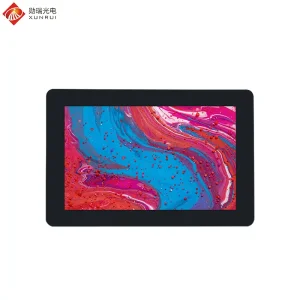
Custom 5 inch HDMI 800×480 IPS TFT LCD Module With Driver Board & CTP
View Specifications
China 7 inch 800×480 RGB 40pin 450nit TN TFT LCD Display
View Specifications
Custom 8 inch 800×1280 MIPI 31pin 480nit IPS TFT LCD Module
View Specifications
China 10.1 inch 1280×800 LVDS 40pin 350nit IPS TFT LCD Module
View Specifications
China 7 inch 1024×600 1000nit High Brightness IPS TFT LCD Module
View Specifications
China 10.1 inch 800×1280 MIPI 40pin 350nit IPS TFT LCD Display
View Specifications
China 8 inch 1024×600 1300nit TN TFT LCD with Capacitive Touch Panel
View Specifications