Direct Factory Deployments
Selected Industrial & Custom Display Modules
Engineered by Shenzhen Xunrui Optoelectronics for extreme durability, long production lifecycles, and bespoke touch integrations.

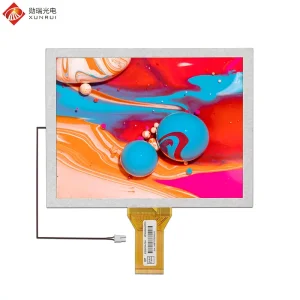
Custom 5 inch TFT LCD module 800×480 RGB 40pin interface 350nit IPS screen
View Product Spec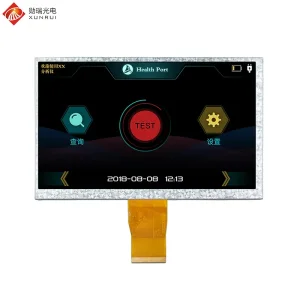
Custom 7 inch 1024×600 RGB 50pin 350nit TN TFT LCD Display Manufacturer
View Product Spec
China 4 inch 480×480 RGB Square IPS TFT LCD Module with capacitive touch
View Product Spec
China 7 inch 800×480 RGB 40pin 450nit TN TFT LCD Display Manufacturers
View Product Spec
China 8 inch 1024×600 1300nit TN TFT LCD with capacitive touch panel
View Product Spec
Custom 7 inch TFT LCD module 800×480 RGB 50pin interface 250nit TN screen
View Product Spec
Custom 23.8 inch 1920×1080 IPS TFT LCD with capacitive touch panel
View Product Spec
Technical Whitepaper Depth
Engineering Architecture of Custom 6.2 Inch IPS Panels
A comprehensive examination of liquid crystal molecular alignments, optical performance under sunlight, and thermal-mechanical reliability.
In-Plane Switching (IPS) Dynamics
Unlike conventional Twisted Nematic (TN) systems where liquid crystal molecules twist perpendicular to substrates under electrical bias, the custom 6.2" IPS panel aligns molecules parallel to the glass plate. This provides symmetrical 85°/85°/85°/85° omni-directional viewing angles with zero grayscale inversion or chromatic shift across critical oblique visual lines.
This optical fidelity is mission-critical for dual-cockpit automotive clusters, multi-operator medical workstations, and off-axis smart factory control pods.
High-Luminance Optical Engineering
Standard displays fail under direct solar incidence due to internal reflections exceeding 4.5% across boundary layers. Xunrui incorporates edge-lit LED lightbars driven by high-efficiency Nichia or Osram LED arrays, achieving standard brightness levels from 450 cd/m² up to 1,500 cd/m² (sunlight readable).
Paired with 3M brightness enhancement films (BEF) and dual-brightness enhancement films (DBEF), power consumption is throttled while delivering peak optical contrast exceeding 1000:1.
Custom FPC & Signal Protocols
The 6.2-inch form factor occupies a versatile intermediate aspect ratio (typically 16:9, 18:9, or custom stretched bar geometries). Xunrui’s Shenzhen cleanrooms support bespoke Flexible Printed Circuit (FPC) routing with gold-plated multi-pin connectors.
Native interfaces cover 4-lane MIPI DSI for compact embedded Android/Linux SoCs, dual-link LVDS for industrial immunity, and RGB TTL or embedded DisplayPort (eDP) for compute-heavy SBC architectures.
| Performance Vector | Standard Commercial Grade | Xunrui Custom 6.2" Industrial IPS | Automotive / Military Extreme Grade |
|---|---|---|---|
| Active Resolution | 800 × 480 / 720 × 1280 | 1080 × 2400 (FHD+) / 720 × 1560 HD | 1280 × 720 Rugged Customized |
| Luminance (Nits) | 250 – 350 cd/m² | 500 – 1,000 cd/m² | 1,200 – 1,500+ cd/m² (Direct Sunlight) |
| Operating Temperature | -10°C to +50°C | -20°C to +70°C | -30°C to +85°C (Extended Fluid Cleared) |
| Contrast Ratio | 600:1 | 1000:1 – 1200:1 (IPS True Black) | 1500:1 (Polarized Anti-Reflective) |
| Touch Integration | Air-gap bonded RTP | Optical Clear Resin (OCR/OCA) PCAP | Wet-Finger & 5mm Glove Functional PCAP |
| Surface Hardness & Coating | 3H Untreated PET | 7H Chemical Strengthened AG/AR/AF | 9H Corning Gorilla Glass 6 / Dragontrail |
Macro Industry Ecosystem
Global Commercial & Industrial Landscape
Analyzing procurement shifts, panel generation cycles, and the strategic relevance of 6.2-inch display form factors in modern cyber-physical ecosystems.
The Fab Generation Evolution
Global TFT-LCD manufacturing has shifted predominantly to Gen 8.5 and Gen 10.5 fabs in Mainland China. While large television panels dominate capacity, industrial OEM buyers encounter high obsolescence rates when adopting commodity consumer-grade glass cut from smartphone leftovers.
Xunrui resolves this through dedicated industrial mask allocations, ensuring form-fit-function availability for 5 to 7 continuous years, shielding mission-critical hardware from costly mid-lifecycle redesigns.
The Touch-Display Integration Nexus
Modern HMI systems demand unified optical assemblies. Sourcing the open-cell panel from one supplier, the touch sensor (CTP) from another, and cover glass from a third generates finger-pointing during ESD failures, optical parallax, and moisture condensation.
As a single-source factory since 2016, Xunrui controls the cleanroom bonding pipeline using both Optical Clear Adhesive (OCA) sheet lamination and Optical Clear Resin (OCR) liquid bonding, optimizing yield rates past 98.6%.
EMI Suppression & Ruggedization
In automated industrial lines and EV charging equipment, high-voltage switching inverters produce severe electromagnetic radiation. Standard consumer displays flicker or lose touch calibration in these noisy environments.
Our custom 6.2-inch assemblies integrate indium tin oxide (ITO) shielding layers, ferrite core attachments on FPCs, and tuned touch controller firmware (ILITEK, Goodix, FocalTech) achieving rigorous CISPR 25 and EN 61000-4-2 Level 4 immunity.
Real-World Deployment
Localized Application Scenarios for 6.2" IPS Panels
Where dimension, ergonomic aspect ratio, and rugged durability intersect across modern global commerce.
Smart Automotive & Two-Wheeler Clusters
The 6.2-inch format is ideal for motorcycle digital instrument clusters, electric golf cart dashboards, and commercial telematics screens. The IPS glass guarantees legibility when riders lean into curves. Xunrui's proprietary anti-glare etching eliminates direct sunlight washout, while the automotive-grade backlight circuit handles cold-crank power dips seamlessly.
Portable Diagnostic & Infusion Devices
Medical handhelds require high pixel density, precise color gamut reproduction for physiological waveform curves, and total sealability against chemical sterilizers. Our custom 6.2" assemblies feature antimicrobial surface coatings and optical bonding that prevents fluid penetration from alcohol wipes or hospital disinfectants.
Smart EV Chargers & Outdoor Kiosks
Unattended public charging terminals operate 24/7/365 through scorching summer heatwaves and freezing winter blizzards. Incorporating wide-temperature nematic liquid crystals and anti-UV polarizers, our 6.2-inch displays resist solar isotropic blackout (clearing point up to +105°C) and withstand IK08 vandal-impact cover glass tests.
Need Seamless Prototype-to-Mass Transition?
Xunrui eliminates the traditional high MOQ barrier for custom tooling. Following initial engineering drawing approval and functional sample delivery, we provide a one-time trial batch run of 5 to 500 units to validate pilot production before ramping to volume runs (1,000+ units MOQ).
E-E-A-T Quality Governance
Localized Support & Global Compliance Guarantees
Shenzhen Xunrui Optoelectronic Technology Co., Ltd. operates under certified ISO 9001 and ISO 14001 frameworks, backed by 5 strict quality control checkpoints.
International Statutory Compliance
Every customized 6.2-inch panel batch ships with full chemical composition declaration compliance. All polarizers, bonding resins, driver ICs, and PCB components adhere rigorously to EU RoHS 3 (Directive 2015/863) and REACH (EC 1907/2006) SVHC candidate lists. For aerospace and medical clients, full conflict mineral disclosures (CMRT) and CE/FCC compliance testing packages are fully documented.
5-Gate QC & Reliability Regimes
Zero-defect targets are enforced through five mandatory gates: IQC incoming component screening; Raw Glass microscopic inspection; FOG (Film-on-Glass) hot-bar bonding inspection coupled with high-temp aging; Final module thermal-shock and vibration burn-in cycling (-40°C to +85°C, 240 hours); and OQC outgoing aesthetic and optical spectrophotometer color verification.
Shenzhen Direct Engineering Bridge
Procuring overseas should not come with communication latency. Xunrui bridges Western engineering teams with dedicated bilateral hardware and firmware engineers. We supply register initialization code, device tree overlays for Linux kernels, and direct factory-level schematic review within 24 business hours.
2016
Year Established in Bao'an, Shenzhen
5,000 m²
Class 1,000 & 10,000 Cleanroom Area
2,000,000+
Monthly TFT Module Output Capacity
0.96"–27"
Full Spectrum Custom Display Matrix
Six-Stage Gate Control
Engineering Customization Protocol for 6.2" IPS Displays
A de-risked methodology ensuring electrical compatibility, optical brilliance, and long-term supply integrity.
01
1. Application Review & Opto-Electrical Specs
We analyze enclosure drawings (STEP/IGES), thermal heat dissipation paths, viewing angle needs, power constraints, and host processor bus protocols (MIPI, LVDS, eDP, SPI, or RGB).
02
2. FPC & Mechanical CAD Sign-Off
Our Shenzhen engineering office issues dimensional 2D/3D mechanical drawings, pin-out configurations, EMI grounding finger layouts, and cover-glass silk screen layouts for customer sign-off.
03
3. Tooling & Working Golden Samples
Custom FPC tooling, glass cutting, and backlight mold fabrication commence. Functional golden samples are built, verified on Chroma optical analyzers, and couriered globally with driver init code.
04
4. Small-Batch Trial Run (5–500 pcs)
To eliminate procurement risk, Xunrui enables an exclusive trial batch run of 5 to 500 units. This allows clients to populate SMT lines, perform drop tests, and complete field validation.
05
5. High-Volume Mass Production
Upon sample sign-off, automated volume bonding commences with an MOQ of 1,000+ units. High-speed Cog (Chip-on-Glass) and Fog (Film-on-Glass) lines run under ISO 9001 and ISO 14001 controls.
06
6. Lifecycle & Obsolescence Protection
We provide guaranteed PCN (Product Change Notification) and EOL (End-of-Life) notices minimum 6 to 12 months in advance, backed by last-time-buy reserves to protect client lifecycles.
Future Innovations
Technology Roadmap & Next-Gen Outlook (2026–2030)
Anticipating the technological convergence of micro-optics, edge AI processing, and sustainable display fabrication.
Phase I: Current Deployment
Mini-LED Local Dimming Arrays
Transitioning from traditional edge-lit lightbars to 576-zone Mini-LED backlighting matrices on 6.2-inch platforms. Delivers HDR 1000 contrast, 100,000:1 dynamic range, and eliminates black-level glow in dim cockpits.
Phase II: Near-Term Integration
In-Cell Haptic Sensory Feedback
Integration of piezoelectric tactile feedback actuators laminated directly between the IPS polarizer and cover glass. Enables realistic physical knob-click sensations on virtual automotive dials without mechanical buttons.
Phase III: Advanced Horizon
Curved 3D Shaped Cover Glass
Advanced hot-bending glass facilities producing cylindrical and multi-radius compound curved surfaces for ergonomic handhelds and wrap-around automotive dashboard trims, keeping optical lamination bubble-free.
Phase IV: Eco-Optoelectronics
Ultra-Low Power Reflective Hybrid
Engineering transflective IPS cell structures combined with ambient-light harvesting layers, slashing overall battery drain by up to 60% on field-deployed military and agricultural telemetry units.
Procurement & Engineering Answers
Frequently Asked Questions (FAQ)
Key technical and supply-chain inquiries addressed by Xunrui senior optoelectronic engineering specialists.
What makes a 6.2-inch IPS panel technically superior to standard TN displays in industrial gear?
IPS (In-Plane Switching) technology coordinates liquid crystal molecules to rotate parallel to the substrate glass plane rather than twisting vertically like Twisted Nematic (TN) panels. This fundamentally eliminates the notorious "grayscale inversion" visual defect when viewed from bottom or oblique angles. For industrial devices and automotive instrument clusters, a 6.2" IPS panel provides consistent 85°/85°/85°/85° viewing angles with vivid color fidelity and high contrast, ensuring operators read mission-critical data accurately regardless of user height or mounting tilt.
What is the exact MOQ and lead time for a customized 6.2-inch display build?
At Xunrui, we bridge the gap between prototype validation and high-volume manufacturing. After technical drawings are approved by the client's engineering team, working golden samples are typically dispatched in 3 to 4 weeks. Following sample evaluation, we offer a dedicated, one-time trial batch run of 5 to 500 units to test assembly fixtures and field reliability. For ongoing custom mass production, our baseline MOQ is set at 1,000 units with standard batch delivery within 4 to 6 weeks.
Can Xunrui customize cover glass with anti-glare, anti-fingerprint, and vandal-proof ratings?
Yes. Our in-house cover glass processing lines accommodate chemically strengthened soda-lime glass, AGC Dragontrail, and Corning Gorilla Glass from 0.7mm up to 6.0mm thickness. We apply specialized chemical surface treatments: Anti-Glare (AG) chemical etching (gloss levels 60 to 95) to break specular glare in sunlight; Anti-Reflective (AR) magnetron sputtering coatings to increase optical transmittance above 96%; and hydrophobic Anti-Fingerprint (AF) oleophobic plasma coating. Impact resistance can be tailored to meet IK07, IK08, or IK09 international standards.
How does Xunrui address direct sunlight readability on outdoor 6.2" IPS modules?
Sunlight readability requires balancing backlight surface luminance against ambient reflection. Standard displays (250–350 nits) wash out under 10,000–100,000 lux outdoor illuminance. We combine high-output Nichia/Osram LED lightbars (boosting luminance to 800–1,500 nits) with Full Optical Bonding (OCA or OCR resin) between the LCD and cover plate. Full lamination removes the internal air gap, cutting ambient reflection from ~4.5% down to less than 0.2%, preserving contrast ratios above 15:1 even under intense solar exposure.
Which video and driver interfaces are supported on your 6.2-inch modules?
We adapt FPC circuits to match diverse host processor architectures. Standard native options include 4-lane MIPI DSI for compact application processors, dual-link LVDS for industrial SBCs, and 24-bit RGB TTL. Additionally, Xunrui designs and manufactures industrial HDMI, VGA, and composite AV driver adapter boards with integrated LED backlight drivers and touch controller bridges (I²C or USB HID plug-and-play).
What environmental testing is performed to ensure cold and heat survivability?
Every customized industrial display model undergoes severe qualification testing in our Shenzhen reliability lab. This includes High-Temperature Operating (+85°C for 240 hours), Low-Temperature Operating (-30°C for 240 hours), Thermal Shock Testing (-40°C to +85°C with rapid 10-minute cycle transitions for 100 cycles), High-Humidity Testing (+60°C at 90% RH), and multi-axis sinusoidal vibration tests to guarantee zero adhesive delamination, zero liquid crystal freezing, and zero driver IC detachment.
Consult with Xunrui's Senior Display Engineers
Send your 3D enclosure models, interface targets, or functional RFP for review within 24 hours.
Extensive Product Portfolio
High-Brightness, Ultra-Wide & Touch-Integrated Displays
From 2.8-inch micro handheld panels to 10.1-inch sunlight-readable industrial terminals, explore our direct factory series.

Custom 10.1 inch 1024×600 TN TFT LCD display with resistive touch panel
View Product Spec
Custom 3.5 inch IPS TFT LCD 320×480 MCU 40pin interface 300nit
View Product Spec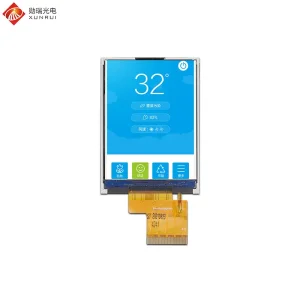
China 2.8 inch TN TFT LCD module 240×320 RGB 40pin interface 250nit
View Product Spec
Custom 7 inch 800×480 TN TFT LCD display with resistive touch panel
View Product Spec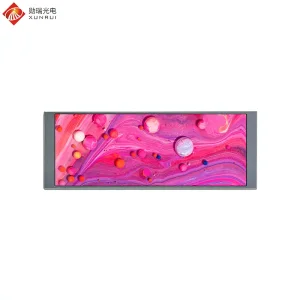
Custom 6.86 inch 480×1280 MIPI 40pin 700nits IPS Strip TFT LCD Module
View Product Spec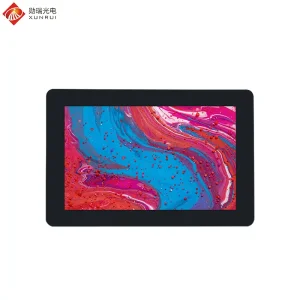
Custom 5 inch HDMI 800×480 IPS TFT LCD With driver board & CTP
View Product Spec
Custom 10.1 inch 1024×600 1000nit High brightness TN TFT LCD module
View Product Spec