

Custom 5 inch 800×480 TN TFT LCD display with capacitive touch panel Manufacturers, Suppliers
View Specifications
Featured compact and mid-size active-matrix TFT displays designed for HMI integration, high-contrast visual monitoring, and harsh operating environments.

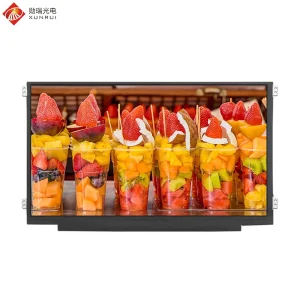




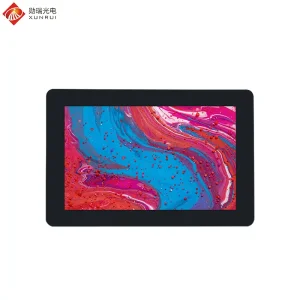
Understanding the physical stack, driver IC topology, and electro-optical considerations of 5.7" bare LCD glass in embedded systems.
A 5.7 inch bare screen represents the purest active-matrix liquid crystal display cell—composed of TFT glass, a color filter (CF) substrate, polarizers, and liquid crystals without an integrated backlight module or casing. This open-cell delivery model affords system architects absolute freedom to integrate ultra-slim custom light guides, precision thermal sinks, or specialized ruggedized metal chassis.
The 5.7-inch display format holds a vital strategic position across automation. Historically standardized around 640×480 (VGA) or 320×240 (QVGA) resolutions in a 4:3 aspect ratio, bare glass in this footprint serves as the lifeline for mission-critical instruments requiring 7 to 10-year life-cycle longevity without redesigning expensive front bezels or mechanical stamping molds.
For custom bare screens, the transition from bare ITO routing to external microprocessors depends on anisotropic conductive film (ACF) bonding. China's top cleanroom facilities utilize sub-micron accuracy FOG production lines, bonding flexible printed circuits (FPC) and Chip-on-Glass (COG) controller drivers capable of resisting high mechanical shear and thermal cycling stress.
| Parameter Metric | Standard Commercial Grade | Industrial High-Spec Bare Glass | Customized Outdoor Extreme |
|---|---|---|---|
| Active Diagonal | 5.7 Inch (14.48 cm) | 5.7 Inch (14.48 cm) | 5.7 Inch (14.48 cm) |
| Resolution Options | QVGA (320×240) / VGA (640×480) | VGA (640×480) / WVGA (800×480) | High-Density Custom RGB |
| Liquid Crystal Mode | TN (Twisted Nematic) Normal White | IPS (In-Plane Switching) All-View | Transflective / Sunlight Readable |
| Operating Temperature | -10°C to +60°C | -20°C to +70°C | -30°C to +85°C (Extended Fluid) |
| Interface Topology | Parallel RGB 18/24-bit, MCU 8/16-bit | TTL / LVDS 1-Channel, MIPI DSI | Custom FPC Pinout with EMI Shielding |
| Surface Polarizer | Clear Anti-Scratch (3H) | Anti-Glare (AG) treatment (3H-7H) | Anti-Reflective (AR) + Oleophobic (AF) |
Shenzhen Xunrui Optoelectronic Technology Co., Ltd. leverages the unmatched density of the Pearl River Delta optoelectronic cluster to deliver superior quality bare display cells.
By partnering with front-end G5, G6, and G8.5 glass substrate fabs (such as BOE, Tianma, and Innolux), we execute high-precision in-house laser glass scribing and splitting. This minimizes material waste and guarantees stable cell pricing regardless of global wafer fluctuation.
Zero-defect commitments require total inspection. Every 5.7 inch bare screen passes rigorous incoming IQC, microscopic glass crack inspection, automated optical FOG bonding validation with high-temp aging, final finished-product active aging, and ISO 9001-governed OQC audits.
Unlike massive conglomerates that demand 50,000-unit minimum batch locks, our flexible Shenzhen factory provides a low-barrier 5 to 500 unit pilot trial run. This bridges the critical validation phase between hardware R&D breadboarding and million-unit mass rollout.
Removing cross-border frictional risks through certified supply practices, transparent traceability, and specialized international FAE response desks.
Every bare screen shipment is supported by comprehensive SGS laboratory testing documentation. Materials comply strictly with EU RoHS Directive 2011/65/EU and REACH (EC 1907/2006) regulations, containing zero heavy metals or banned halogenated substances.
Engineering mismatches cause costly delays. Our bilingual field application engineers (FAEs) in Shenzhen provide schematic reviews, timing diagram debugging for ST7789, ILI9341, or SSD1963 controllers, and custom pin-out flex remapping within 24 hours of ticket submission.
Bare glass displays are extraordinarily sensitive to airborne particulates and electrostatic discharge. Our export operations utilize custom conductive vacuum trays (ESD-safe waffle packs), sealed in dry-nitrogen-flushed aluminum foil moisture barriers conforming to IPC/JEDEC J-STD-033 standards.
Delivering uncompromised optical clarity across the most demanding physical working environments worldwide.
Mounted inside factory-floor motor drives, CNC human-machine interfaces, and automated PLC racks. Operating around relentless electromagnetic motors, 5.7" bare screens with custom copper-foil grounded FPC designs exhibit zero jitter and high ESD resistance.
Dialysis machines, syringe pumps, and vital sign monitoring units benefit from wide-viewing IPS bare screens. Glass bonded to anti-microbial cover lenses enables medical staff to interpret waveforms accurately from any angle under harsh clinical fluorescent lighting.
Optical time-domain reflectometers (OTDR), spectrum analyzers, and marine depth sounders require high-contrast transflective bare screens that remain readable in direct outdoor sunlight while consuming minimal battery power in battery-powered handheld tools.
How advanced material science and digital interfaces are modernizing classic industrial display architectures.
While the bare liquid crystal cell remains the standard, OEM clients increasingly pair bare 5.7" glass with multi-zone local dimming Mini-LED backlights. This yields 100,000:1 contrast ratios and up to 2,000 nits brightness with exceptional power savings.
The historical air-gap assembly between bare screens and protective touch glass is rapidly being replaced by full optical bonding. Vacuum-cured optical adhesives remove internal reflection boundaries, eliminating fogging under condensation and boosting sunlight legibility by 400%.
Modern microcontrollers (such as STM32H7, NXP i.MX, and ESP32-P4) increasingly favor high-speed differential serial buses. Next-generation bare 5.7" cells feature integrated COG drivers that translate parallel RGB data directly into MIPI DSI, drastically cutting system trace counts.
Essential guidance for procurement directors, hardware architects, and supply chain analysts.
A bare screen (open cell) consists strictly of the glass substrate, liquid crystal matrix, color filters, and driver IC (via COG or COF) with an attached FPC ribbon. It does not include an LED backlight unit (BLU), plastic/metal frame, or front capacitive touch panel, making it ideal for deeply customized OEM system integration.
Yes. Our engineering department specializes in reverse pin-mapping and FPC redesign. If you are replacing an obsolete Sharp, Kyocera, or Toshiba 5.7" display, we can match the legacy connector pitch, pin definition, and electrical signal timings exactly to eliminate PCB redesign costs.
Standard glass cut samples can typically be dispatched in 7 to 10 working days. For projects requiring custom FPC tooling, mask creation, or custom ITO bonding patterns, tooling and sample fabrication takes 3 to 4 weeks, backed by iterative engineering revisions until final customer sign-off.
Industrial medical and automation equipment requires 5 to 10 years of consistent supply. We maintain direct source agreements with parent glass fabs and reserve mother-glass wafers. In the event of wafer transitions, we issue a minimum 6-month Last Time Buy (LTB) notification and provide drop-in pin-compatible alternatives.
Complementary display solutions spanning sunlight-readable IPS panels, high-definition automotive modules, and ultra-reliable industrial touch displays.







