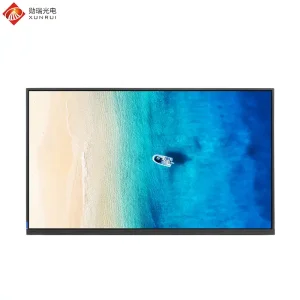
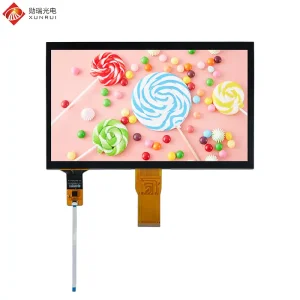
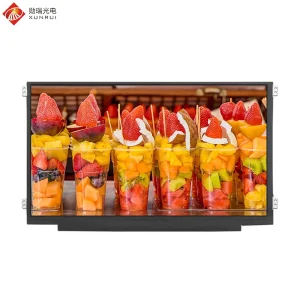
Active Production Portfolio
Primary Display Engineering Solutions
Precision-calibrated TFT panels and touch integration solutions fabricated under certified cleanroom conditions for global OEMs.



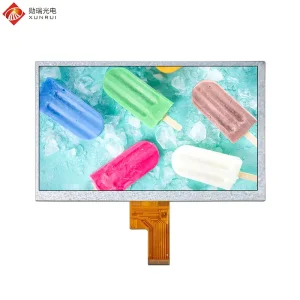



Industrial Engineering Deep Dive
The 4-Inch TFT LCD Module: Engineering Dynamics in Modern HMI
As human-machine interfaces shift toward decentralized control nodes and edge computing units, the 4-inch display profile provides the optimal convergence of spatial economy, thermal control, and pixel clarity.
Form Factor & Aspect Versatility
The contemporary 4-inch category spans standard 4:3 industrial layouts, 1:1 square modules (480×480), and wide-aspect touch strips. This geometry allows system designers to replace legacy dial indicators, analog meters, and passive segment screens with high-density IPS color liquid crystal without redesigning outer chassis parameters.
Electrical Bus Adaptability
Factory-level custom engineering resolves legacy communication bottlenecks. Our 4-inch TFT LCD platforms accommodate parallel RGB 24-bit, MIPI DSI differential signaling for high frame rates, serial SPI (3-wire and 4-wire) for compact microcontroller pipelines, and 8/16-bit 8080 MCU interfaces via custom-routed FPC pin-outs.
Optoelectronic Customization
Beyond panel substrates, custom LED backlight architectures elevate baseline luminescence up to 1,000–1,500 nits for direct sunlight readability. Enhanced polarization layers, transflective thin-film matrix arrays, and wide-view IPS cell structures eliminate gray-scale inversion across 85°/85°/85°/85° symmetrical perspectives.
1000+
Custom Mass Run MOQ
5-500
Pilot Trial Units
5-Stage
Cleanroom QC Inspection
50,000h
Backlight Half-Life MTBF
Market Dynamics
Global Commercial Ecosystem & Procurement Strategy
Sourcing custom display modules requires navigating complex global supply chains, obsolescence mitigation, and rigorous qualification protocols.
Glass Sourcing & Cell Allocation
Global availability of mother glass shifts across generation lines (G5, G6). Direct factory engagement ensures stable allocation of Grade-A LCD polarizers and driver ICs (e.g., ST7701S, ILI9806E, ST7789), insulating procurement roadmaps from unpredictable consumer market shortages.
Obsolescence & PCN Protection
Industrial programs require 5 to 7+ years of form-fit-function supply stability. Xunrui implements strict Product Change Notification (PCN) and End-of-Life (EOL) protocols, maintaining pin-compatible alternative engineering pathways before any active component deprecation.
Total Cost of Ownership (TCO)
By engineering touch sensors (PCAP/RTP), FPC shapes, and cover plates into a unified sub-assembly, procurement teams bypass multi-tier vendor risk. In-house COG (Chip-on-Glass) and FOG (Flex-on-Glass) bonding dramatically minimize field failure rates and post-delivery integration costs.
Deployment Paradigms
Field-Validated Application Environments
How engineers deploy custom 4-inch TFT LCD configurations to solve specific mechanical, optical, and environmental constraints.
Rotary Knob & Smart Building Hubs
Using 4-inch 480×480 square IPS panels mounted behind circular or rectangular cover glass, HVAC engineers embed intuitive touch interfaces into standard European (86-box) and US wall-gang electrical boxes, enabling elegant home automation control with full angle fidelity.
Point-of-Care Medical Diagnostics
Portable defibrillators, blood gas analyzers, and infusion pumps benefit from optical bonding with anti-microbial, chemically strengthened cover glass. High contrast ratios maintain readability of critical patient waveforms under intense operating room lighting.
Harsh-Environment Handheld Terminals
Rugged inventory scanners and outdoor utility diagnostic readers utilize sunlight-readable 4-inch panels with resistive or water-immune capacitive touch layers. Units withstand continuous sub-zero conditions (-30°C to +80°C operating window) without sluggish crystal refresh rates.
Quality & Regulatory
Localized Integration & Global Compliance Assurance
Bridging the gap between Shenzhen factory-floor precision and strict North American and European regulatory environments.
RoHS, REACH & Conflict Minerals
Every raw glass sheet, indium tin oxide (ITO) film, polariser adhesive, and solder paste employed in our manufacturing line complies with EU RoHS Directive 2011/65/EU and REACH regulations. Full material declaration sheets (FMD) support corporate ESG audit chains.
EMC/EMI Radiation Hardening
Custom FPC layouts incorporate cross-hatched ground shielding, ferrite bead filters, and tailored differential pair routing. This active noise mitigation prevents display signals from disrupting onboard wireless modules (Wi-Fi, Bluetooth, LTE) during FCC and CE certification tests.
Dedicated Engineering Support
Our bilingual FAE (Field Application Engineering) team provides initialization code sequences (C-code/C++), timing diagram audits, and direct PCB review before your team cuts silicon or tools an enclosure. Pilot batches of 5–500 units ensure real-world verification.
R&D Horizons
Engineering Roadmap: The Next Era of 4-Inch Display Modules
Anticipating hardware requirements across edge devices, energy-optimized terminals, and next-generation interactive consoles.
Micro-LED & Mini-LED Backlights
Migrating edge-lit LED backlights to local-dimming Mini-LED arrays in compact 4-inch frames. This technology delivers 100,000:1 contrast ratios and deep black levels for medical diagnostic and defense applications while trimming overall milliwatt power draw.
Direct In-Cell Touch Integration
Consolidating discrete touch layers directly into the TFT liquid crystal matrix. In-cell touch eliminates the glue line, reduces module thickness by up to 0.8mm, boosts optical transmittance over 92%, and streamlines mechanical assembly in slim IoT housings.
Ultra-Low Power Reflective Variants
Developing memory-in-pixel (MIP) and transflective hybrid structures tailored for battery-operated field meters. These displays preserve operational sharpness in sunlight without drawing continuous backlight current, extending field battery autonomy from days to months.
Procurement & Engineering FAQ
Technical & Production Queries
Essential technical insights addressing common manufacturing and deployment challenges for engineering teams.
What are the key technical trade-offs between IPS and TN matrices in 4-inch display modules?
TN (Twisted Nematic) modules provide a cost-effective pathway with rapid response times, making them well-suited for budget-sensitive, single-operator devices with fixed perpendicular sightlines. However, they suffer from grayscale inversion when viewed from off-axis perspectives. IPS (In-Plane Switching) preserves true color accuracy and contrast across symmetrical 85° viewing cones in every direction, which is critical for wall-mounted controllers, shared medical diagnostic screens, and dynamic industrial instruments.
How does optical bonding differ from air-gap tape bonding in custom assemblies?
Air-gap tape bonding affixes the touch panel or cover glass along the outer frame perimeter, leaving an internal air gap. While economical, internal reflections lower contrast in bright environments, and moisture can condense inside. Full optical bonding injects optical-grade liquid OCR or solid OCA resin across the entire interface, eliminating internal air boundaries. This boosts impact resistance (IK rating), eliminates condensation risks, and increases sunlight readability by approximately 300% at identical backlight drive currents.
Can Xunrui accommodate customized FPC pinouts and EMI shielding for tight enclosures?
Yes. We routinely engineer fully customized Flexible Printed Circuits (FPC) regarding trace length, bend radii, connector pin assignments (ZIF/Hirose/Molex), and active EMI mitigation. Options include double-sided silver-paste shielding, copper mesh layers, and integrated passive components (pull-ups, decoupling capacitors, ESD diodes) directly on the FPC tail to reduce carrier-board complexity.
What are the factory's minimum order quantities (MOQ) and prototyping policies?
Upon formal mechanical and electrical drawing sign-off, we produce pilot test samples (typically 5 to 20 units) for customer qualification. Following sample approval, we offer a small-batch verification run of 50 to 500 units to ensure DFM (Design for Manufacturing) stability. Full customized mass-production runs typically begin at an MOQ of 1,000 units, while standard catalog modules can be sourced in lower volumes.
What five quality control gates are used during volume production?
Every production batch passes five distinct checkpoints: 1) IQC incoming raw material inspection (glass, ICs, backlights, flex); 2) Cell/Glass defect and particle screening under cleanroom magnification; 3) Post-FOG (Flex-on-Glass) bond electrical continuity with thermal stress aging; 4) Final integrated assembly optical color coordinate, luminance, and touch calibration inspection with high-temperature burn-in; and 5) OQC outgoing AQL sampling prior to anti-static vacuum export packing.
Extended Solutions Range
Specialty Form Factors & Large-Format Industrial Displays
Explore high-resolution, wide-temperature, and ultra-wide bar-type display alternatives engineered to exact OEM requirements.